3 min
3 min 
Google reviews are way more than just a number. They are a treasure trove of information that can give you a real insight into what your customers actually think about your business.
A whopping 81% of consumers now turn to Google reviews before making a purchase, so being able to read the feedback and make changes to your business is crucial.
In this blog, we’re going to break down the key things you need to know about Google review data, how to analyse it, and turn that into strategies to improve your business.
The components of Google review data
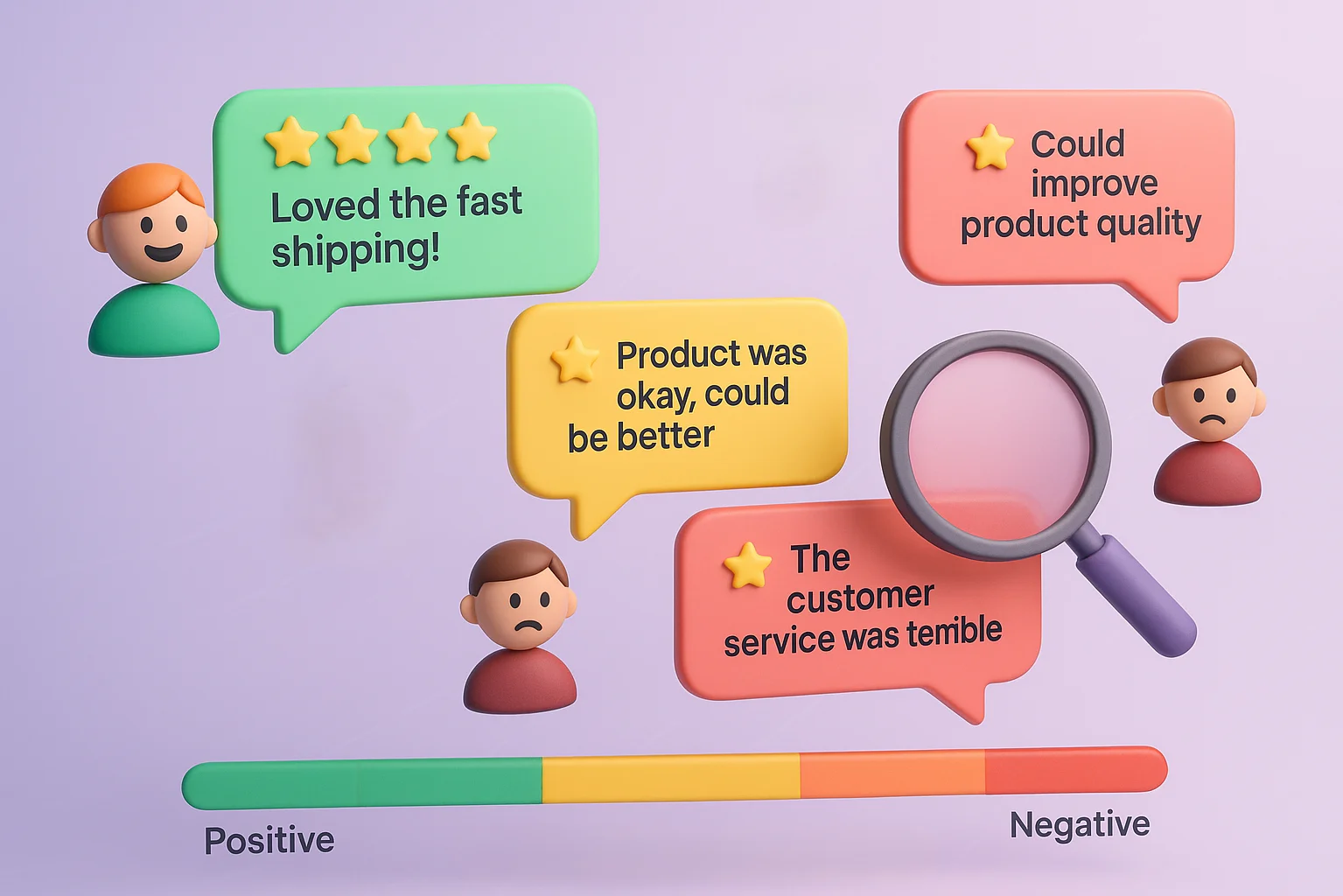
When you’re reading through Google reviews, you come across loads of different information that can give you a real insight into customer sentiment and preferences.
There are three main types of data that you’ll need to consider when analysing Google reviews:
Quantitative elements
These are the bits of data that you can measure. Typically, these are things like :
- Star ratings – how many stars someone gave your business (out of 5)
- How often you get reviewed – whether people are reviewing you regularly or not
How many reviews do you get over time? Are you getting more reviews each year?
This data helps you determine if customers are generally satisfied with your business and if there are any trends or patterns that you should be aware of.
Qualitative elements
This is where the written part of the review comes in, where customers provide you with detailed feedback on your business.
The key here is to understand what they’re actually saying.
For example, you might be looking for things like :
- What they like about your business – are there specific things that people are raving about?
- What they don’t like – are there bits of your business that people are complaining about?
- Suggestions for change – are customers suggesting you do things differently?
This kind of feedback can have a tangible impact on how you run your business and improve your products and services.
Contextual & metadata
This includes stuff like :
- When the review was left, was it left during a busy period or after a special event?
- Who left the review – are they a regular customer or someone who has only reviewed you once?
- Any contextual notes – did someone leave a review after a sale, or after a customer support interaction?

All your reviews in one place
Collect reviews, manage every response, and display them where they matter most.
Start Free →How to Prepare & Clean the Review Data
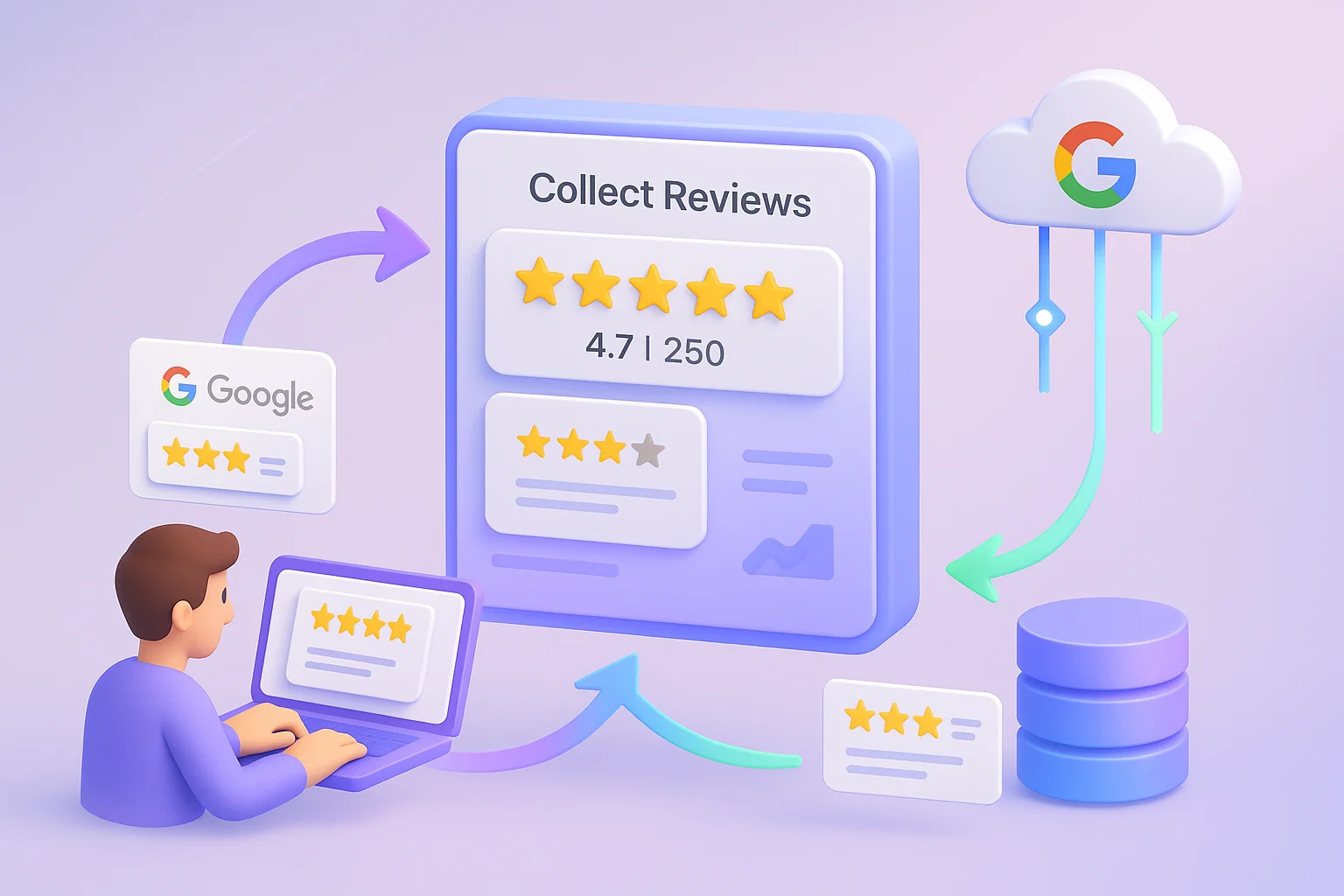
Once you have collected all your review data, it’s time to clean and prepare it for analysis. Here are the key things you need to do:
Collecting reviews
The first step is to gather all your reviews. You can either do this manually or use a Google review management tool to assist you.
Some third-party APIs, such as the Google Places API, can also help you fetch reviews in bulk.
Preprocessing steps
Once you’ve got all your reviews, you’ll need to clean them up. This includes things like :
- Removing duplicates – so you’re not looking at the same review multiple times
- Fixing formatting issues – so your text isn’t all over the place
- Handling missing data – if someone hasn’t given you a star rating, or hasn’t left a comment
Methods & techniques for analysis
Now that you have your clean review data, it’s time to start analyzing it.
There are loads of different methods and techniques that you can use, but here are some of the most effective ones:
Sentiment analysis
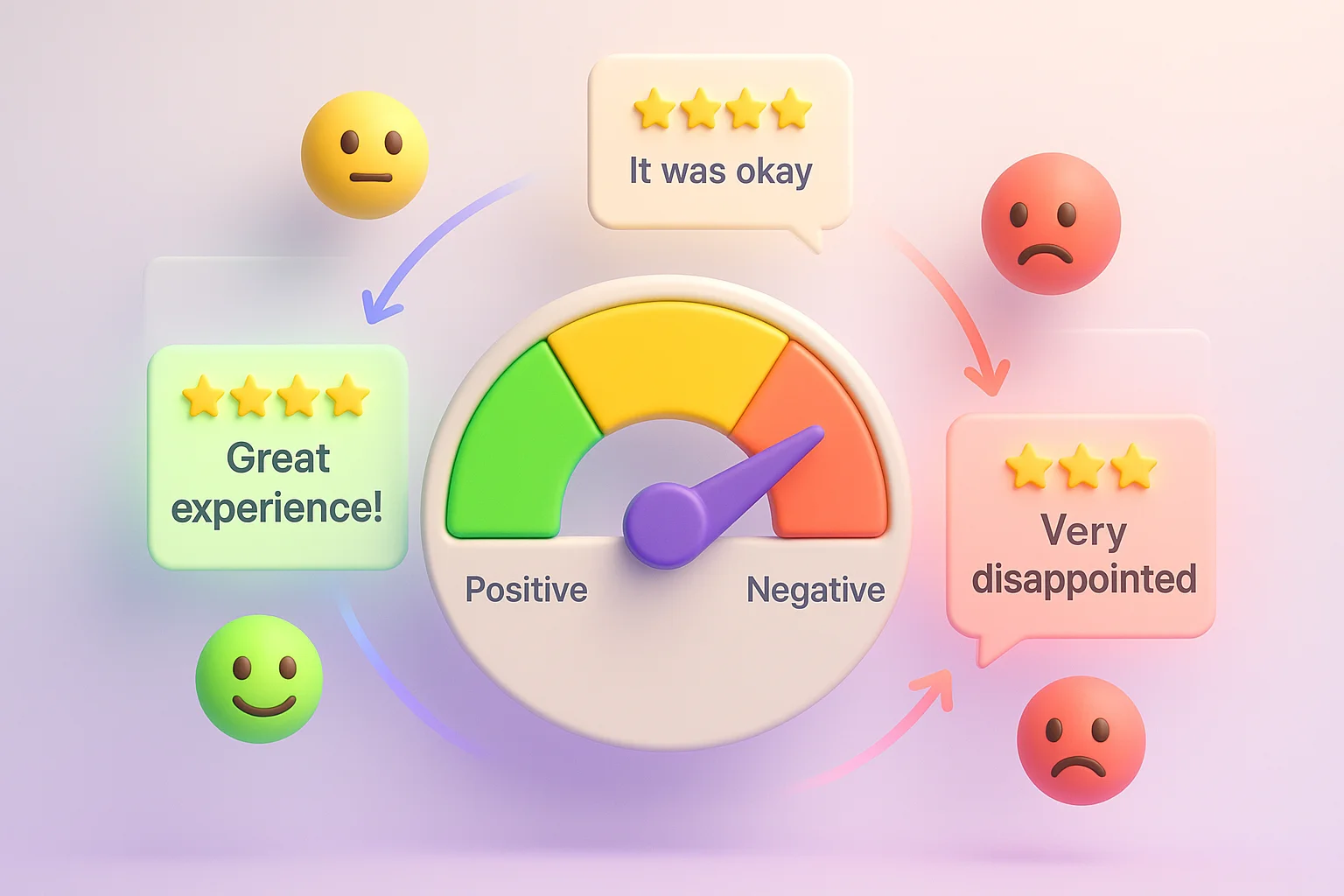
This is a great way to gauge whether customers are generally satisfied or dissatisfied with your business.
By examining the emotional tone of their reviews, you can gain a genuine insight into what they’re thinking.
Topic modeling & thematic extraction
This technique is excellent for identifying common themes or topics that customers frequently discuss.
For example, they might frequently mention delivery speed or customer support.
Keyword & phrase frequency
Analyzing the frequency of specific words or phrases can provide valuable insight into what’s essential to your customers.
If they’re mentioning “slow” a lot, it might be that your delivery times need to be reviewed.
Aspect-based sentiment
This technique is ideal for examining specific aspects of your business, such as customer service or product quality.
By examining the sentiment surrounding each aspect, you can pinpoint areas where improvement is needed.
Comparative/Competitive analysis
Comparing your Google reviews with those of your competitors can give you a real insight into where you stand.
By examining what customers say about similar businesses, you can identify your strengths and weaknesses.
Trend tracking/Alerting
Tracking review trends over time is crucial for understanding how your business is performing.
By setting up alerting systems, you can receive notifications when issues arise and make adjustments before it’s too late.
WiserReview – Google review analysis tool
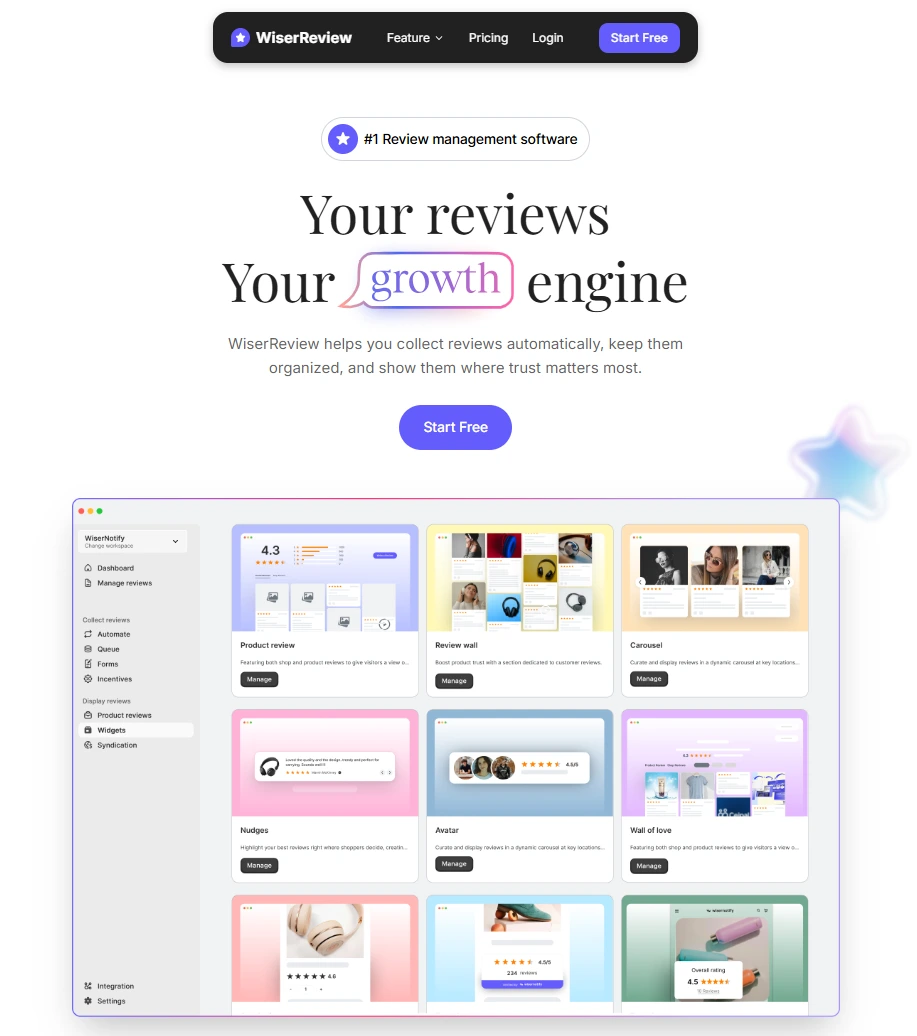
WiserReview is a tool designed to simplify the analysis of your Google reviews.
It automates the process of collecting Google reviews, making it easy to identify trends and patterns.
Some key features of WiserReview include :
- Real-time review tracking
- Sentiment analysis
It saves you time and effort, providing actionable insights that you can use to improve your business.
All your reviews in one place
Collect reviews, manage every response, and display them where they matter most.
Start Free →Turning analysis into action
Once you’ve got your review analysis, the real challenge begins – turning that into actionable improvements.
Here’s how to do it:
Prioritizing issues
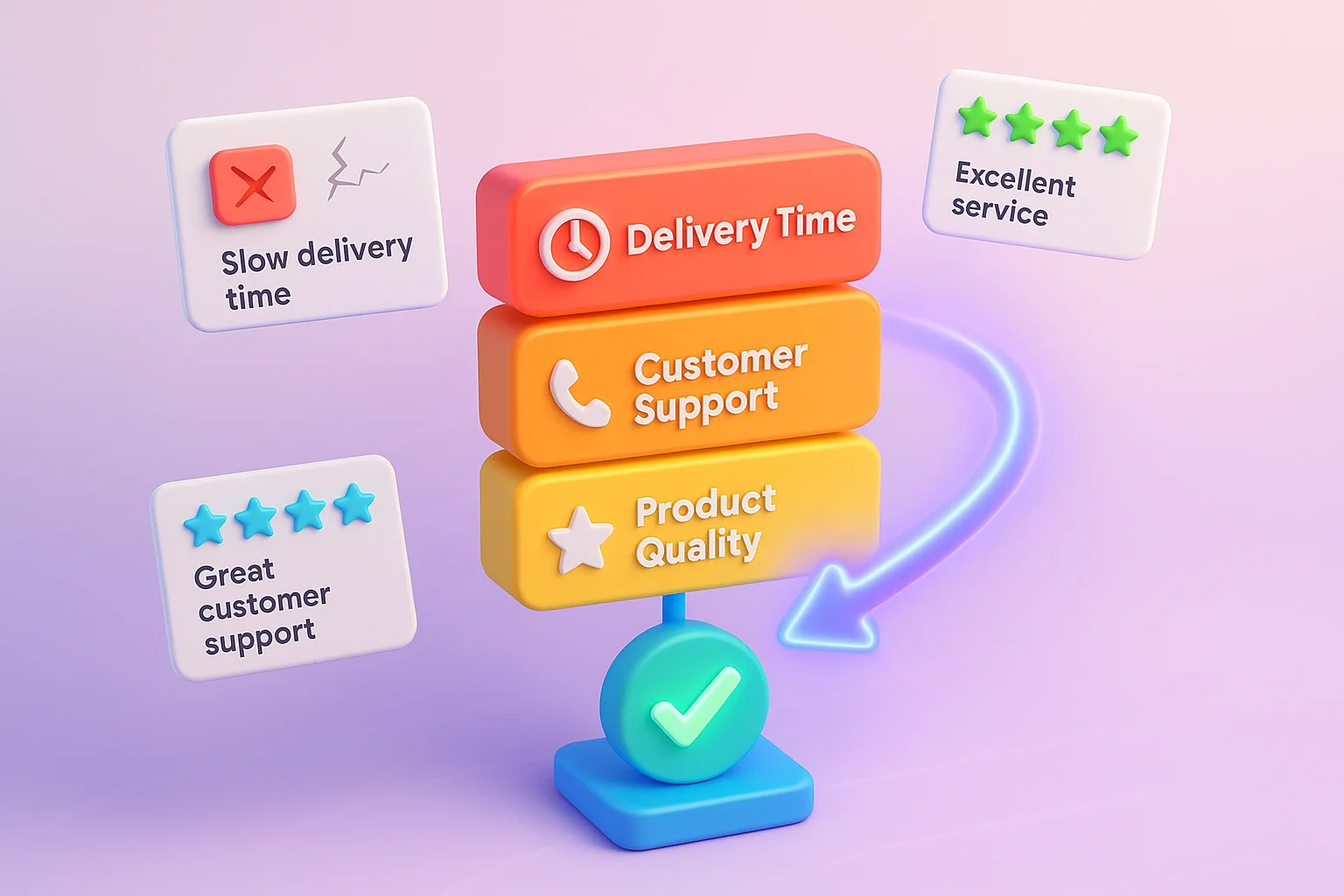
Start by addressing the most common complaints.
For example, if customers complain that your delivery times are too slow, you may need to examine ways to streamline your logistics.
But the first question is: Are customers actually complaining about delivery times? Making a real impact on your customers.
By focusing on the issues that matter most to your customers, you can drive some seriously impactful changes.
Closing the loop
Connect with your customers by responding to Google reviews, both positive and negative.
It’s a simple way to show them you actually care about their opinions, and it does wonders for how the public perceives you.
A quick thanks for a positive review, and a sincere apology or a plan to make things right for a negative one can go a long way in building trust.
Improving your product & service
Take the insights you get from analysis and use them to shape your products or services.
If numerous customers are pointing out the same problem or have the same great idea for something you should offer, then you’ve got a clear winner on your hands.
Using reviews to market
Positive reviews are a goldmine for marketing.
Use customer testimonials, or share what your customers are saying about you on your website and social media to build trust with potential customers.
It’s a sure-fire way to boost your reputation and attract more business.
The last word
Google reviews are a treasure trove of info about how your customers really feel about your business.
By using things like sentiment analysis and topic modeling to dig deep, you can turn their feedback into knowledge you can use to grow your business.
Whether it’s improving your products or services, or simply making your business a more attractive option, the insights gained from Google reviews are the key to genuine customer satisfaction and genuine business success.
So, start taking a closer look at what your customers are saying, and take the next step towards making them and your business happy.
All your reviews in one place
Collect reviews, manage every response, and display them where they matter most.
Start Free →Frequently asked questions
Google reviews provide insights into customer satisfaction, service quality, and overall experience. Analyzing these reviews can help businesses understand their strengths and areas for improvement.
You can analyze customer feedback by looking at ratings, identifying common themes in review comments, and tracking sentiment over time. Tools like WiserReview can help automate this process and provide deeper insights.
Negative reviews can hurt a business's reputation and local search rankings. However, responding to them thoughtfully can show potential customers that you care about feedback and customer satisfaction.
Yes. By regularly analyzing reviews, you can identify recurring issues, improve customer service, and highlight positive feedback in your marketing efforts.
Make it easy for customers to leave reviews by sending follow-up emails or sharing direct links to your Google review page. Tools like WiserReview can automate the process and make review requests more efficient.

Krunal