4 min
4 min 
Okendo is a popular review tool for online stores. Many brands use it to collect reviews, photos, and videos from customers.
It helps stores show real feedback and build trust. But Okendo also has limits, and its pricing can feel high as your store grows.
This guide gives you a clear look at Okendo’s pros, cons, and pricing. You will see how it works, what it does well, where it falls short, and what you should think about before you pick a plan in 2026.
This will help you decide if Okendo fits your store or if you should consider other options.
What is Okendo?
Okendo is a review tool for Shopify stores. More than 8,000 brands use it to collect reviews, photos, and videos from customers.
The app loads fast, works well on mobile, and gives stores a simple way to show real feedback on product pages.
It focuses on clean layouts, visual reviews, and smooth performance for both shoppers and store owners.
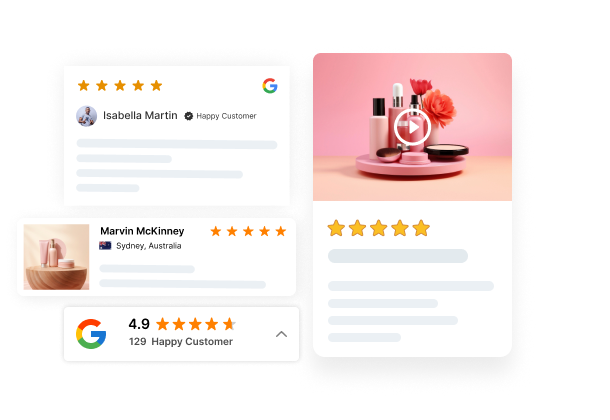
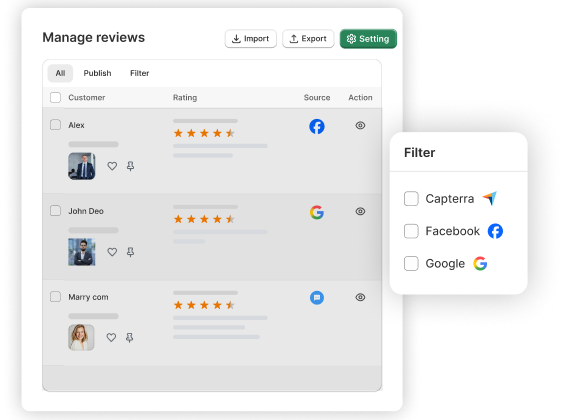
All your reviews in one place
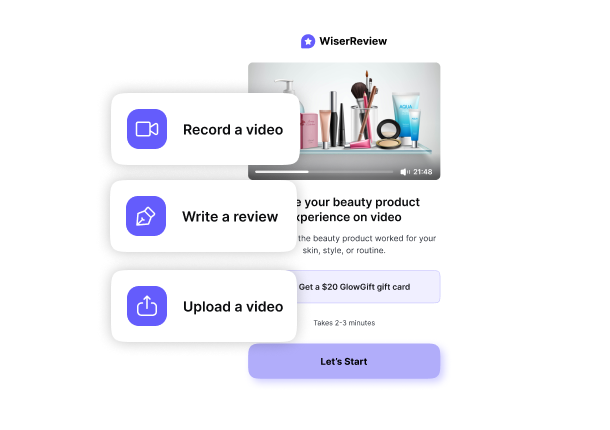
Collect reviews, manage every response, and display them where they matter most.
Okendo pros: What Okendo does best

1. Easy setup and smooth Shopify connection
Okendo installs quickly and fits well inside the Shopify system. Most stores can turn it on, link the settings, and start collecting reviews right away. You don’t need deep technical work to get the widget live or connect order data.
- Fast install
- Clean theme compatibility
- Low setup effort
2. Strong photo and video reviews
Okendo focuses heavily on visual reviews. Customers can add photos or videos straight from their phone during the review process.
This creates rich UGC that helps shoppers see real product results, which often increases trust.
- Simple media upload flow
- Clear and neat gallery layout
- High impact on buying decisions
3. Useful Email and automation tools
Okendo gives stores a steady way to collect reviews through automated email flows.
After an order is marked as fulfilled, Okendo sends a request at the right time. You can add follow-ups or reminders for customers who missed the first email.
- Automatic request timing
- Optional reminder emails
- Easy template editing
4. Filters, Product grouping, and Attribute ratings
Okendo lets stores collect extra details such as fit, quality, or style. Shoppers use these filters to view reviews that match their needs.
For stores with variants or similar items, product grouping keeps reviews organized so users don’t get confused.
- Tag-based filters
- Review grouping for variants
- Attribute ratings that guide buying choices
5. Integrations that support your marketing work
Okendo connects with many tools that Shopify brands already use. Email, SMS, and loyalty tools can all use review data to personalize messages or rewards.
These connections help stores create stronger marketing flows without extra work.
- Klaviyo integration
- Attentive and SMS tools
- Loyalty and rewards platforms
6. Helpful and fast support
Okendo’s support team replies quickly through chat and email. Most questions get solved with clear steps. This is helpful for small teams that want simple answers without long waiting times.
- Fast response time
- Clear troubleshooting steps
- Active customer success team
7. Easy-to-read analytics and sentiment data
Okendo gives stores a simple dashboard that shows rating trends, review volume, and customer sentiment.
You can see which products perform well and which ones need attention.
- Rating and review charts
- Sentiment tags
- Trend and performance insights
8. AI review summaries for faster decisions
Okendo uses AI to convert long reviews into short summaries. Shoppers read the main points quickly and move through the buying process with less hesitation.
This feature helps reduce drop-offs on product pages.
- Short review summaries
- Clear highlight boxes
- Better user flow on product pages
Okendo cons: The real limitations to know before buying
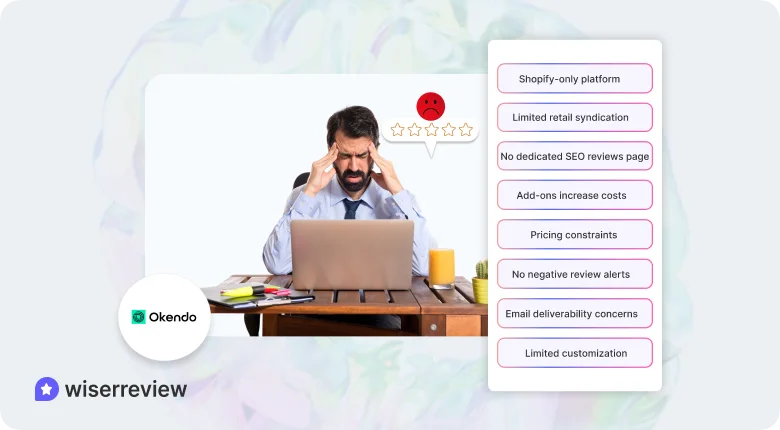
1. Shopify-only platform (Major restriction)
Okendo works only inside Shopify. If your brand ever moves to platforms like WooCommerce, BigCommerce, or Magento, you cannot bring Okendo with you. This limits long-term growth for brands planning multi-store or multi-platform setups.
- No multi-platform support
- No future migration path
- Locks you into Shopify for reviews
2. Limited retail syndication
Okendo does not push reviews to retail partners, marketplaces, or external channels. If you sell on Amazon, Walmart, Target Plus, or Google Shopping, you cannot syndicate Okendo reviews there. This reduces your reach outside your Shopify store.
- No marketplace syndication
- No retail partner feeds
- Missed multi-channel visibility
3. No dedicated SEO reviews page
A dedicated SEO page helps rank long-form review content on Google. Okendo does not offer this page by default. Without it, your reviews stay limited to product pages and do not help your site gain more organic traffic.
- No SEO-friendly review hub
- No indexable review content
- Requires custom coding or another tool
4. Add-ons increase costs quickly
Many core features that stores expect are add-ons rather than part of the base plan. When you add media upgrades, attributes, integrations, or advanced display options, your total cost grows far beyond the listed plan price.
- Add-ons raise the final cost
- Basic plans become limiting
- Hard to estimate monthly spend
5. Pricing constraints for low-volume merchants
Even small stores with low order counts pay a high base price. Review request caps restrict how many reviews they can gather. This makes Okendo feel expensive for new brands and early-stage stores.
- High starting price
- Low caps on request volume
- Not friendly for new merchants
6. No negative review alerts
Okendo does not alert store owners when someone leaves a bad review. This slows down your ability to respond, fix issues, or protect your brand reputation.
- Slow reaction to bad reviews
- Missed opportunity to fix problems
- No instant notification system
7. No reputation management tools
Okendo handles only on-site reviews. It does not help with Facebook reviews, Yelp reviews, or marketplace ratings. Brands must use separate tools to manage their full reputation footprint.
- No external review monitoring
- No consolidation of multi-channel reviews
- No tools to reply outside Shopify

All your reviews in one place
Collect reviews, manage every response, and display them where they matter most.
Start Free →8. Email deliverability concerns
Some users report issues with review request emails landing in spam. Deliverability depends heavily on correct DNS setup and sender authentication, which not all store owners configure correctly.
- Risk of lower open rates
- Requires manual DNS work
- Can hurt review collection rate
9. Advanced features can feel clunky
Features like custom questions, attributes, and multi-step flows can feel slow or hard to adjust. Larger catalogs also create more manual work when assigning attributes or filters.
- Workflows feel slow
- Extra clicks for changes
- Heavy for large stores
10. Loyalty program feels underdeveloped
Okendo offers a loyalty feature, but it lacks depth. There are no advanced point rules, tier levels, or automated rewards based on customer actions. Many stores end up using a separate loyalty app.
- Basic reward options
- Few automation choices
- Not good for growing brands
11. Limited customization for premium brands
High-end brands need strong visual control. Okendo offers color and layout basics but does not give full design freedom. Custom code is often needed for deeper changes.
- Basic styling options
- No full layout editing
- Developer needed for custom work
Okendo pricing in 2026 (Full breakdown)

Here are the key points in Okendo pricing:
1. Okendo plan summary (Free → Enterprise)
Okendo uses a tiered pricing model that scales with monthly order volume. Each plan unlocks more requests and more review tools.
- Essential: Entry plan $19 for low-volume stores
- Growth: More review requests and filters
- Power: Media reviews, automation, and stronger controls
- Advanced: Full feature access for large stores
- Enterprise: Custom setup for brands with very high order load
2. Add-ons & Extra costs
Okendo includes several features as paid add-ons, which can push the final cost higher than expected.
Stores often need extra review request capacity, stronger media tools, or advanced integrations as they grow.
These upgrades are not part of the main plan, so the monthly bill can rise as the store scales.
3. Price comparison with competitors
Okendo usually costs more than other review tools at similar order volumes. Many competitors offer lower prices for mid-size stores or include more features in their base plans.
Brands that look for lower monthly cost or broader features often find better value in lighter or more flexible review platforms.
Who Okendo is best for
Here are the stores that get the most value from Okendo:
- Stores that run on Shopify and want strong photo and video reviews.
- Brands that have steady monthly orders and can handle higher pricing.
- Stores that already use tools like Klaviyo or SMS platforms and want a smooth data flow.
- Brands that sell products where visuals matter, such as fashion, beauty, fitness, and lifestyle items.
- Stores that want review filters like size, fit, and quality to help shoppers decide.
- Brands with active repeat customers who respond well to review request emails.
Who should not use Okendo
Here are the stores that may not be a good fit for Okendo:
- Stores with low order volume that cannot support higher plan costs.
- Brands that need a tool that works outside Shopify or plan to change platforms later.
- Stores that want deep customization for widgets and layouts.
- Brands that need a strong SEO reviews page to rank on Google.
- Stores that want review syndication to places like Google Shopping or retail channels.
- Brands that want a full reputation tool for Google, Facebook, and other platforms.
- Stores that cannot afford extra add-ons or rising monthly costs as orders grow.
WiserReview: The best alternative to Okendo for reviews
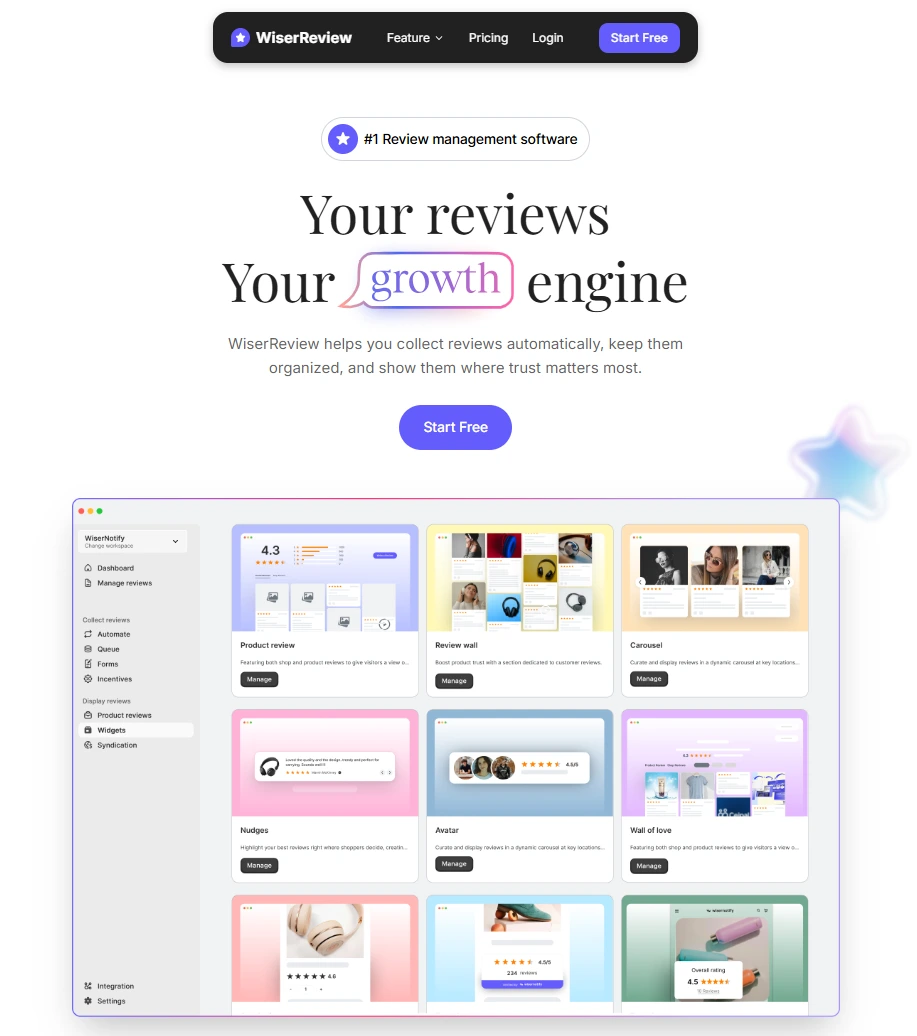
WiserReview is the best review management software. That gives Shopify and other stores a simple way to collect, manage, and show customer reviews.
It focuses on speed, clean design, and stronger features at a lower cost.
Why WiserReview Stands Out
WiserReview gives stores strong review features at a lower cost. It keeps the setup simple and works well on Shopify, WooCommerce, BigCommerce, and other platforms.
The widget loads fast, shows clean layouts, and supports photos, videos, attributes, and Q&A without extra fees.
WiserReview also includes full automation, AI summaries, and strong filters, which help stores get more reviews and improve buyer trust.
Brands that want value, speed, and easy control find WiserReview more flexible and more affordable than Okendo.
All your reviews in one place
Collect reviews, manage every response, and display them where they matter most.
WiserReview vs. Okendo: Quick Comparison
| Feature | WiserReview | Okendo |
|---|---|---|
| Pricing | Start with the free plan; paid plans start at just $9/month. | Plans from $19/month. |
| Media Reviews | Photos and videos are included in all plans | Media features get stronger in higher plans |
| Review Request Automation | Full automation with reminders and follow-ups | Basic automation; advanced rules in higher tiers |
| Platform Support | Works on Shopify, WooCommerce, BigCommerce, and more | Works only on Shopify |
| Attributes & Filters | Size, fit, quality, and custom tags included | Strong attributes, but many locked behind upgrades |
| Customization & Layout | More layout freedom and clean widgets | Basic styling; deeper edits need code |
| AI Review Summary | Included for fast reading | Available but may require higher plans |
| Loyalty / Rewards Program | Simple rewards built in | The rewards tool exists, but feels limited |
| Support | Fast and simple guidance | Fast Responsive |
Final Verdict
Okendo gives Shopify stores strong photo reviews, clean layouts, and simple automation.
It works well for mid-size brands with steady orders. But it becomes costly as order volume grows, and many features are available only in higher plans.
WiserReview gives more features at a lower price. It supports more platforms, loads fast, and includes complete tools without extra fees.
Stores that want a simple, affordable, and flexible review system will get better long-term value with WiserReview.

Krunal