5 min
5 min 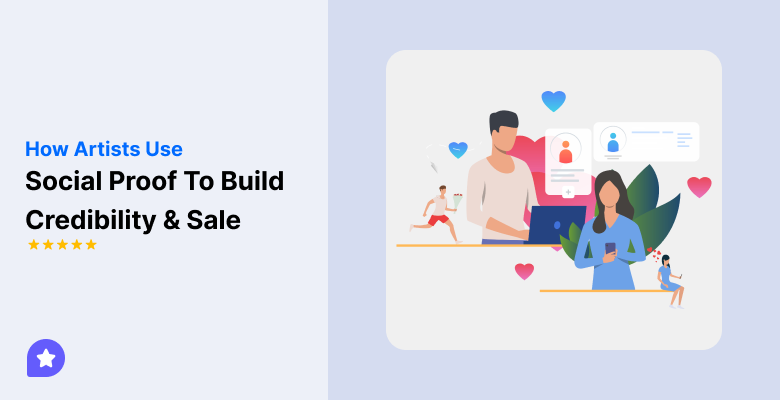
When artists hear about each other, it builds trust faster. Social proof shows that there are real buyers for the work, so initial buyers will know that others like them buy there as well.
Customer reviews, photos, and public feedback serve as quiet endorsements. They answer the unspoken question that the buyer poses before purchasing: Has this worked for someone else?
They convince skeptical buyers that real people own your work and love it enough to share it with others.
This article explains how artists use simple social proof to look credible, earn confidence, and turn interest into steady sales without sounding salesy.
Why social proof directly impacts art sales
Social proof works because buyers want to know what others think before making decisions. When collectors see positive reviews, gallery features, or testimonials from satisfied clients, their trust increases noticeably.
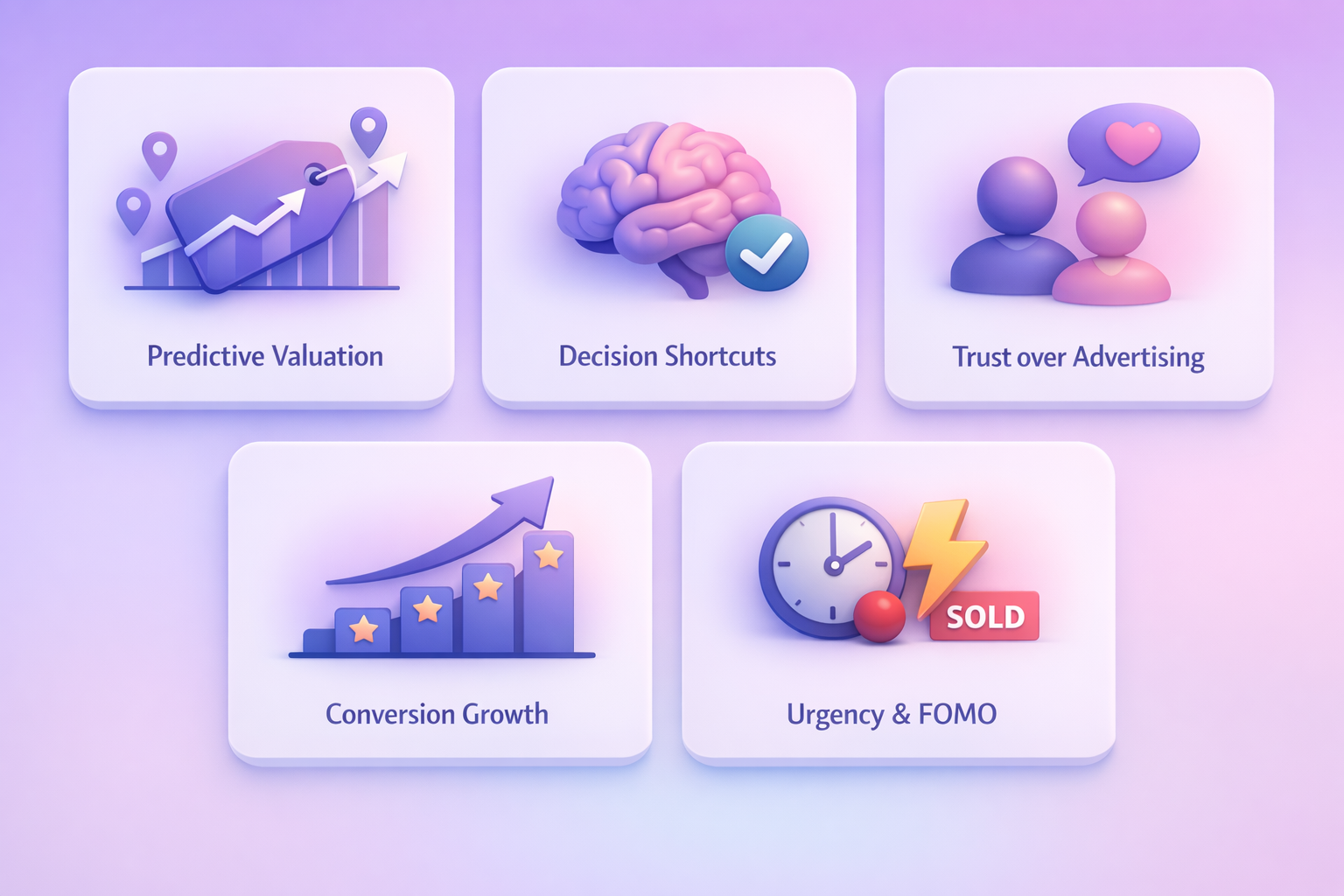
Social proof directly impacts art sales through the following psychological and market mechanisms:
Predictive Valuation: Social signals, such as exhibition history and prior sales, more accurately predict contemporary art prices than the art’s visual features, especially in emerging markets.
Decision Shortcuts: Buying art is an emotionally and financially complex decision. Social proof acts as a psychological shortcut, providing the “reassurance” needed for a buyer to commit.
Trust over Advertising: Modern collectors trust the opinions of other buyers nearly 12 times more than an artist’s own promotional content.
Conversion Growth: Displaying authentic reviews and testimonials can improve conversions on art sale pages by as much as 270%.
Urgency & FOMO: Real-time demand signals (such as “Sold Out” notifications or recent purchases) create a Fear of Missing Out, encouraging the collector to act faster.
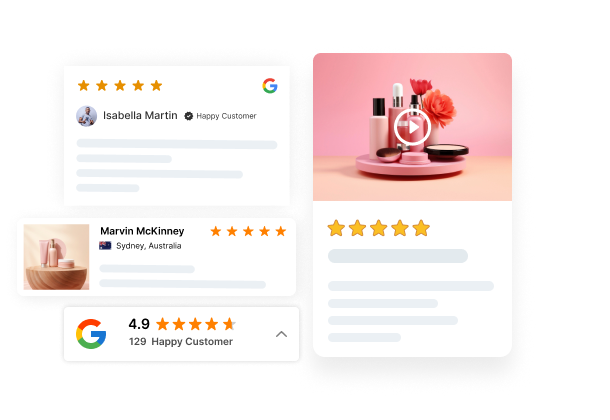
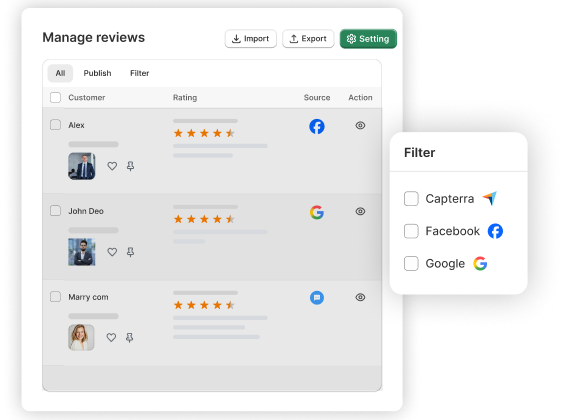
All your reviews in one place
Collect reviews, manage every response, and display them where they matter most.
The most effective types of social proof artists can use
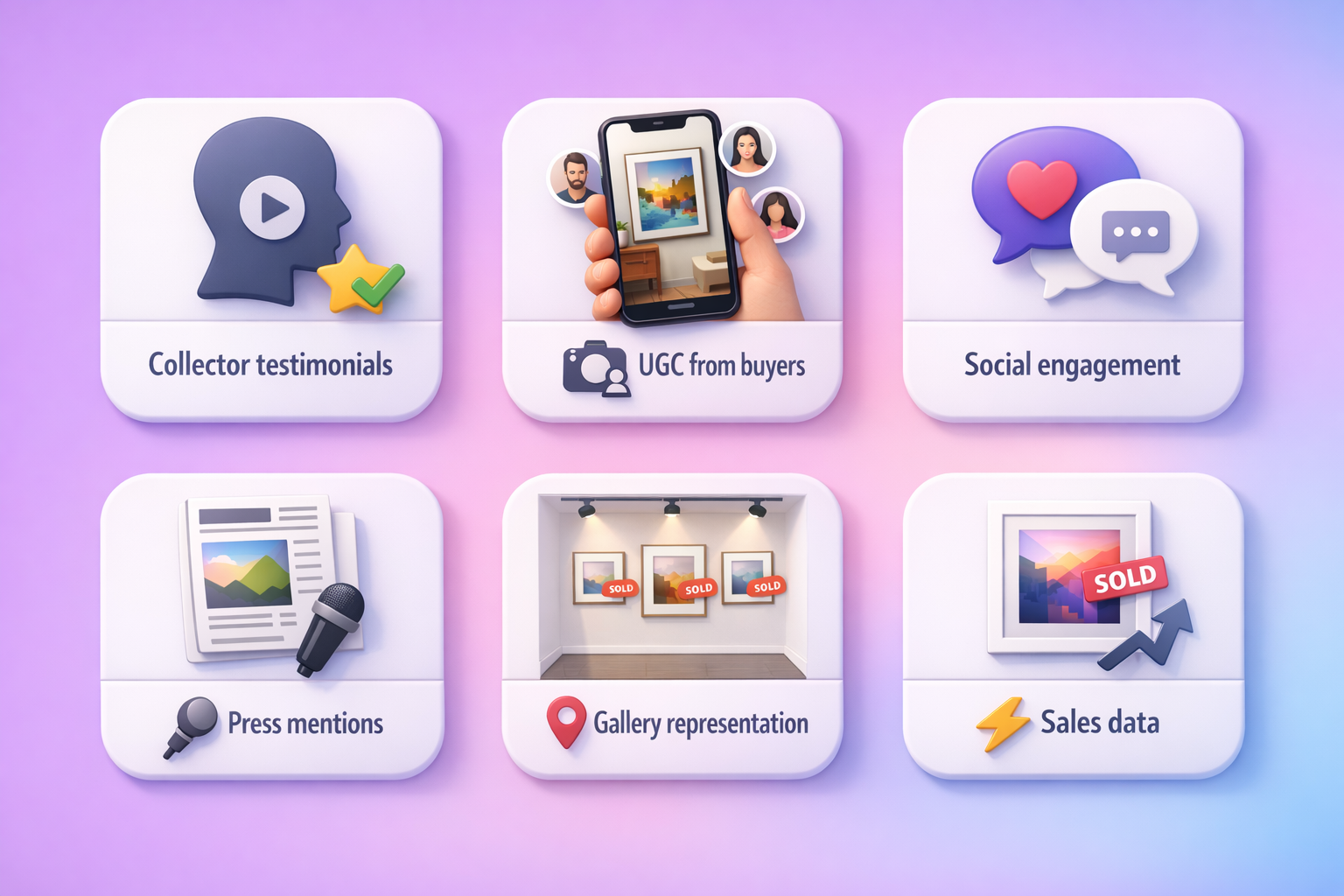
Artists have several forms of social proof at their disposal. Each type helps build credibility and trust in different ways.
Collector testimonials and reviews
These remain fundamental trust signals. In 2026, video testimonials are significantly more effective than text reviews because they are harder to fake and foster a stronger personal connection.
Impact: Directly reduces perceived risk and builds buyer confidence. Text reviews can increase conversions by 34%, but video reviews can boost them by 80%.
Best Use Case: Placing specific, detailed reviews near “buy now” buttons on a website to provide final purchase validation.
User-generated content from buyers
Photos and videos of your art in collectors’ homes provide visual proof that real people own and display your work.
Shoppers trust this content nearly 12 times more than an artist’s self-promotion. It helps bridge the gap between viewing art online and experiencing it in person.
Best Use Case: Encourage buyers to share photos on social media and tag you. Repost this content with permission.
Social media engagement as proof
Your social media metrics reflect your popularity and the level of trust you have with the community. High engagement rates, a healthy following, and active comments all signal that people value your work.
Seeing a high volume of comments, shares, and saves on your process videos or finished work shows you’re relevant and people are actively looking for you.
Best Use Case: Do live streams and Q&A sessions and showcase your active, engaged audience in real time – it’s like a real-time endorsement of your expertise and value.
Media features and press mentions
When reputable publications, blogs, or podcasts feature your work, it brings third-party validation and shows you’re a serious artist.
It elevates your status from “hobbyist” to “professional” in the eyes of your audience – and that can be a real game-changer.
Best Use Case: Create an “As Seen In” or “Press” page on your website, using logos from reputable sources to immediately establish authority and credibility when visitors land on your site.
Gallery representation and exhibitions
This is the traditional “expert” form of social proof, essential for high-end art markets and serious investors.
Signals that industry gatekeepers and curators have professionally vetted the artist’s work. Research shows that these social signals account for up to 75% of price variation in emerging art markets.
Best Use Case: Listing gallery affiliations and exhibition history on an artist’s CV or “About” page. This justifies premium pricing for original works.
Sales data and popularity indicators
Seeing some numbers doesn’t just create credibility; it actually sells your work. Showcasing how many pieces you’ve sold, how many collectors you serve, or how many countries your art reaches – that all helps to demonstrate popularity and demand.
You can even use live sales notifications (“Someone just bought this piece!”) to create a sense of urgency and prove that your art is in demand – it can even make people more likely to make an impulse buy.
Best Use Case: Use marketing tools on your e-commerce site that show real-time demand to increase conversion rates.
Using social proof across the buyer journey
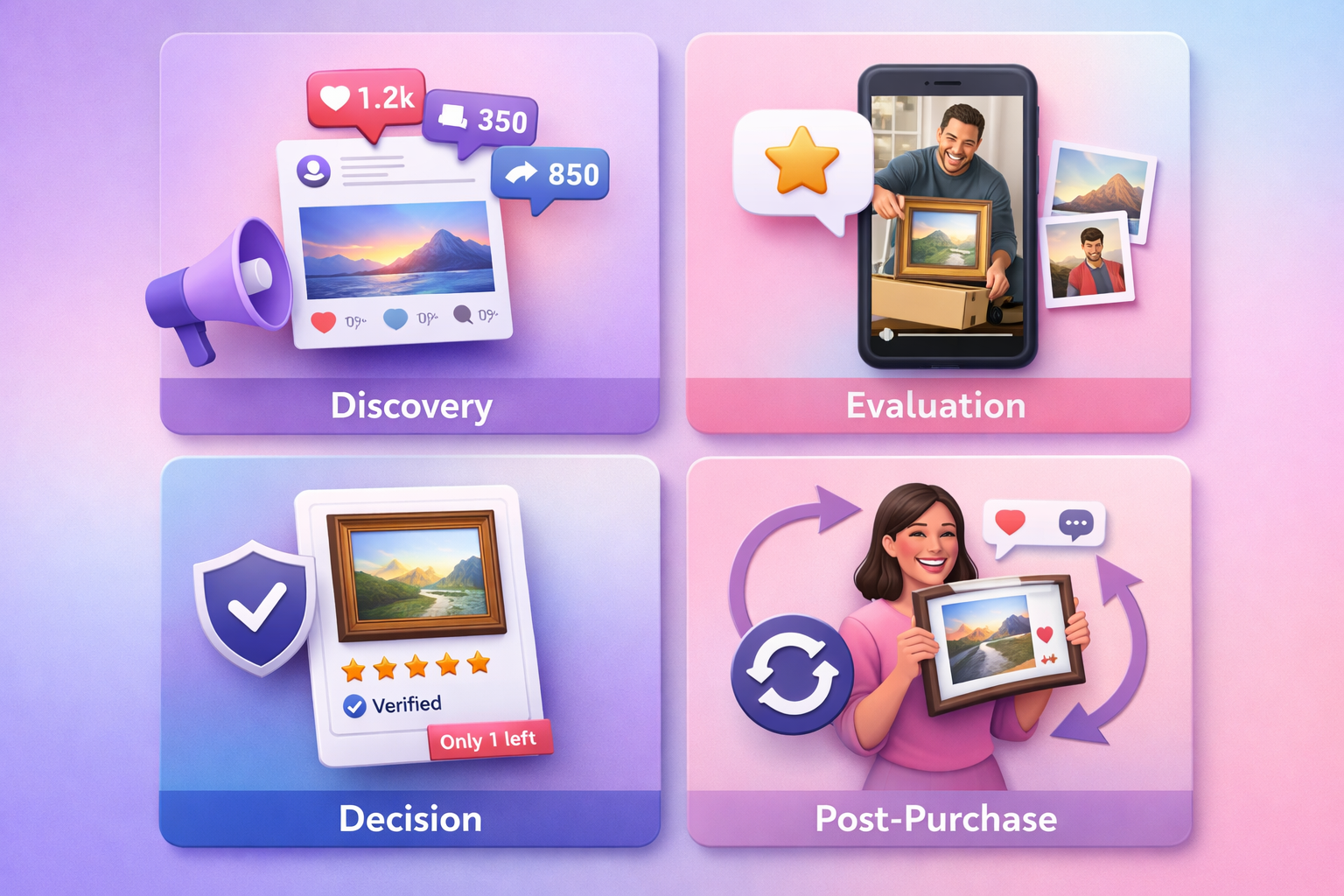
Strategically placing social proof at each stage of the buyer journey helps collectors go from discovery to purchase. Each stage requires different types of validation.
1. Awareness stage (building discoverability)
At this stage, social proof is used to stand out in crowded social feeds and search results, media mentions, and follower counts catch attention.
- Viral Visual Content: High engagement metrics (shares, saves, and comments) on platforms like Instagram and TikTok act as public endorsements that signal relevance.
- Media “Halo Effect”: Having logos from newspapers or art blogs on your landing page gives cold traffic the confidence to come and take a closer look.
2. Consideration stage (reducing friction)
Once a prospect is interested, social proof helps educate them and address questions they haven’t yet asked about quality. Here, testimonials and detailed reviews are what matter most.
- Video Testimonials: Short, unpolished clips of collectors unboxing or discussing the work drive 80% higher conversion than text alone in 2026.
- User-Generated Content (UGC): Sharing photos of art in real homes (in situ) helps buyers visualize the work in their own space, and shoppers trust these images 12x more than professional studio shots.
3. Decision stage (closing the sale)
At the point of purchase, social proof helps overcome last-minute hesitation, while recent purchase notifications and limited availability create urgency.
- Trust Badges & Reviews: Placing 5-star ratings and verified buyer reviews directly near the “Buy Now” button reduces perceived financial risk.
- Best Seller Highlighting: Labeling specific pieces or collections as “Most Popular” prevents choice paralysis by guiding buyers toward a consensus.
4. Post-purchase (fostering loyalty)
Social proof continues to work after the sale by turning buyers into advocates.
- Repurposing UGC: By resharing collector photos, artists encourage a “participation loop” in which existing buyers feel valued and new buyers feel inspired to join the community.
- Referral Incentives: Offering discounts for reviews or friend referrals can mobilize content collectors into a sales force.
How artists can collect social proof consistently
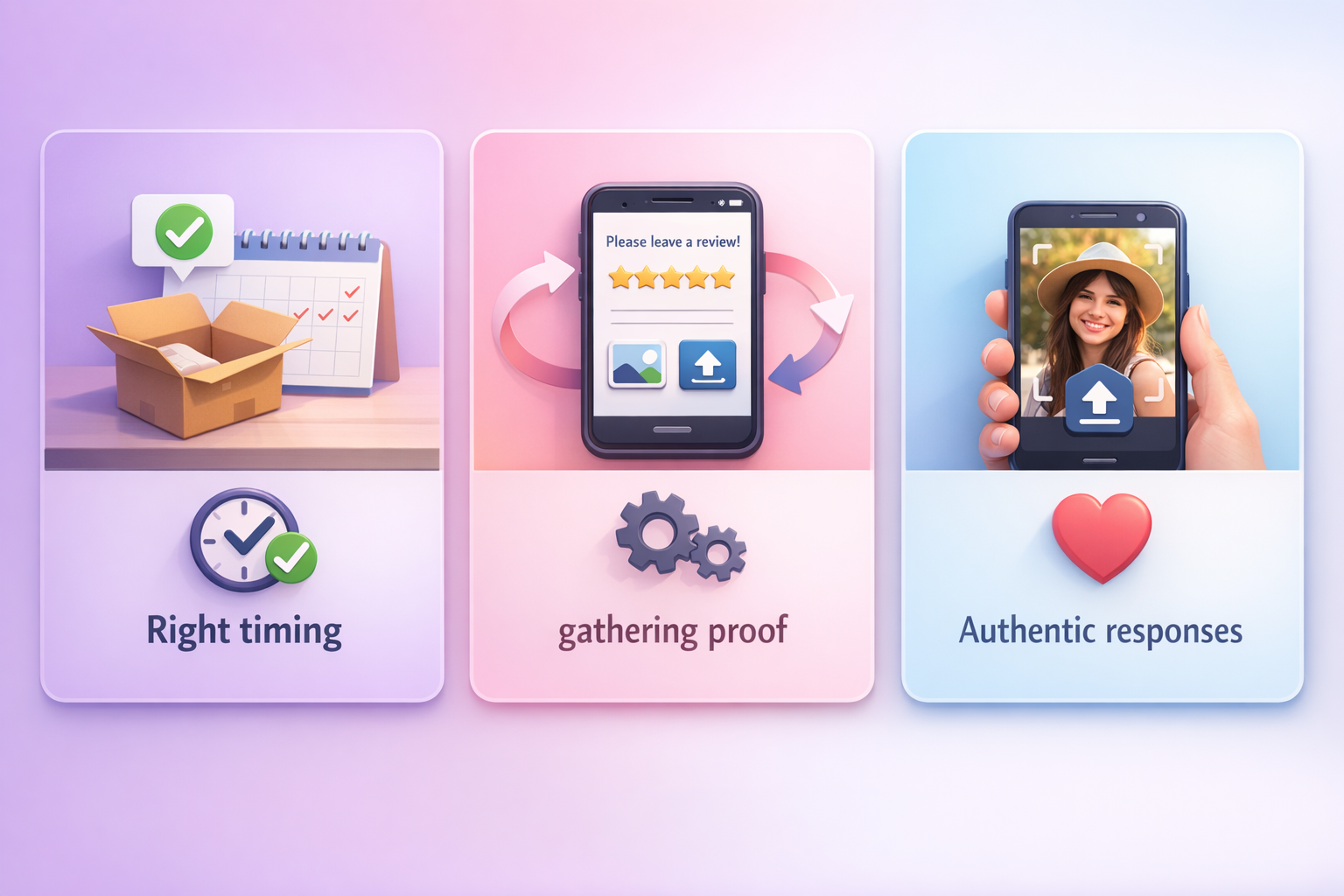
If you want a continuous flow of social proof, you need to install a smart, automated system that seamlessly integrates into the post-purchase process for buyers.
Asking buyers at the right time
Timing is critical. Asking too early feels transactional; asking too late is often ignored.
Send an automated email or text message 3-7 days after delivery, when the art is likely to be on display.
Instead of asking “Did you like it?” ask more specific questions that elicit meaningful quotes, such as “How does the painting change the feel of your room?”
Creating systems for gathering proof
Manual requests don’t scale. Create automated systems that request feedback at optimal times without constant effort.
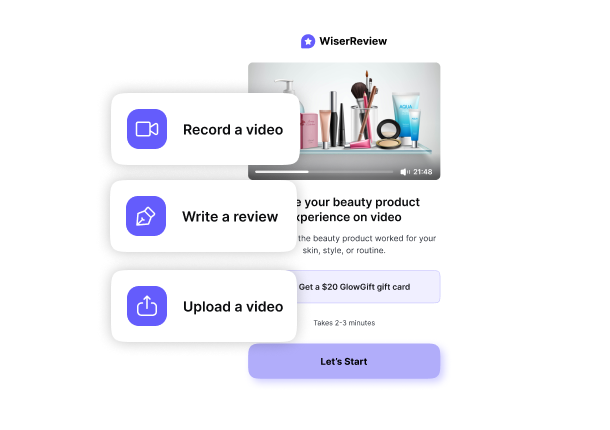
Tools like WiseReview send requests automatically after purchases or deliveries, so collectors respond while the experience is fresh. Set your rules once and let WiseReview handle the rest through email, WhatsApp, and shareable links.
Provide a single, mobile-friendly link that lets buyers leave a star rating and upload a photo or short video without creating an account.

All your reviews in one place
Collect reviews, manage every response, and display them where they matter most.Encouraging authentic responses
Authenticity is the most valuable currency in 2026. Guide collectors toward specific, meaningful feedback without putting words in their mouths.
Explicitly state that imperfect, real-life photos (UGC) are preferred over professional ones. This lowers the barrier to entry for buyers.
Publicly thanking collectors for their reviews (even the neutral ones) shows transparency and encourages others to participate, as they see their effort is valued and visible.
Where artists should display social proof
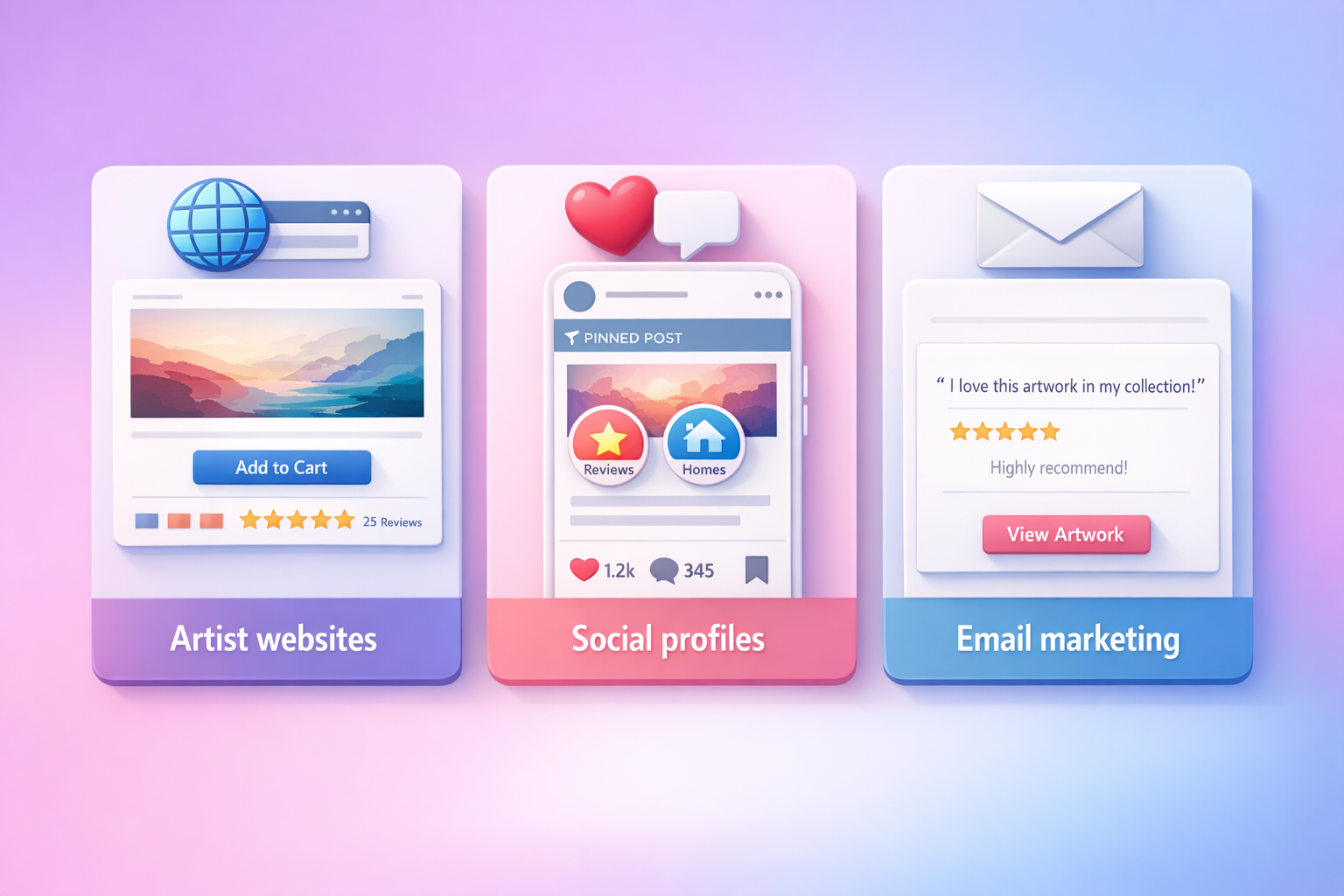
Social proof needs to be spread all over the place, from the very first time someone lands on your site to the final “thanks for your business” email – that way, everyone gets a clear picture of how credible you are.
Artist websites
Your website is your primary sales platform. Social proof should appear throughout, not hidden on a single testimonials page.
- The Homepage “Trust Banner”: Place a row of media logos (“As Seen In”) or gallery badges immediately below the hero image to establish authority within seconds of a visitor’s arrival.
- Product & Collection Pages: Display star ratings and specific text reviews directly next to “Add to Cart” buttons to reduce last-minute purchase anxiety.
- Dedicated “Collectors”: Create a visual gallery of user-generated content (UGC) showing your art in real homes.
Social media profiles
Social media requires different social proof strategies than websites. Social media serves as a “living” portfolio where social proof validates your current relevance.
- Pinned Posts & Highlights: Create dedicated Instagram or TikTok Highlights titled “Testimonials,” “In Homes,” or “Press.” This ensures that new followers see external validation before they even scroll through your feed.
- Collaborative Posts: Use the “Collab” feature with collectors or influencers. When their audience sees your work on a trusted profile, that trust is instantly transferred to you.
Email marketing and launches
Email is a direct line to your most interested fans; here, social proof is used to drive urgency and click-through rates.
- Launch Teasers: During a new collection launch, share a story or quote from a “VIP collector” who got early access. This creates a sense of exclusivity and high demand.
- “Last Chance” Emails: Include a screenshot of a positive review from someone who just bought from the current collection to provide “herd mentality” validation for those still on the fence.
Wrap up
Social proof changes the way collectors look at your artwork business.” By providing evidence of testimonials, reviews, media mentions, and engagement metrics, you’re building trust and driving sales.
Artists who consistently collect and showcase social proof tend to perform better than those with only a strong portfolio.
Tools like WiserReview have made the process of gathering testimonials smoother for you, giving you more time to create while testimonials accumulate in the background.
Keep in mind: social proof isn’t a one-off task. Social proof is an ongoing process. Each satisfied collector becomes a possible social proof stamp for the next buyer.
Frequently asked questions
Start with 2 to 3 real testimonials. Even a few honest reviews build trust fast. More reviews help later, but some proof is always better than none.
Use feedback from people who experienced your work. This can include show visitors, commission clients, workshop attendees, or early buyers.
Ask after delivery or completion. Keep it friendly. Tell them their feedback helps future buyers decide. Most happy customers are glad to help.
Start on your homepage and top product pages. These pages get the most visits. Add other sections later, such as your About page and social profiles.

Krunal