6 min
6 min 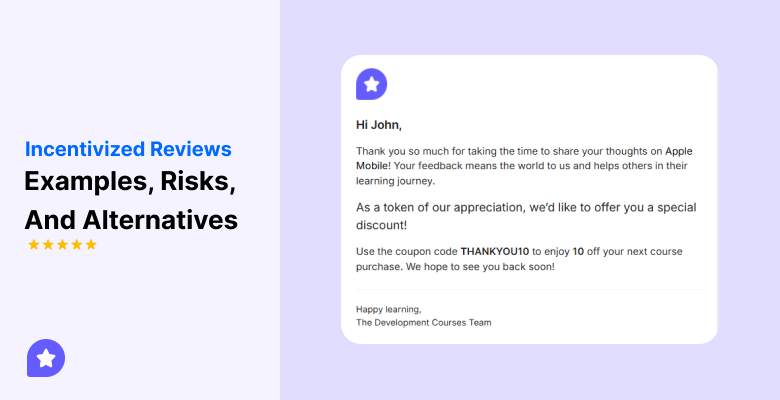
Incentivized reviews seem to be a quick fix to get more reviews. But listen to this: Incentivized reviews can win you or kill you, depending on how you decide to leverage these reviews.
They will pressure customers to say positive things about your brand, obscure your actual concerns, and put your brand at risk.
This guide will provide real-world examples of incentivized reviews, the risks they pose, and safer alternatives for generating honest reviews to build consumer trust and increase sales.
What are incentivized reviews?
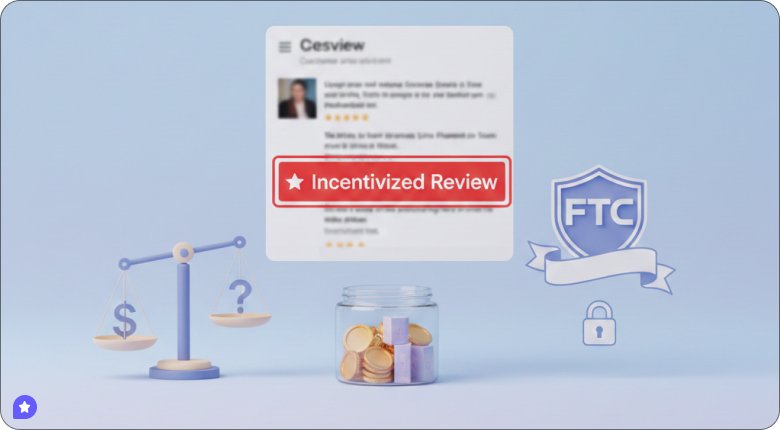
Incentivized reviews are customer reviews left in exchange for a reward or privilege, such as discounts, loyalty points, or free products.
What this means, in other words, is that the reviewer receives something in return for their feedback, which may not fully reflect their actual experience.
These reviews help the business generate more feedback in less time. However, the reward introduces a potential bias that could affect the authenticity of the reviews.
These practices are now heavily regulated by the FTC and major platforms to protect consumers from misleading information.

All your reviews in one place
Collect reviews, manage every response, and display them where they matter most.4 Common types of incentivized reviews
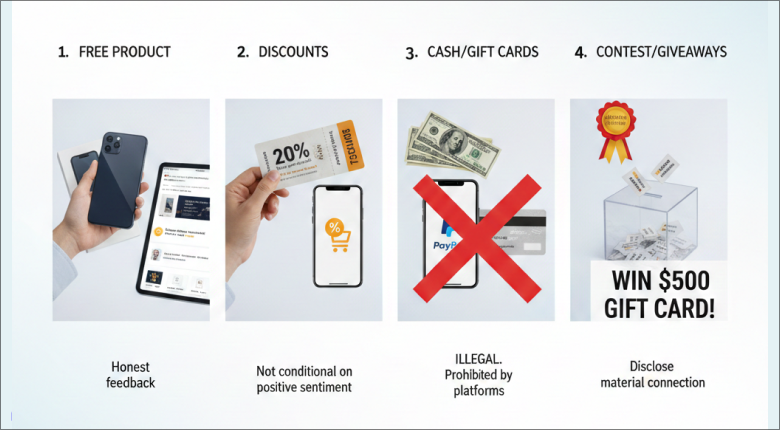
These four incentive models that organizations use to encourage their customers to leave reviews can be summarized as follows. Each of the incentive models has its own implications and consequences regarding regulatory status and risk.
1. Free product in exchange for a review
This is the most direct method of incentivization. Often, such methods are employed within new product releases to create initial “social proof“.
In this scenario, a brand will send a free sample or a full product to a customer/influencer in return for a review.
Direct exchange is forbidden. The seller must utilize the Amazon Vine program, where “Vine Voices” get a free product and no wages, while needing to post honest reviews, whether bad or good.
Amazon Vine is an exclusive program where Amazon picks trusted reviewers who receive the products for free with the goal to provide genuine reviews. Reviews under this program are marked as ‘Vine Customer Review of Free Product.
2. Discounts, coupons, or store credit
This is primarily used to drive customer retention and repeat purchases. Customers get percentage-off coupons or store credit after leaving a review.
The business can provide a percentage-off coupon (e.g., “10% off next order”) or loyalty rewards upon submission of the review.
You can offer discounts for leaving a review, but never condition the reward on positive sentiment. Saying “Leave a 5-star review for 20% off” violates FTC rules. Instead, use “Share your honest feedback and get 20% off.”
3. Cash payments or gift cards
This is the highest-risk category and often crosses into “fake reviews” territory if not handled with extreme transparency.
Offering Direct monetary compensation for reviews. This includes cash, PayPal transfers, or gift cards given specifically for writing reviews.
Paying for a positive review is illegal and considered fraud. In January 2026, the FTC updated its jurisdictional thresholds, raising civil penalties for deceptive practices, including review manipulation.
Cash payments are prohibited on virtually all major review platforms, including Amazon, Google, Yelp, and TripAdvisor.
4. Contest entries and giveaways
A cost-efficient solution for brands to generate a large number of reviews within a short period. Every customer who submits a review is automatically entered into a contest to win prizes.
Each submitted review counts as one entry into the sweepstakes. Example: “Review for a chance to win a $500 gift card.” It feels less transactional than a direct contest entry.
FTC Requirement: The “material connection” (the chance to win) must be disclosed.
Real-world examples of incentivized reviews
These examples show how incentives appear in real review flows that customers see every day. Each case highlights how rewards, discounts, or free products can shape reviews and affect trust.
1. Paid collaboration
Influencers/creators are paid by brands to produce reviews and share them on Instagram, TikTok, or YouTube. The content shared appears to be a review; however, it was influenced by a financial incentive or provided free of charge.
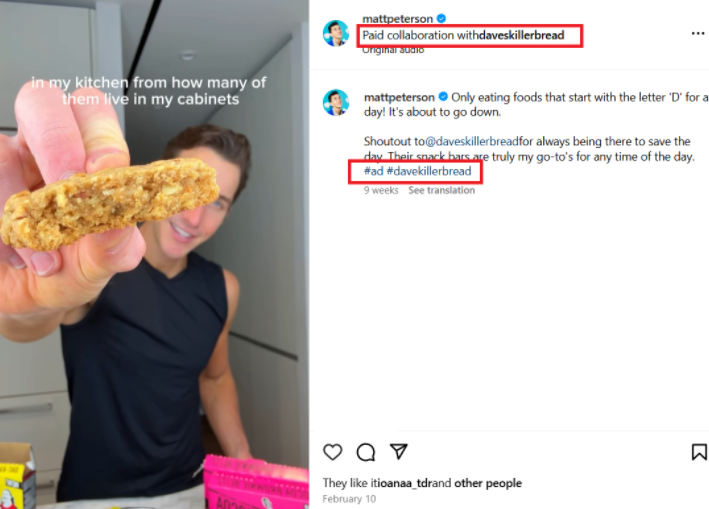
This image shows a paid social media promotion presented as a product review. The creator clearly labels it as a paid collaboration and uses ad hashtags.
Even with disclosure, the payment influences the message. This is a common example of an incentivized review that appears to be a personal recommendation.
2. Discounts or coupons for leaving a review
Customers receive a discount code, store credit, or cash back after submitting a review. Many ecommerce stores add cards to the package.
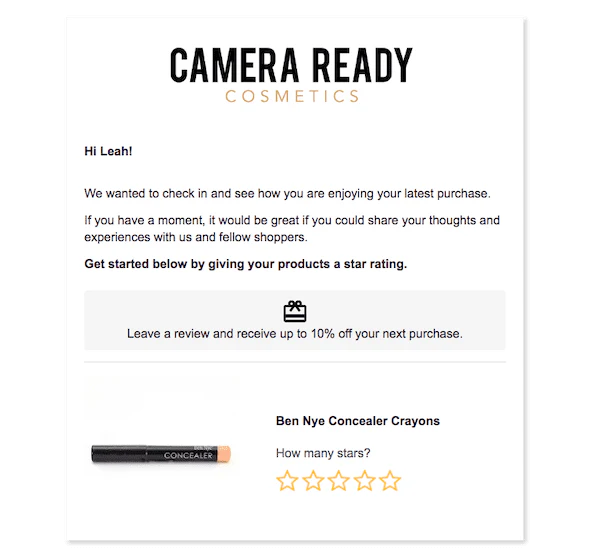
This image shows a post-purchase review request email offering up to 10% off for leaving a product review. The reward is tied to submitting feedback, not to a specific rating.
This is a common incentivized review tactic. The reward can influence what customers write, which is why many platforms restrict or ban it.
3. Free products in exchange for feedback
Brands send free products and ask customers to leave a review. Even if the brand states “honest review,” the free product still influences the review.
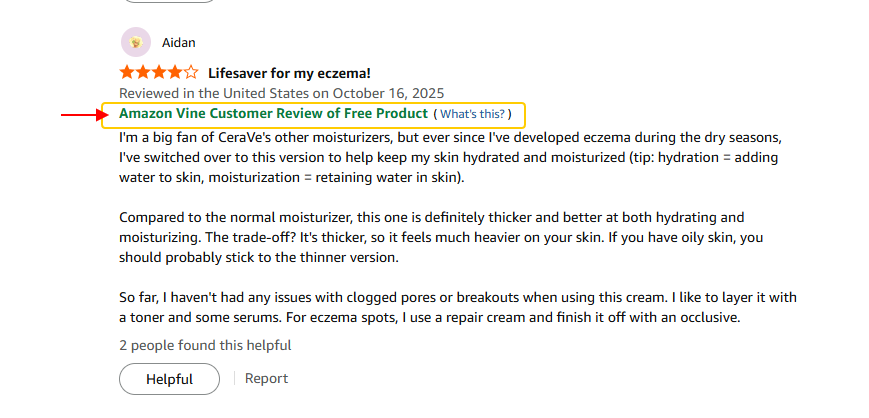
This image shows an Amazon review clearly labeled as “Amazon Vine Customer Review of Free Product”. The badge indicates to buyers that the reviewer received the product for free.
Amazon displays this label to stay transparent. It helps shoppers understand that the review was provided as a free product, even if the opinion remains honest.
The risks of incentivized reviews
Incentivized reviews pose serious business risks that can damage your reputation and drain your budget.
Loss of customer trust
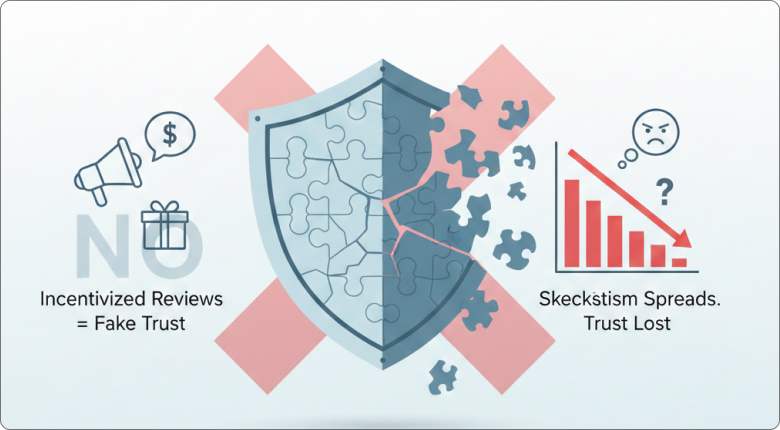
54% of consumers won’t buy from businesses they believe have fake reviews. When customers discover you’re incentivizing reviews, they question all your feedback. This damages your reputation permanently.
Studies indicate that customers have less trust in incentive-driven reviews than in organic ones because they perceive a conflict between social norms (sharing advice) and market norms (being paid).
Your competitors can expose your incentive programs. One social media post showing your “leave a 5-star review for a gift card” email destroys years of trust-building. Customer skepticism spreads fast. Once lost, trust takes years to rebuild.
Platform penalties and review removal
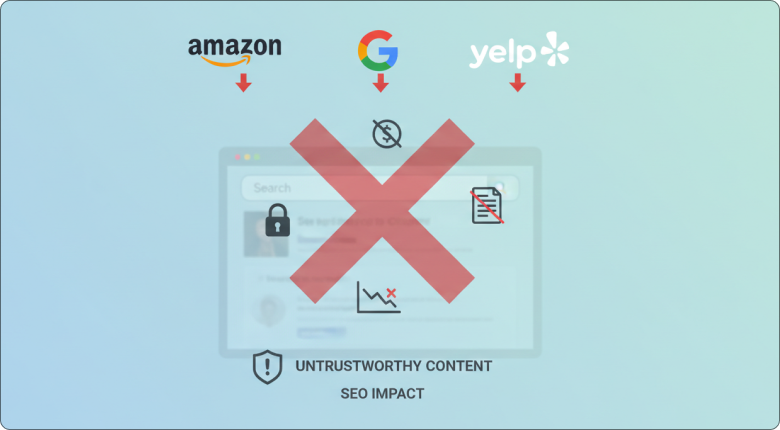
Major platforms use advanced algorithms and manual audits to detect review manipulation.
Amazon: Sellers caught violating the “no incentivized reviews” policy face permanent account suspension and the removal of all affected reviews.
Outside of its official Vine program, with penalties including;
- permanent seller account suspension
- withheld funds
- listing removal
- potential legal action.
Google & Yelp: These sites have zero tolerance for incentives and may even place a “penalty badge” on the front of a business’s profile to warn visitors about the untrusted content.
SEO Impact: Search engines may also lower the rankings of websites that display high levels of incentivized reviews.
Legal and compliance risks
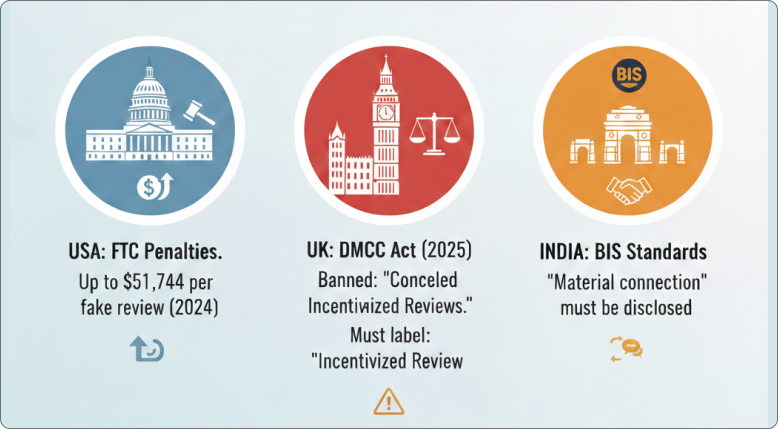
- FTC Penalties (USA): Under the final rule effective in late 2024, the FTC can impose civil penalties of up to $51,744 per violation (per fake/undisclosed review).
- DMCC Act (UK): As of April 2025, “concealed incentivized reviews” are expressly banned. Failure to clearly label them (e.g., “incentivized review”) is considered an automatically unfair commercial practice.
- India (BIS): Indian standards now mandate that any “material connection” between a reviewer and a brand must be disclosed.
Skewed feedback and poor product decisions
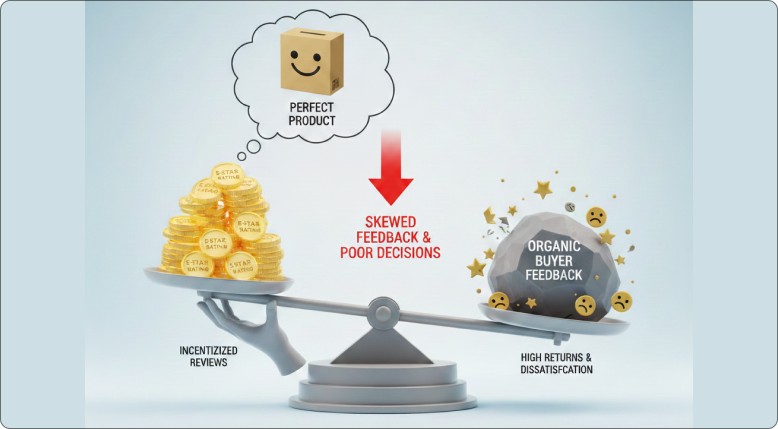
Incentivized reviews consistently skew positive. This creates false confidence in product quality.
- Rating Inflation: Incentivized reviews tend to have higher star ratings but may contain “internal inconsistency”, where the text is critical but the rating is high, making them less useful for real data analysis.
- False Market Validation: A brand might believe a product is perfect based on paid feedback, only to face high return rates and customer dissatisfaction among organic buyers.
- Amplified Negativity: On some programs, such as Amazon Vine, expert reviewers are often more critical because they are hyper-sensitive to quality; a mediocre product can quickly be “killed” by brutally honest, high-authority negative reviews.
When incentivized reviews might be acceptable
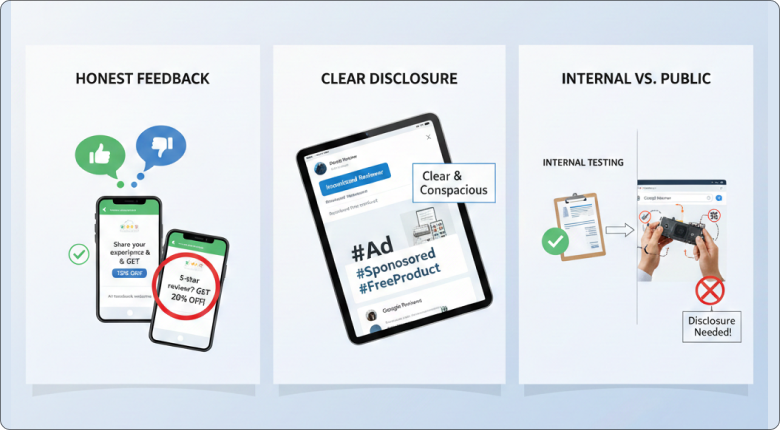
Not all incentivized reviews violate regulations. The key lies in how you structure the program and disclose the relationship.
Incentives for honest feedback, not positive reviews
The most critical rule: you are paying for the customer’s time, not their approval. You can offer rewards for participation without requiring positive sentiment. The incentive must be for providing feedback, not for the content or rating.
Compliant example: “Share your experience and receive 15% off your next order. We value all feedback, positive or negative.”
Violation example: “Leave us a 5-star review and get 20% off!”
The difference matters legally. Make it clear that negative reviews still qualify for rewards.
Proper disclosure and transparency
Every incentivized review must clearly disclose the incentive. The disclosure should appear prominently where the review is posted.
Platforms like Yotpo and PowerReviews automatically add badges like “Incentivized Reviewer” or “Verified Reviewer (Received Free Product)”.
Disclosure must be “clear and conspicuous.” It shouldn’t be buried in a “Read More” link or at the very bottom of a long post. It needs to be near the top where a consumer can’t miss it.
For social media reviews, specific tags like #Ad, #Sponsored, or #FreeProduct are required.
Internal testing vs public reviews
Use incentives for internal feedback collection, not public reviews.
Beta testers receive free products for detailed feedback is a standard and acceptable business practice. This data helps refine the product before launch.
Once those testers post that feedback to public sites like Google or Amazon, it transitions from “Product Testing” to “Incentivized Marketing,” and all disclosure rules apply immediately.
Tools like WiseReview help you manage this process by separating internal testing feedback from public review campaigns.
All your reviews in one place
Collect reviews, manage every response, and display them where they matter most.Safer alternatives to incentivized reviews
You don’t need incentives to build a strong review profile. These proven methods generate authentic reviews without legal risks.
1. Post-purchase review requests
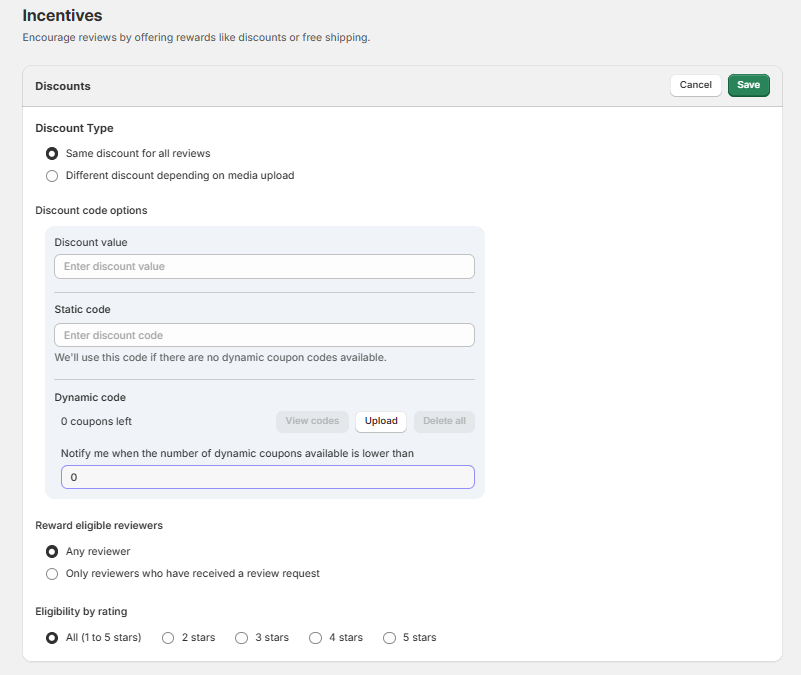
Timing is everything. Send automated review requests after customers receive their products. Timing matters; wait 7-14 days for customers to use the product before requesting feedback.
WiseReview automates this process through email, SMS, or WhatsApp. The platform triggers requests based on purchase dates or delivery confirmations.
Set your rules once, and the system handles the rest without manual follow-ups.
2. Improving the review experience
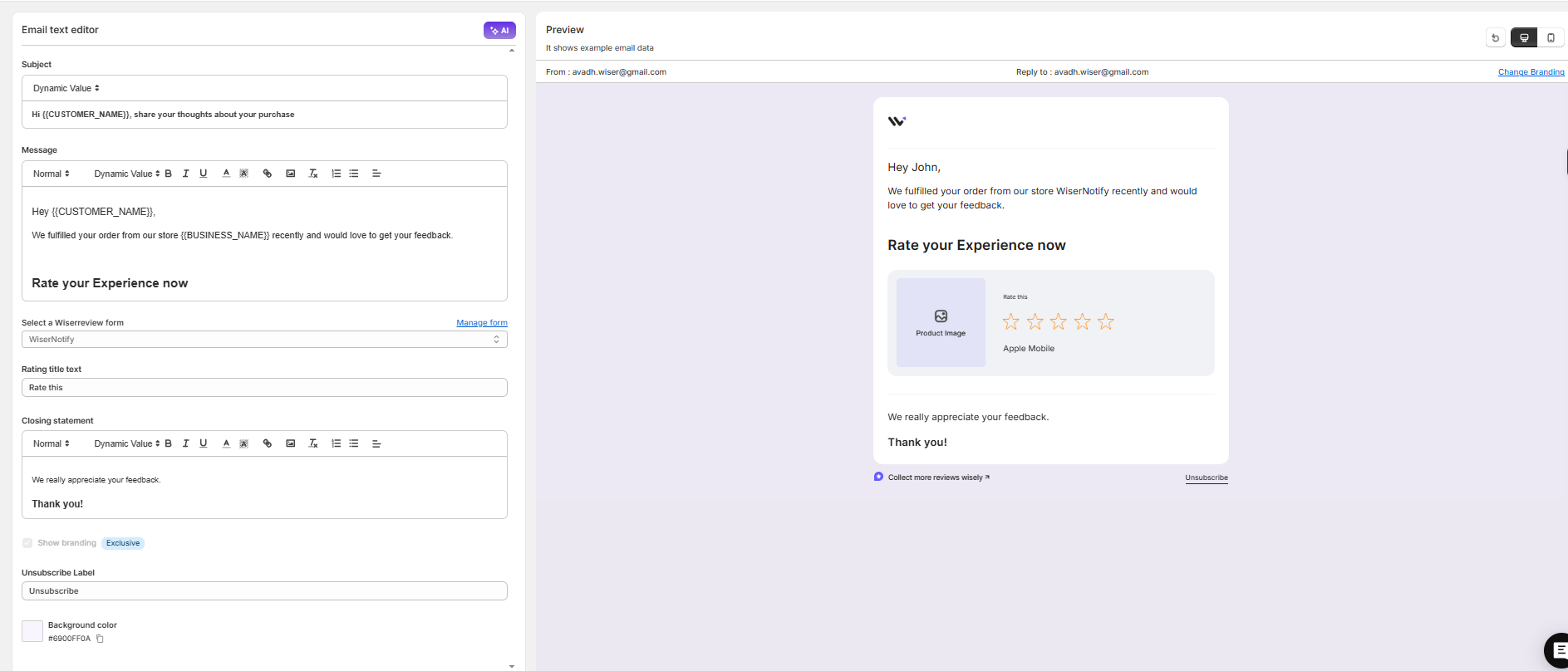
Make leaving reviews effortless. Long forms with multiple required fields kill completion rates. Reduce friction at every step.
- In-Email Forms: Use “interactive emails” where the user can click a star rating directly inside the message without being redirected to a new tab.
- Mobile-First Design: Ensure your review page is optimized for thumb-tapping. If a user has to “pinch and zoom” to leave a comment, they’ll bounce.
WiseReview offers:
- QR codes for instant mobile reviews
- Embeddable forms on thank-you pages
- One-click review submission
- Mobile-optimized interfaces.
The easier you make the process, the higher your response rate.
3. User-generated content without incentives
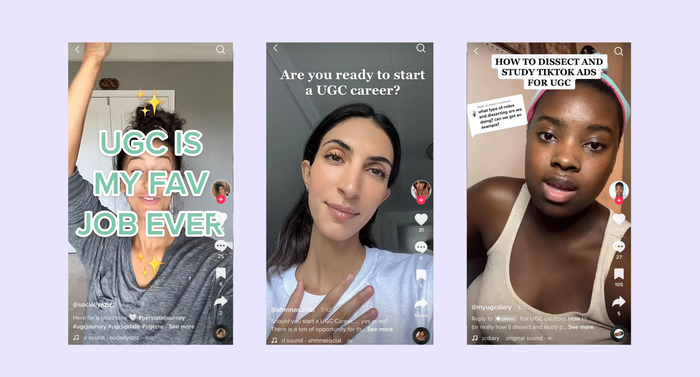
Encourage customers to share photos and videos naturally. Create campaigns that make sharing fun and social, not transactional.
Run social media contests where customers post photos using your products. Feature the best submissions on your website. This generates authentic content without requiring review platform submissions.
Display customer content strategically using WiseReview’s widgets, floating popups, carousels, and trust badges. These showcases inspire other customers to share their experiences without incentives.
4. Proactive customer support follow-ups
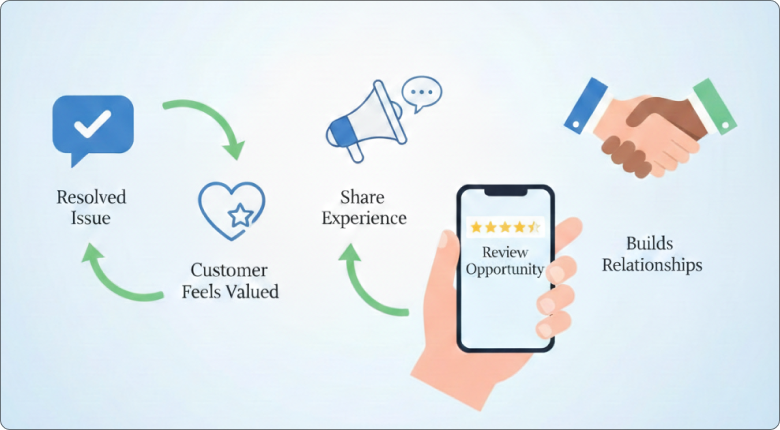
Turn support interactions into review opportunities. After resolving customer issues, your support team can ask if they’d share their experience.
This works because:
- Customers feel heard and valued
- Positive resolutions create natural enthusiasm
- The request feels organic, not transactional
- You build relationships, not just collect reviews.
All your reviews in one place
Collect reviews, manage every response, and display them where they matter most.Conclusion
Incentivized reviews may give you quick feedback, but they also carry serious dangers. When you go over the edge, you will lose trust, get punished on the platform, and make bad product choices.
The best course is easy. Just ask for honest feedback, be upfront about incentives, and look for systems that gather actual customer feedback rather than aiming for stars.
WiserReview will assist you in doing it the proper way. It will allow you to gather feedback based on actual purchases, handle disclosures, and show trusted feedback on your site without any legal or platform hazards.
Frequently asked questions
No, but rules are strict. You must not ask for positive reviews and you must clearly disclose the incentive. Platforms like Google and Yelp ban them completely.
You risk FTC fines up to $51,744 per violation, account suspension, and review removal. Platforms may also warn customers that your reviews are misleading.
Yes, but only through Amazon Vine. Amazon controls the program and labels every Vine review. All other incentivized reviews are banned.
Send post-purchase review requests, keep the process simple, and ask after good support experiences. Honest timing drives real reviews.
Yes. Any free product, discount, or reward must be clearly disclosed so customers understand the connection.

Krunal