10 min
Product reviews are the least used way to make money in ecommerce. Reviews do the selling for you when a customer gets to your product page. Ecommerce reviews help shoppers make a faster purchase decision when they land on your online store.
Ecommerce Product reviews are a powerful tool that can directly influence your ecommerce sales. Today, customers read reviews and spend time reading reviews before trusting any brand.
A good review can make people trust you more, make you look more credible, and get people who are on the barrier to click “buy.” But the key to getting these benefits is to handle reviews well.
This guide has everything you need to know about review-driven purchases, how to collect and display reviews in a useful way, which tools to use, and how to use even bad reviews to your advantage.
Why product reviews are a revenue driver (Not just social proof)
Online reviews not only make your store look trustworthy but also boost conversion rates, raise the average order value, and improve organic search visibility.
The psychology behind review-driven purchases

Online Shoppers don’t trust brands. They trust other shoppers. This is social proof, and this is the foundation of why reviews work.
It clears up any doubts when a potential consumer reads an online review from other customers who faced the same problem, used the same product variant, or fit the same profile.
Uncertainty is the #1 reason for cart abandonment. Reviews resolve it. Reviews provide strong social proof that reassures hesitant buyers.
Three psychological principles drive review-powered conversions:
Social proof: If others bought it and loved it, it’s a safer decision.
Trendy products: Trending products online with high review counts create a psychological pull to join the majority.
Recency bias: A review from last week carries more weight than one from two years ago.
Reviews strengthen your online reputation, improve brand reputation, and help build long-term customer loyalty.
How reviews impact conversion rates, AOV, and SEO
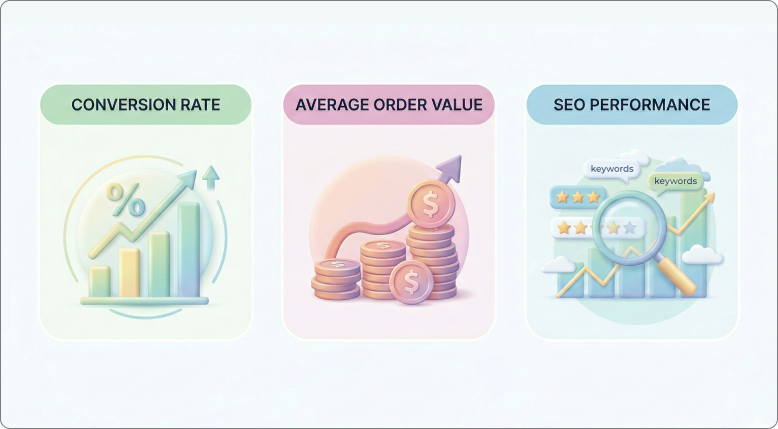
The data is clear. Products with just five reviews are 270% more likely to be purchased than those with none.
Conversion rate: Products with 11–30 reviews convert approximately 68% higher than those with 0 reviews. For high-ticket items, reviews can boost conversion rates by up to 380%.
Average Order Value (AOV): Customers are willing to spend 31% more on businesses with positive reviews. Verified reviews alone increase conversion by 15%.
SEO Performance: reviews generate fresh, keyword-rich user-generated content that search engines index and show on the search engine results page. Customer reviews support your SEO strategy because search engines index them as user-generated content.
- Long-tail Keywords: Customers often use the same natural language in reviews that others use in search queries.
- Rich Snippets: Structured data allows star ratings to appear in search results, increasing click-through rates by up to 35%.
The different types of product reviews (And which ones convert best)
Not all positive reviews are equally powerful. Here’s how the main types rank by conversion impact:
1. User-generated content (UGC)

This is anything a real customer creates, such as social media posts, unboxing videos, and lifestyle shots.
It works so well because it looks like a genuine recommendation from real customers and is often shared by satisfied customers after using the product, so brands can reuse that content across all their marketing channels.
2. Video reviews

Video reviews are the most convincing type of review, giving people a view of how a product works in real life.
They’re especially helpful for complex or expensive items as they show people exactly what they’re getting. This makes them a lot harder to collect, but they can be really persuasive.
3. Verified purchase reviews
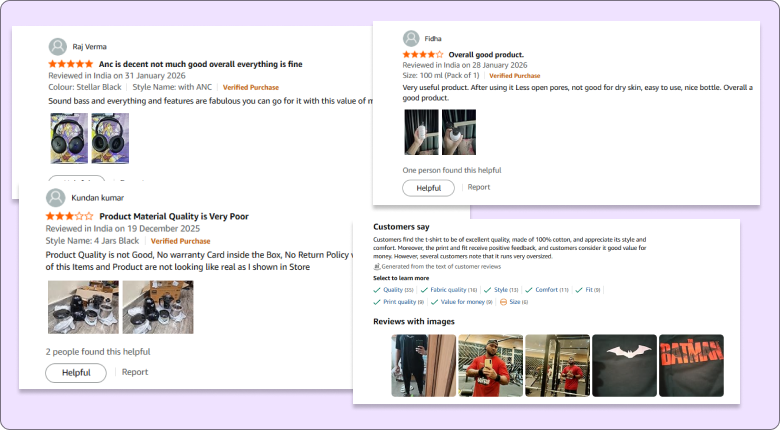
Higher credibility than unverified. These carry a “Verified Buyer” badge, proving the reviewer actually bought the item from your store.
They are the gold standard for trust, as they protect your brand against “review bombing” and fake AI-generated feedback. These reviews confirm the product’s quality through verified purchases.
4. Photo Reviews
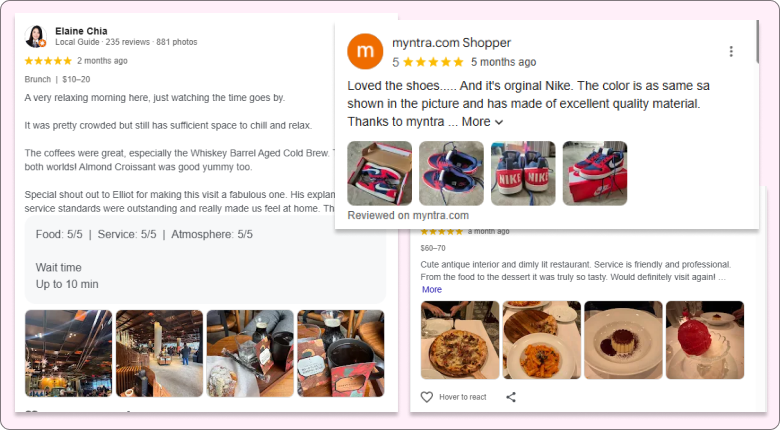
These let customers see what a product looks like in everyday life rather than in a photo studio.
If you’re selling clothes or home decor, these are pretty vital because people trust a photo taken by a fellow shopper more than a polished ad image.
5. Incentivized reviews
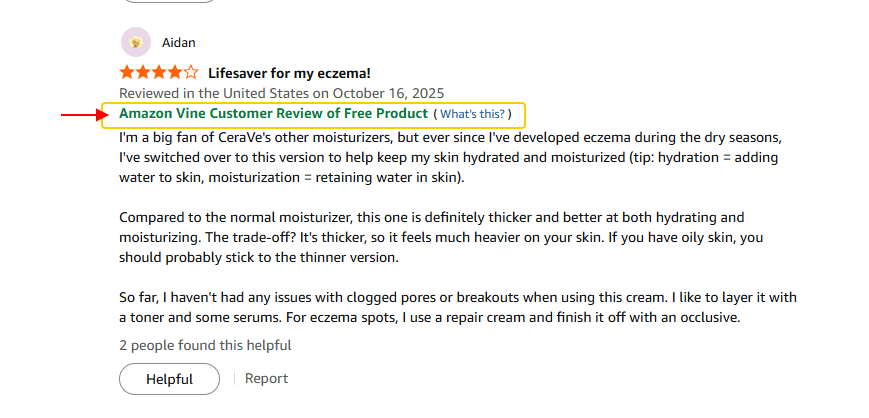
These reviews are collected in exchange for a discount or a free gift. They help businesses get more feedback in less time. Brands offer customers incentives to leave reviews in return.
While great for quickly gathering a lot of feedback on new products, they need to be clearly labelled so people know what’s going on and to comply with consumer protection regulations.
6. Star ratings alone
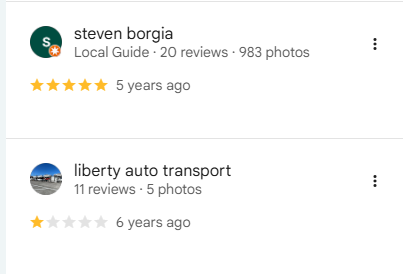
This is a pretty basic feedback option in which customers just give a score from 1 to 5 without writing much.
They don’t provide much detail, but having these does increase your overall review count, making your product more visible in search filters and category rankings.

All your reviews in one place
Collect reviews, manage every response, and display them where they matter most.
Start Free →How top ecommerce brands use reviews (Real examples)
The best ecommerce brands treat reviews as part of their entire marketing funnel, not just the product page. Leading brands across major ecommerce platforms and review sites treat reviews as part of their full funnel.
1. Amazon: Customer reviews with star ratings
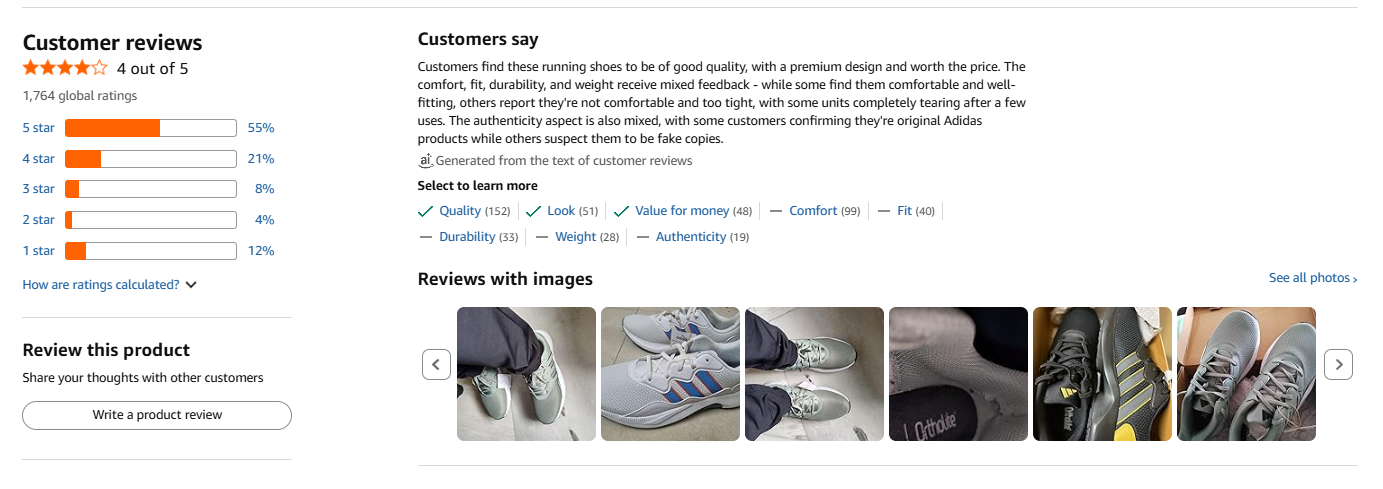
Amazon has an advanced system that uses AI to break down thousands of written reviews and condense them into a short paragraph called “Customers Say”.
Shoppers can quickly read written reviews, see product ratings (from 1 to 5 stars), and browse through the photos people have shared with their reviews.
What You Can Learn: Amazon’s review system builds trust by making it easy for customers to get a quick idea of how good a product is. You can replicate this by making sure your product pages display clear ratings and provide feedback.
2. Sephora: The “review attributes” filter
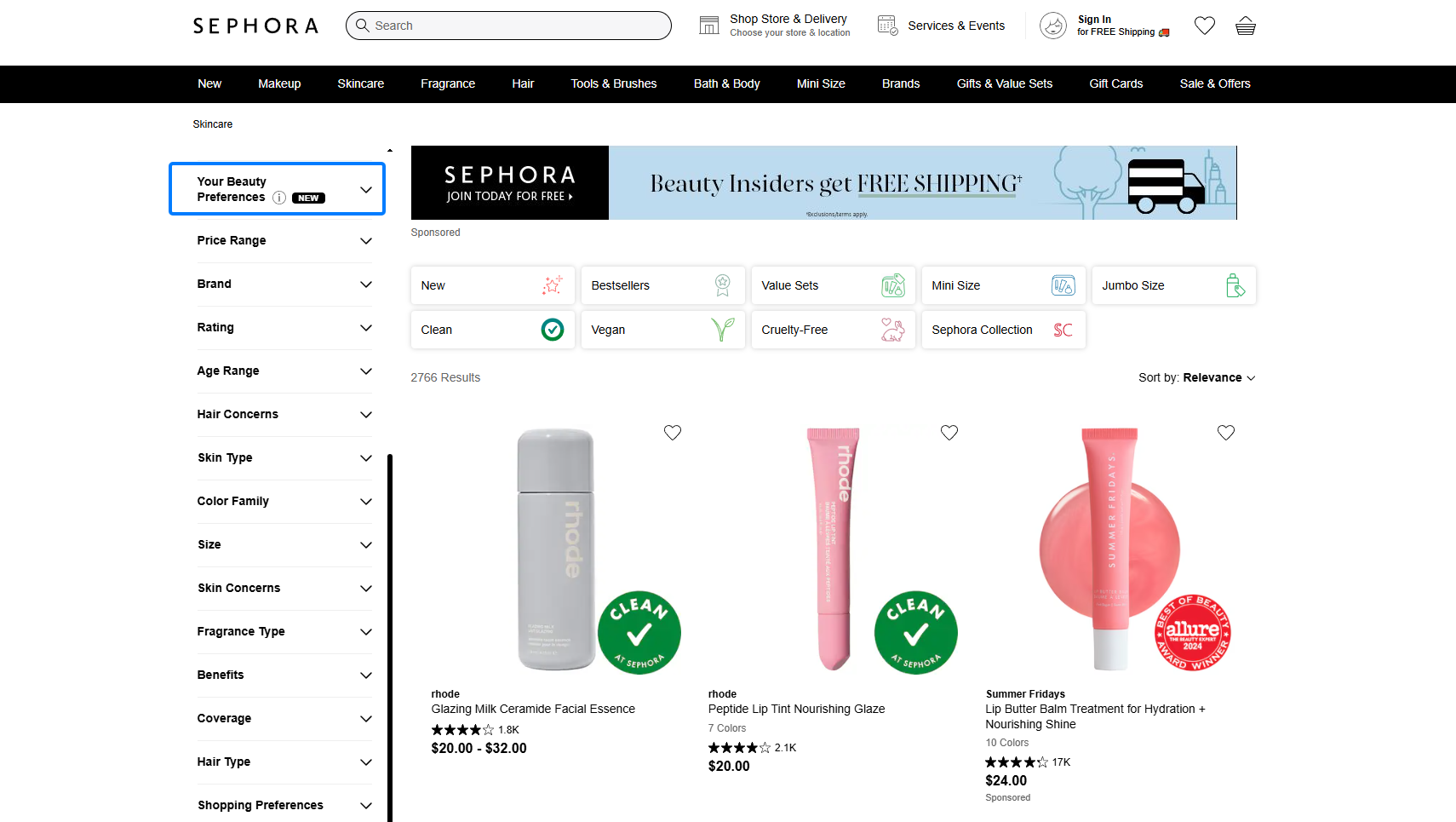
Sephora’s most powerful innovation is its ability to let shoppers filter reviews by physical attributes. When a user leaves a review, they are prompted to provide their:
- Skin Type: (e.g., Dry, Oily, Combination)
- Skin Tone & Undertone: (e.g., Fair, Warm, Cool)
- Age Range: (e.g., 25-34)
- Eye Color & Hair Color
The Result: A shopper with dry skin can filter out all reviews from people with oily skin, finding feedback that is 100% relevant to their specific needs. Sephora’s Community thrives on this “people like me” logic.
3. Glossier: The “co-creation” feedback loop
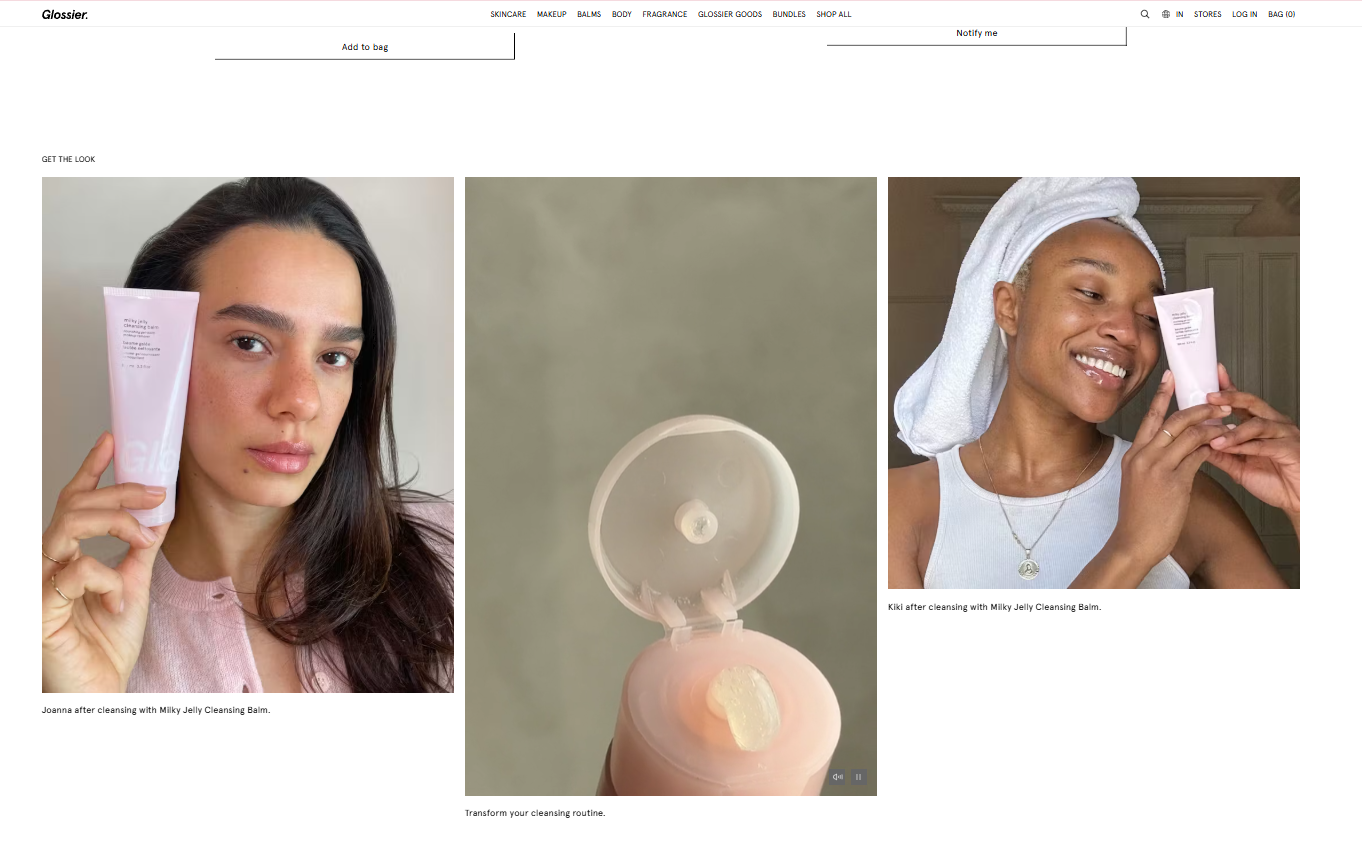
Glossier built its brand almost entirely on community reviews and user-generated content (UGC). The beauty brand embeds customer photos on its online product pages and uses them across paid social ads; the same content that builds trust on-site drives traffic from off-site.
If a reviewer describes a moisturizer as “a big drink of water for my face,” Glossier might use that exact phrase in an Instagram ad.
By using customer feedback, they bypass traditional corporate marketing, making their brand feel more authentic and peer-to-peer, which leads to customer satisfaction.
Collecting reviews: Strategies that actually work
Most ecommerce business wait for customers to leave reviews on their own, which leads to fewer reviews and poor timing. Stores that actively request reviews at the right time and through the right channel collect far more feedback and grow faster.
Choosing the right timing and channel
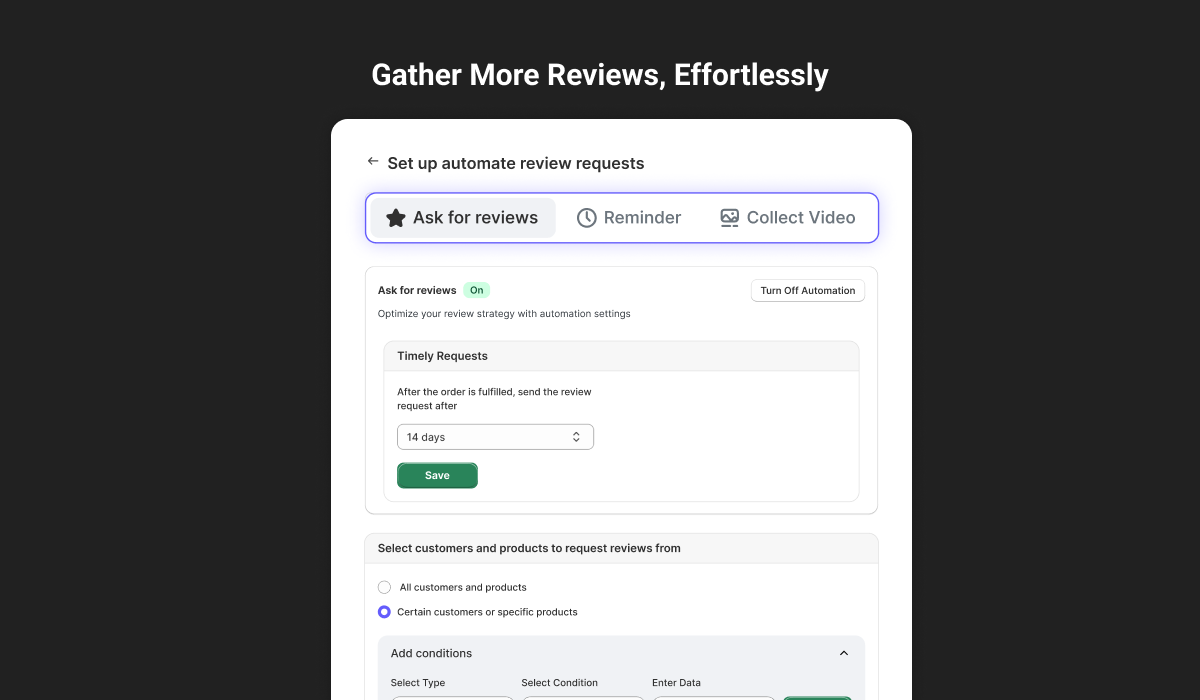
Timing is the single biggest factor in review response rates. The ideal window is 24–72 hours after confirmed delivery, when the product is fresh in the customer’s hands, and the customer experience is still vivid.
Don’t send the request immediately upon delivery. For skincare or electronics, wait 14–21 days to see results. For “instant gratification” items like clothing, 3–5 days is the peak. Proper timing motivates customers to respond quickly.
Channel performance by type:
Email: Still the highest-volume review channel. It works well across all customer segments and supports detailed messaging.
SMS: Delivers higher open rates than email. Best for mobile-first audiences. Short messages with a single review link perform best.
WhatsApp: Growing quickly in regions where WhatsApp is a primary communication app. It feels more personal and drives faster responses.
QR codes: Highly effective for packaging inserts. They connect offline product experiences with online reviews during unboxing moments.
With WiserReview, you can optimize your review process and send review requests through email, SMS, WhatsApp, and QR codes all from one dashboard. You can set the timing based on the delivery status and get more reviews without doing any work yourself.
Writing review requests people respond to
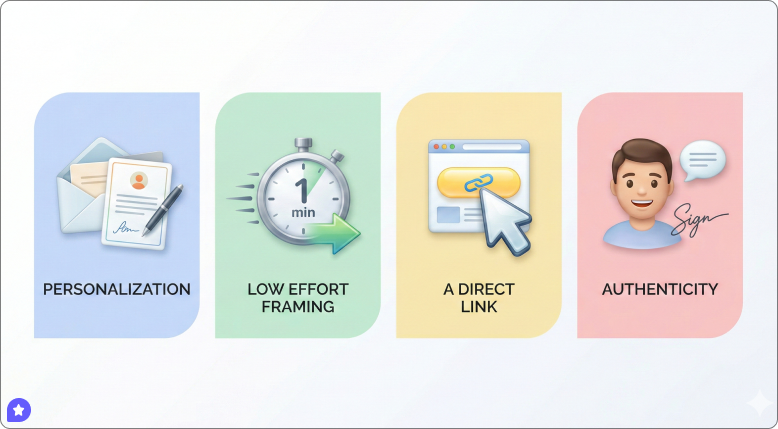
The message itself drives response rate as much as the timing. Stop asking for “feedback” and start asking for a favor.
Effective review request messages share a few traits:
- Personalization: Include the customer’s name and the specific product they bought.
- Low effort framing: Say “It only takes 60 seconds” rather than “Please leave a detailed review.”
- A direct link: Never ask a customer to navigate to a review form on their own. One click should get them there.
- Authenticity: Write like a human, not a marketing department.
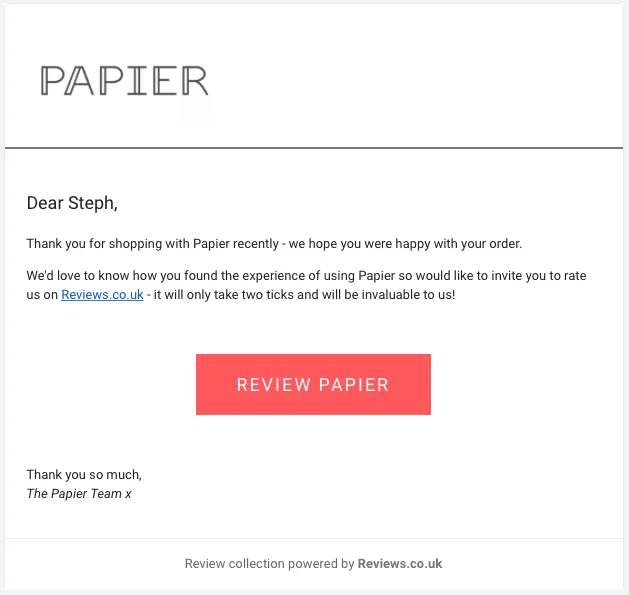
Example: Instead of “Please review us,” try: “How is the [Product Name] performing for you? Other shoppers in our online marketplace would love your expert opinion.”
Using review forms that reduce friction
The review form itself is where most brands lose responses. A long, complicated form kills completion rates. A simple, focused form gets quality responses.
Best practices for high-converting review forms:
- Use interactive email templates that let users click a 1–5-star rating directly in the email.
- Ensure your form is optimized for thumbs.
- Don’t ask 10 questions at once. Ask for the star rating first, then the text, then the photos.
- Make submission mobile-friendly.
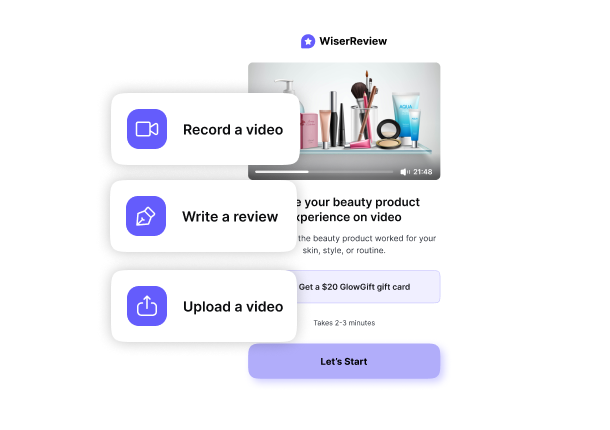
WiserReview makes form creation straightforward. You can build fully customized review forms with custom fields, logic, and calls-to-action, all without code.
All your reviews in one place
Collect reviews, manage every response, and display them where they matter most.
Start Free →How to create a review form in WiserReview
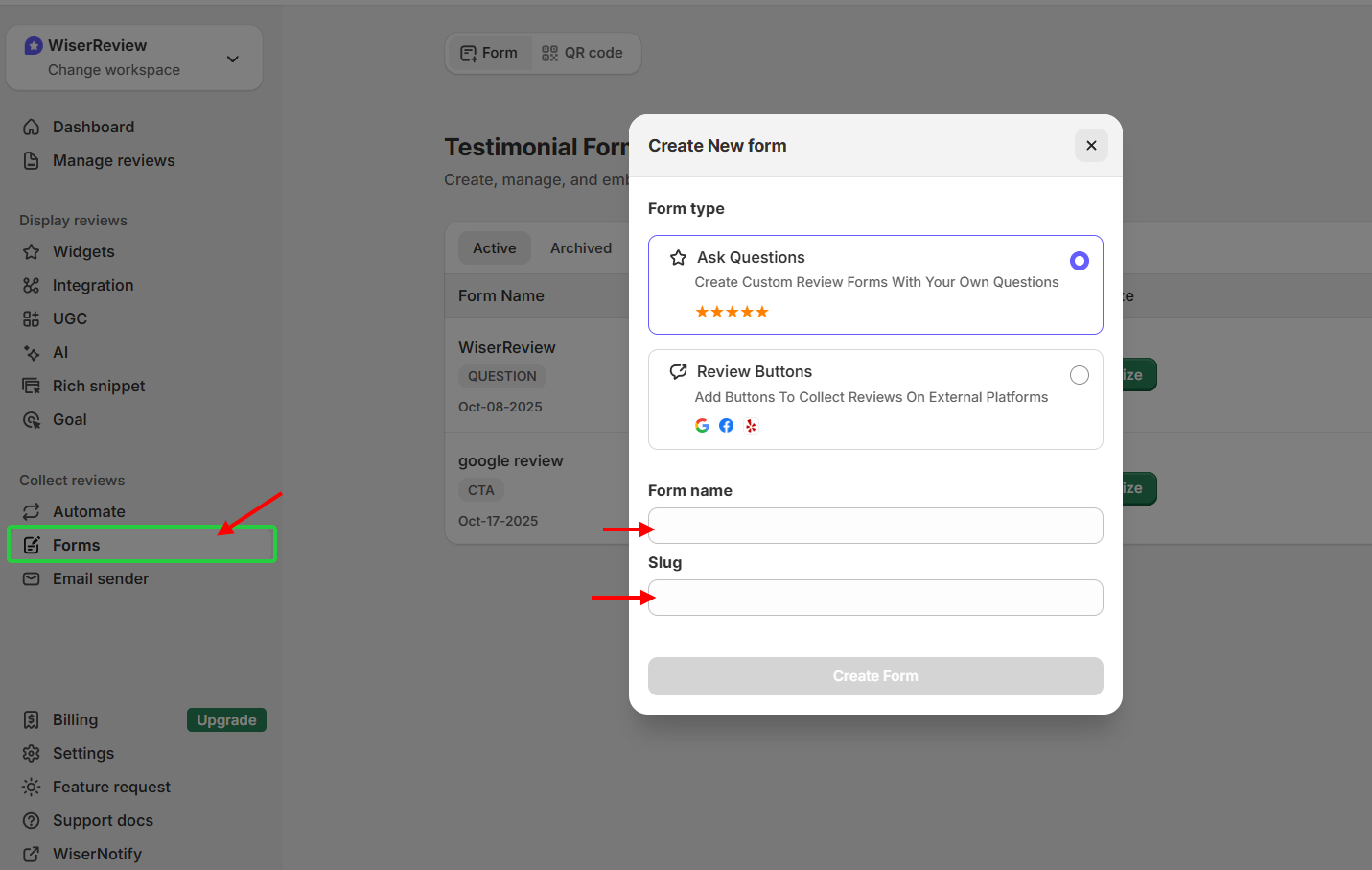
- Go to WiserReview Dashboard → “Forms”.
- Click Create New Form.
- Choose the form type, add your form name, and slug.
- Customize branding, questions, and thank-you message.
- Save the form and copy the share link or embed it on your website.
- Use the form link in email, SMS, WhatsApp, or QR code campaigns to start collecting reviews.
Well-designed review forms and customer feedback surveys make it easy for customers to share their experiences without much effort. Simplifying the form makes adding reviews fast and effortless.
Incentivized reviews: What’s effective and what’s allowed
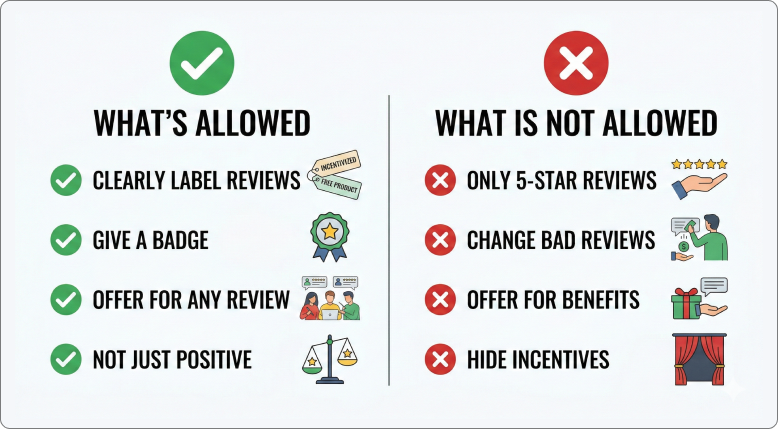
Incentivized reviews are reviews collected by offering customers a small reward, such as a discount, loyalty points, or a small gift, in exchange for feedback.
When done properly, they can really boost your review volume and help you collect valuable feedback much faster. Incentives help activate both new customers and repeat loyal customers.
However, the incentive must be strong enough to encourage customers to provide honest feedback, not just a bunch of glowing reviews.
What’s allowed
According to FTC Guidelines, any review that was incentivized must be clearly labeled (Add a “Received a free product/discount” badge to these posts).
Offering a discount or reward in exchange for “any” review (positive or negative), not just positive reviews.
What is not allowed
You should never offer rewards only for 5-star reviews, ask customers to change bad reviews in exchange for benefits, or hide the fact that incentives are involved.
Scaling review collection with AI and automation
Manual review collection doesn’t scale. Once your order volume grows, automation is the only way to keep review velocity consistent.
Automated review request workflows
Automation is your best friend for ensuring you never miss an opportunity to collect social proof in the review process.
With automated review workflows, you can send review requests at the right time based on order activity and not have to lift a finger to collect more reviews.
Automation ensures every buyer receives a request after they’ve received their order, which in turn improves response rates and keeps things consistent.
How to automate review requests in WiserReview
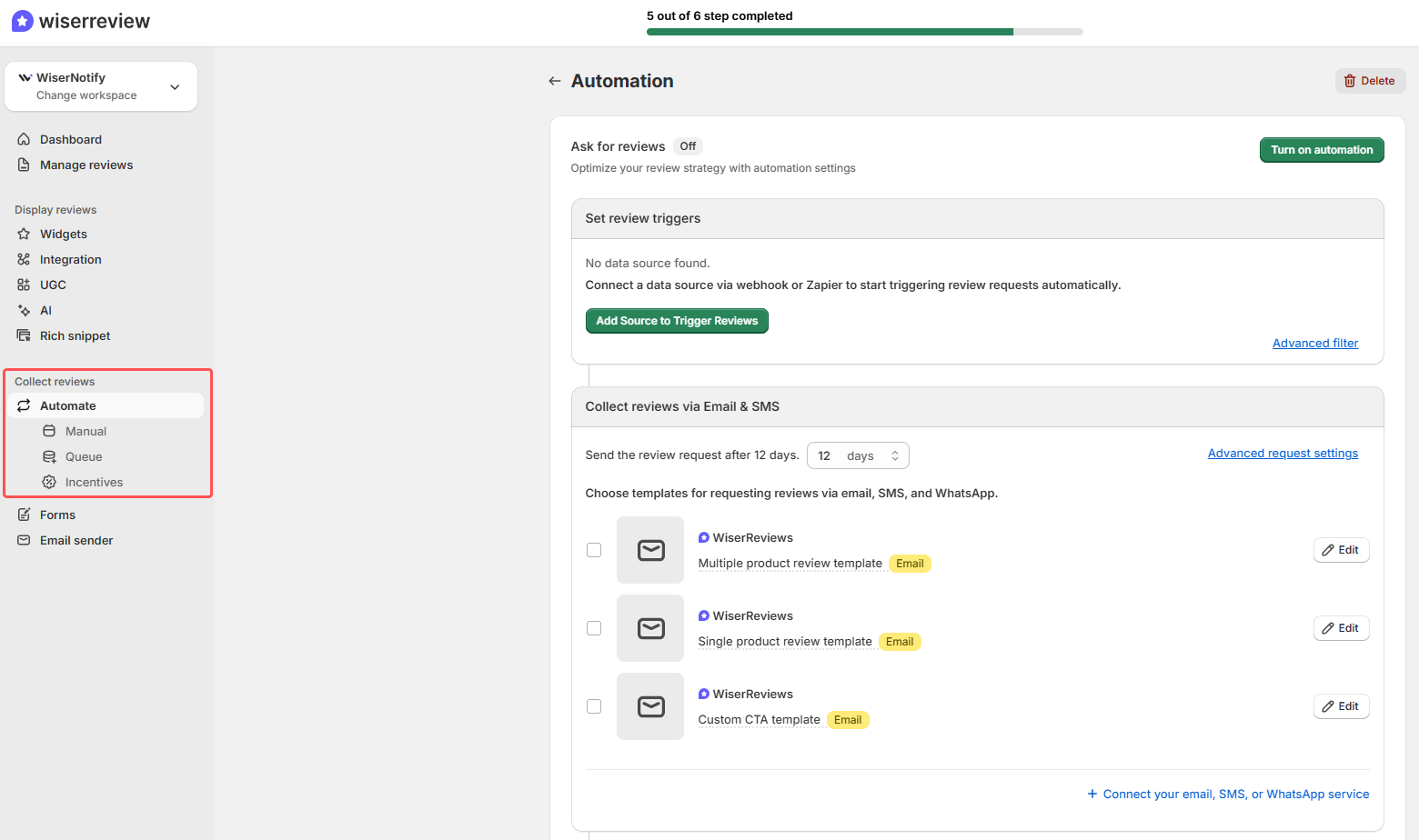
- Go to Dashboard → Automate → Review Request Campaigns.
- Click Create Automation Campaign.
- Select the trigger (e.g., order status, such as Shipped or Completed).
- Set the delay time (for example, 7 days after delivery).
- Choose the channel (Email, SMS, or WhatsApp).
- Customize the message and review form link.
- Save and activate the campaign to start sending requests automatically.
3 AI innovations shaping ecommerce reviews in 2026
AI has fundamentally changed what’s possible in review management. Here are the three most impactful AI features;
1. AI review summary
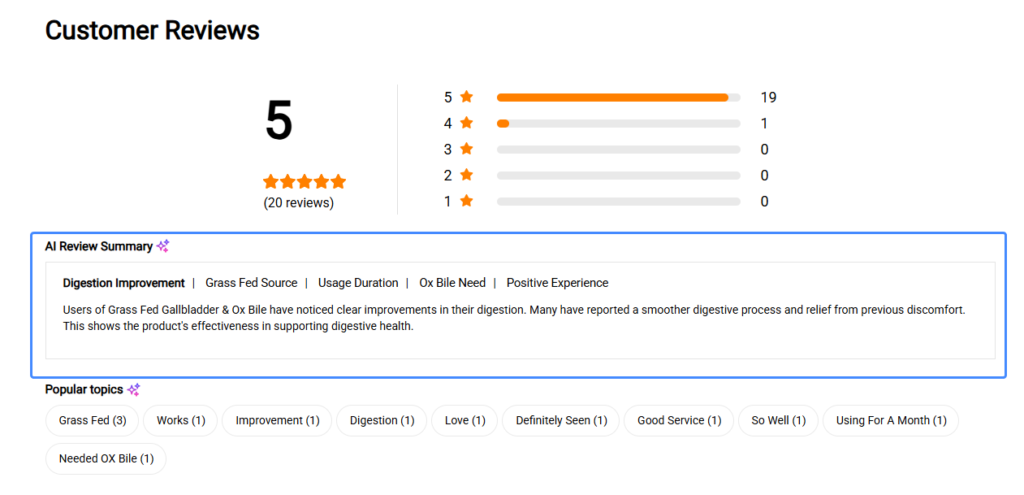
Most shoppers feel a little “review fatigue” when they’re faced with thousands of customer reviews, all saying the same thing over and over.
AI review summaries go through hundreds of high-quality reviews and generate a concise paragraph that summarizes the common themes, what customers love and would like to see improved, and who the product is best suited for.
WiserReview has a feature that auto-generates summaries of all your reviews, making it easy for buyers to sort the good from the bad and get a quick rundown of the pros and cons.
2. AI smart topics
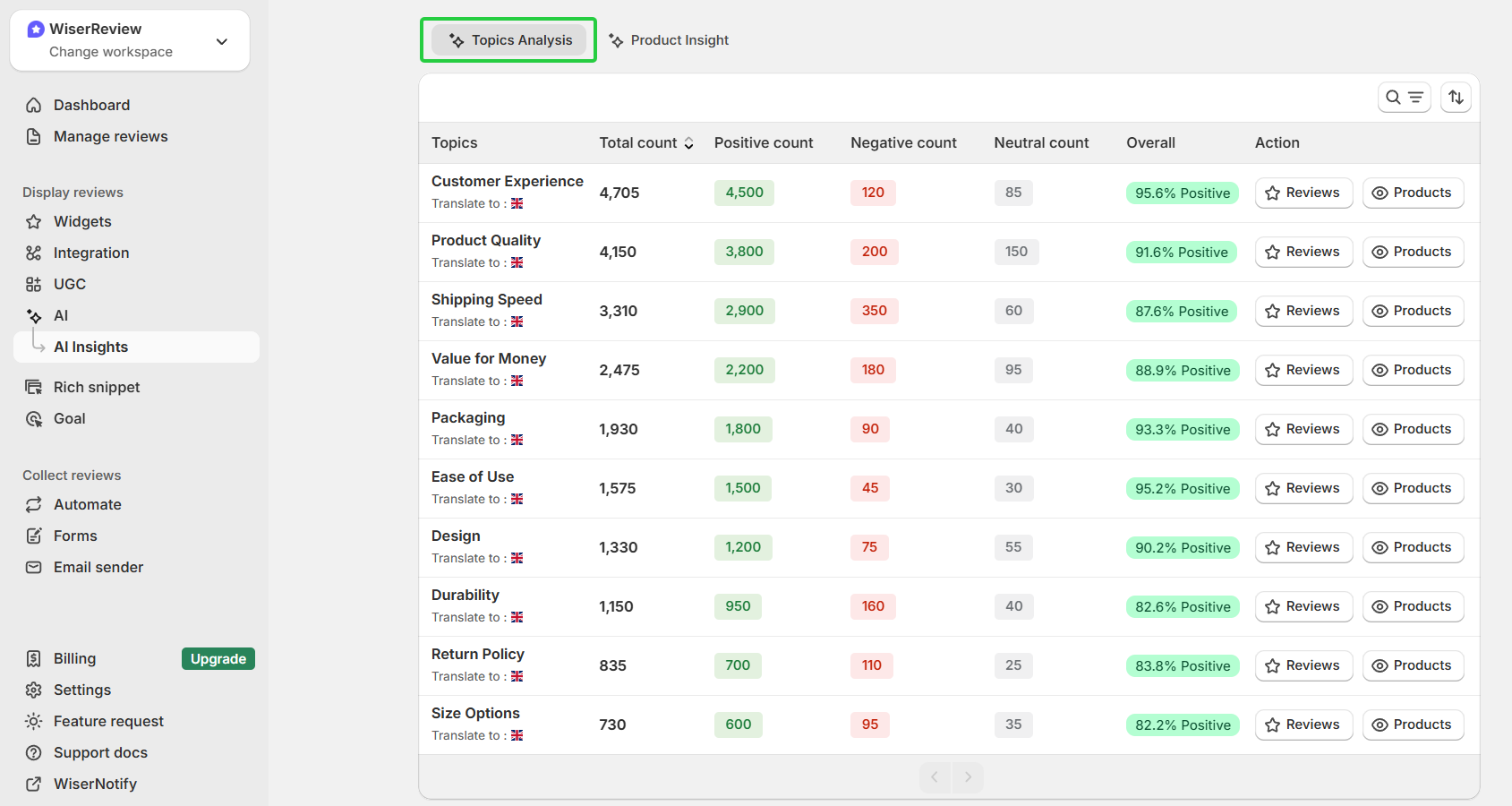
This tool uses natural language processing to identify and group all the recurring themes. So if customers are constantly mentioning “fast shipping” or “soft fabric”, the AI will pick up on that and create clickable tags.
WiserReview’s AI Smart Topics automatically identifies and groups these keywords, making reviews searchable and scannable without any manual tagging on your end.
3. AI product review insights
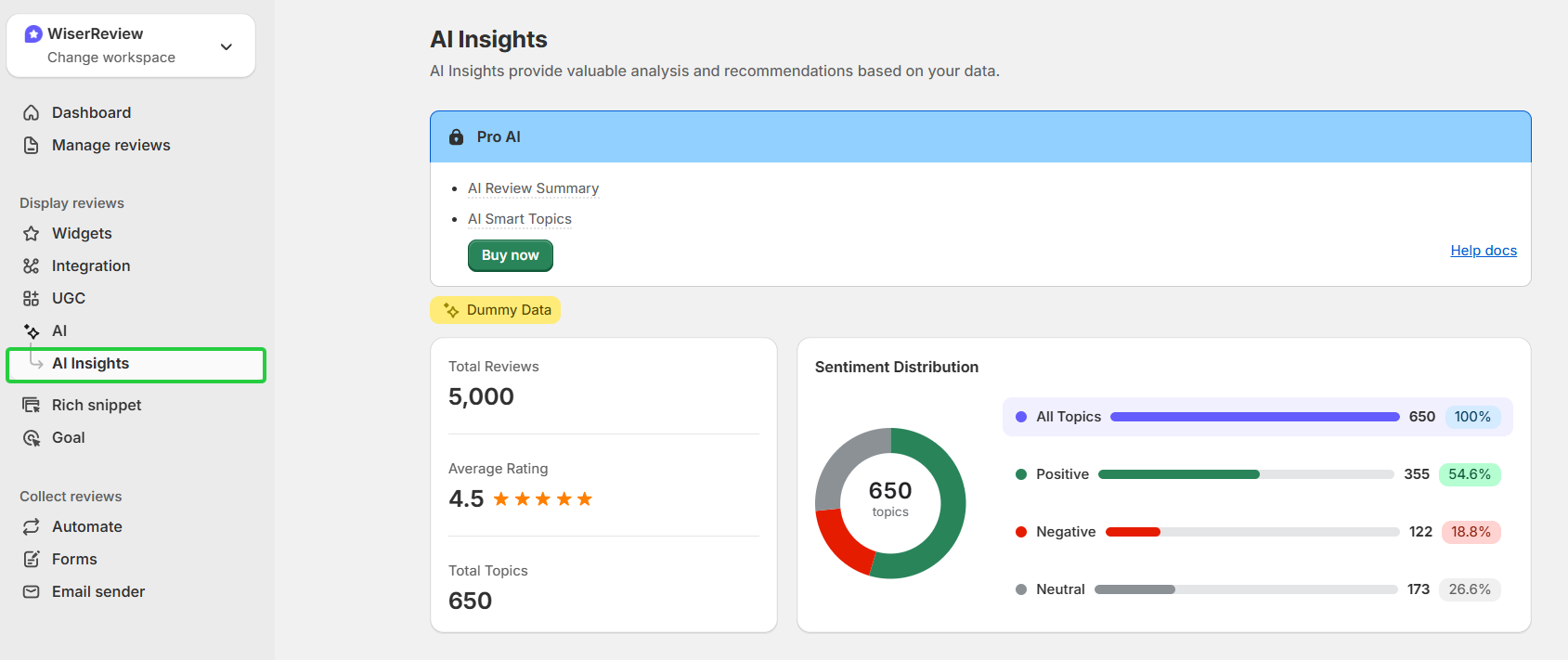
While the first two tools help shoppers, this one is for merchants. AI analysis provides valuable insights that support product optimization and continuous improvement.
It scans and analyzes patterns across your review data, flagging product quality issues and identifying frequently mentioned complaints before they become returns.
WiserReview’s AI Product Review Insights gives you a dashboard view of your review data with actionable signals. Instead of reading individual reviews to find problems, you get structured intelligence you can act on immediately.
All your reviews in one place
Collect reviews, manage every response, and display them where they matter most.
Start Free →Displaying and distributing reviews for maximum impact
Collecting reviews is only half the battle; the real revenue growth happens when you strategically place that content where it influences the final “Buy” decision.
Product page review placement best practices
The product page is the highest-value placement for reviews. Shoppers are in decision mode, and reviews are what push them to add to cart.
Key placement principles:
- Show aggregate star rating and review count near the product title (above the fold).
- Place the full review section below product details, but above related products.
- Make reviews filterable by rating, keyword, and photo.
- Display photo reviews prominently; they’re more convincing than text alone.
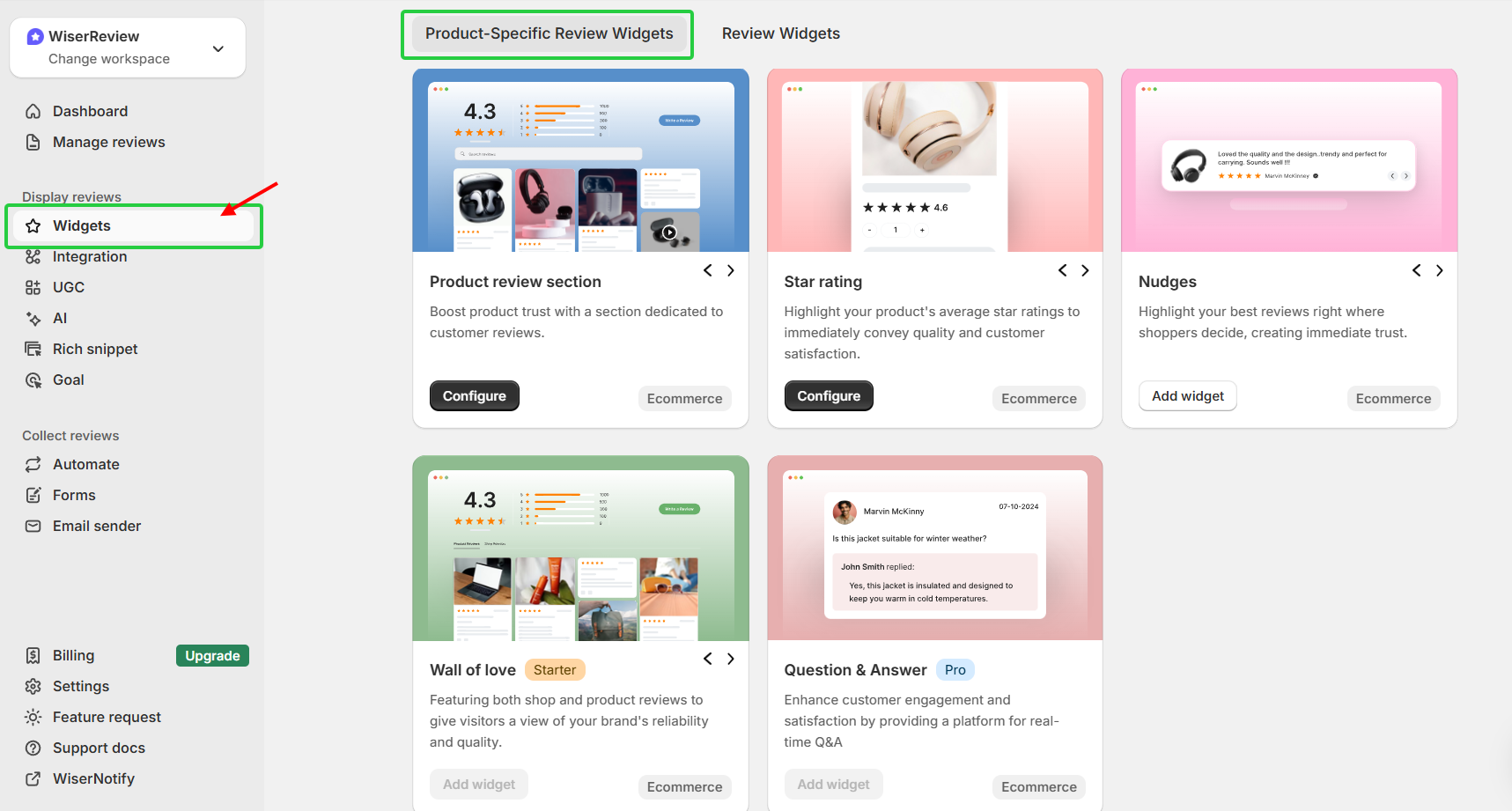
To make this seamless, WiserReview offers Product-Specific Widgets that can be embedded directly into your theme.
These widgets include star ratings, nudges, a wall of love, and a product review section, ensuring that the most persuasive data is front-and-center without slowing down your site speed.
Review syndication: extend your reviews across channels
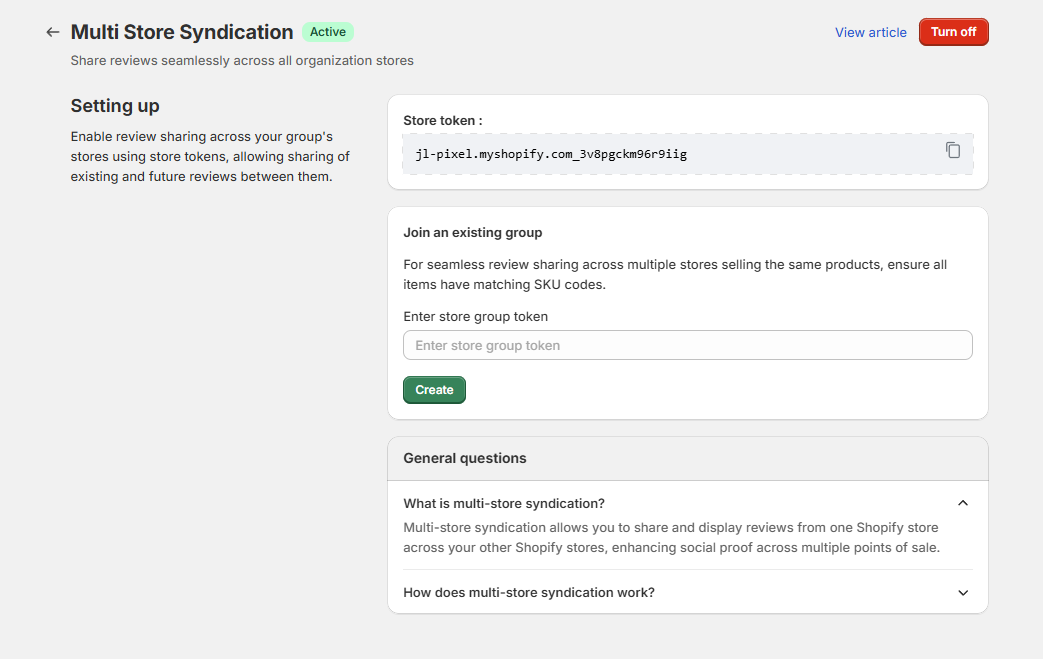
Review syndication pushes your reviews to places beyond your own ecommerce website.
Review syndication is just a fancy way of saying that you’re sharing your collected reviews across multiple platforms to get them seen by more people and build up that online reputation.
Reviews can appear across ecommerce platforms and major review sites to expand visibility.
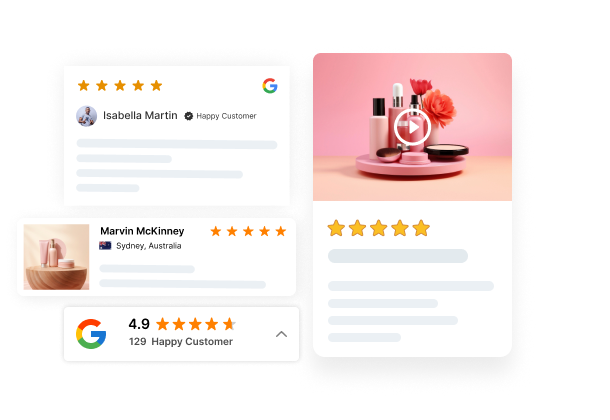
- Google Shopping & Search: By sharing your reviews with Google, your star ratings will pop up in PLAs (Product Listing Ads) and even in organic search results.
- Marketplace Distribution: If you’re selling on multiple platforms (Target+, Walmart, or those specialist boutiques), syndication tools let you push your website reviews to those third-party sites.
WiserReview syncs reviews across Google, Facebook, and Trustpilot from a single dashboard, which is sufficient for most DTC brands.
Using reviews beyond the product page

Reviews are powerful marketing assets that should be used throughout your entire ecosystem to build trust at every touchpoint. Featuring quotes from satisfied customers helps address concerns before checkout.
High-performing brands repurpose reviews across:
- Homepage: A Wall of Love or carousel builds immediate trust for first-time visitors.
- Email campaigns: Pull in your top review of the month to add credibility to promotional sends.
- Paid ads: Customer quotes in Facebook and Google ads outperform generic copy.
- Checkout page: A confidence-building review near the “Complete Purchase” button reduces last-second abandonment.
- Landing pages: Category- or campaign-specific reviews improve ad landing page conversion rates.
WiserReview offers widgets beyond the product page, including a Carousel, auto Slider (ideal for homepages and landing pages), review wall (for a full display of your best reviews), trust badge, floating Badge, floating pop-up, and sidebar snippet. All are mobile-optimized and fully brandable.
Managing and analyzing your reviews
Review collection is ongoing, which means review management needs to be a regular part of your operations.
Review management fundamentals
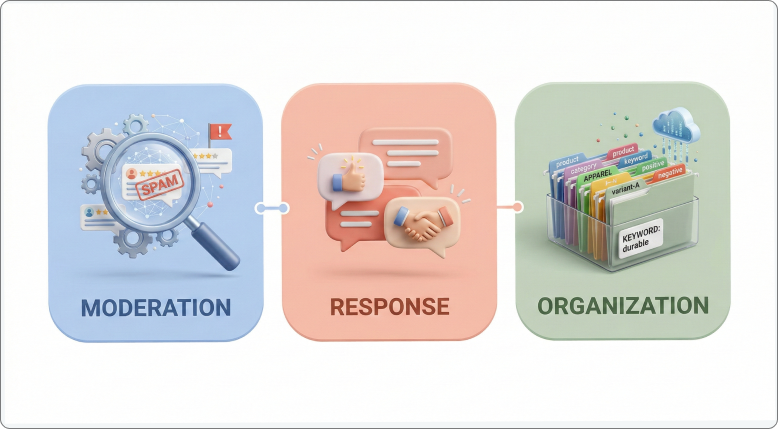
Proper moderation includes addressing negative reviews, since even a single feedback review can influence buyer perception.
Good review management is all about staying on top of three key things: moderation, response, and organisation.
- Moderation: Review every single submission before it goes live. Flag any spam, fake reviews, or content that violates your policy. WiserReview has a built-in AI moderation system that automatically flags suspicious or spammy reviews before they are published.
- Response: Reply to every single review, positive or negative. Responding to reviews shows shoppers that there’s a real team behind the brand. On the positive reviews, keep those responses brief and sincere. On the negative reviews, acknowledge the problem, don’t go all copy-paste.
- Organisation: Tag your reviews by product, variant, category, or keyword so they’re easy to filter and display where they’re relevant.
Proper moderation includes addressing negative reviews, since even a single negative review can influence buyer perception.
Turning negative reviews into a sales advantage
A negative review handled properly can actually earn you more trust than having no negative review at all. And that perfect 5.0 rating? Well, it can actually raise some suspicions with some of the more seasoned shoppers.
When responding to bad reviews:
- Acknowledge the issue specifically, don’t use a copy-paste template.
- Offer a resolution (replacement, refund, support contact).
- Keep it brief and professional. Future shoppers are reading your response, not just the reviewer.
Clear responses help address concerns and protect your brand reputation. When you respond professionally to a complaint, offering a refund, replacement, or technical fix, you aren’t just talking to one unhappy customer; you are auditioning for every future shopper.
Example: Use negative feedback to explain how the product is used. If a customer says a “shirt shrank”, your response can explain the proper cold-wash instructions, which will help future buyers avoid the same mistake.
Product review analysis: Mining reviews for business insights
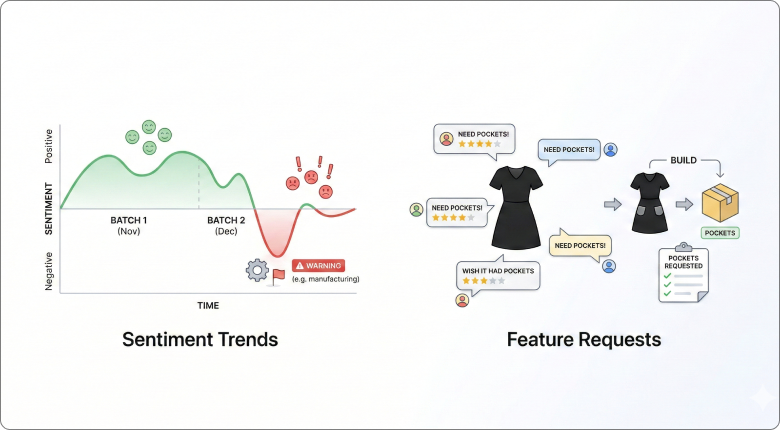
Your reviews contain product intelligence that no focus group can replicate. Customers tell you exactly what works, what doesn’t, and what they wish existed.
Sentiment Trends: Track how sentiment changes over time. A sudden drop in “productQuality” mentions after a new batch comes out is a clear sign that something is up.
Feature Requests: Customers often tell you exactly what to build next. If multiple reviews on a black dress ask for “pockets”, your next design iteration is already sorted.
To scale up review collection without manually sifting through every single piece of feedback, WiserReview gives you a sophisticated AI-Powered Insights Dashboard.
Rather than manually categorizing feedback into ‘likes’ and ‘dislikes’, the system automatically flags the key issues you need to know about, such as “Fragile Packaging” or “Runs Small due to Sizing problems”.
This lets you update your product descriptions or get in touch with suppliers with some seriously compelling data-driven evidence to back up your claims.
And that’s not all: WiserReview also gives you amazing insights into your product review data.
Choosing the right review platform for your store
The review platform you choose basically determines how smoothly you’ll collect, manage, and display reviews, and how much it will cost you in terms of time and money.
Review platforms and software in 2026
Most ecommerce platforms require review tools that scale with growth.
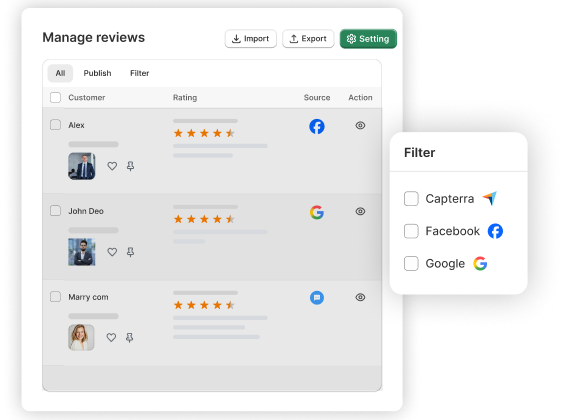
1. WiserReview
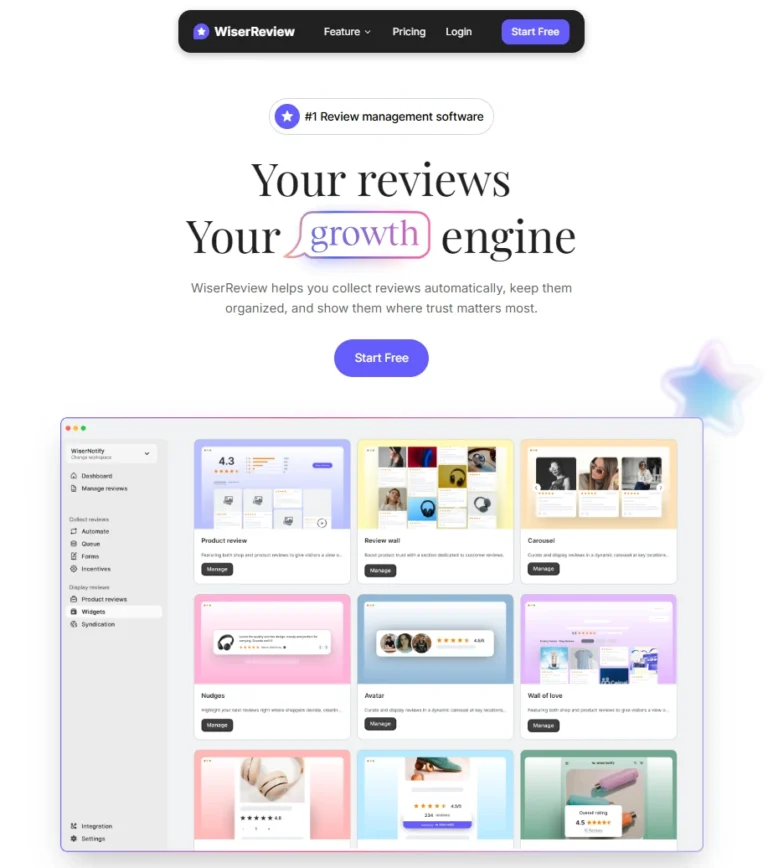
WiserReview is the best-value all-in-one review platform for ecommerce brands in 2026. It specializes in automated review collection and high-conversion widgets.
WiserReview stands out by offering built-in AI Review Summaries, Smart Topics, and Product Insights, so you don’t need third-party plugins to understand your customer sentiment.
Best for: Small to mid-sized ecommerce brands, DTC stores, Shopify and WooCommerce merchants, service-based businesses, and any brand that wants full control without enterprise pricing.
Pricing: Free plan available. Paid plans start at $9/month.
All your reviews in one place
Collect reviews, manage every response, and display them where they matter most.
2. Yotpo
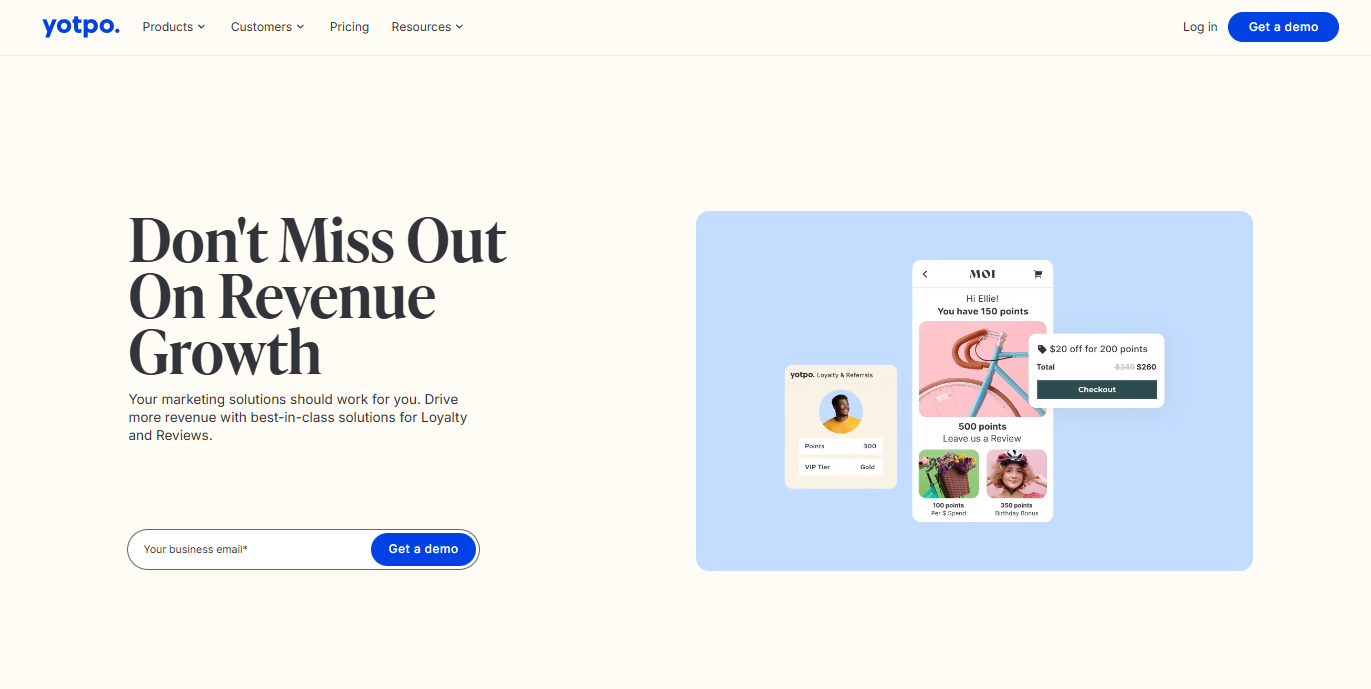
Yotpo is an absolute heavyweight in the e-commerce space, with an incredibly comprehensive suite that ties the customer journey together with loyalty programs and SMS marketing, among other examples.
It’s the go-to choice for enterprise-level brands that want a single ‘go-to’ platform for all their customer engagement needs.
Best for: Mid-to-large Shopify brands that want reviews, loyalty, and marketing in one integrated stack.
Pricing: Starts around $79/month; enterprise plans go significantly higher.
3. Reviews.io
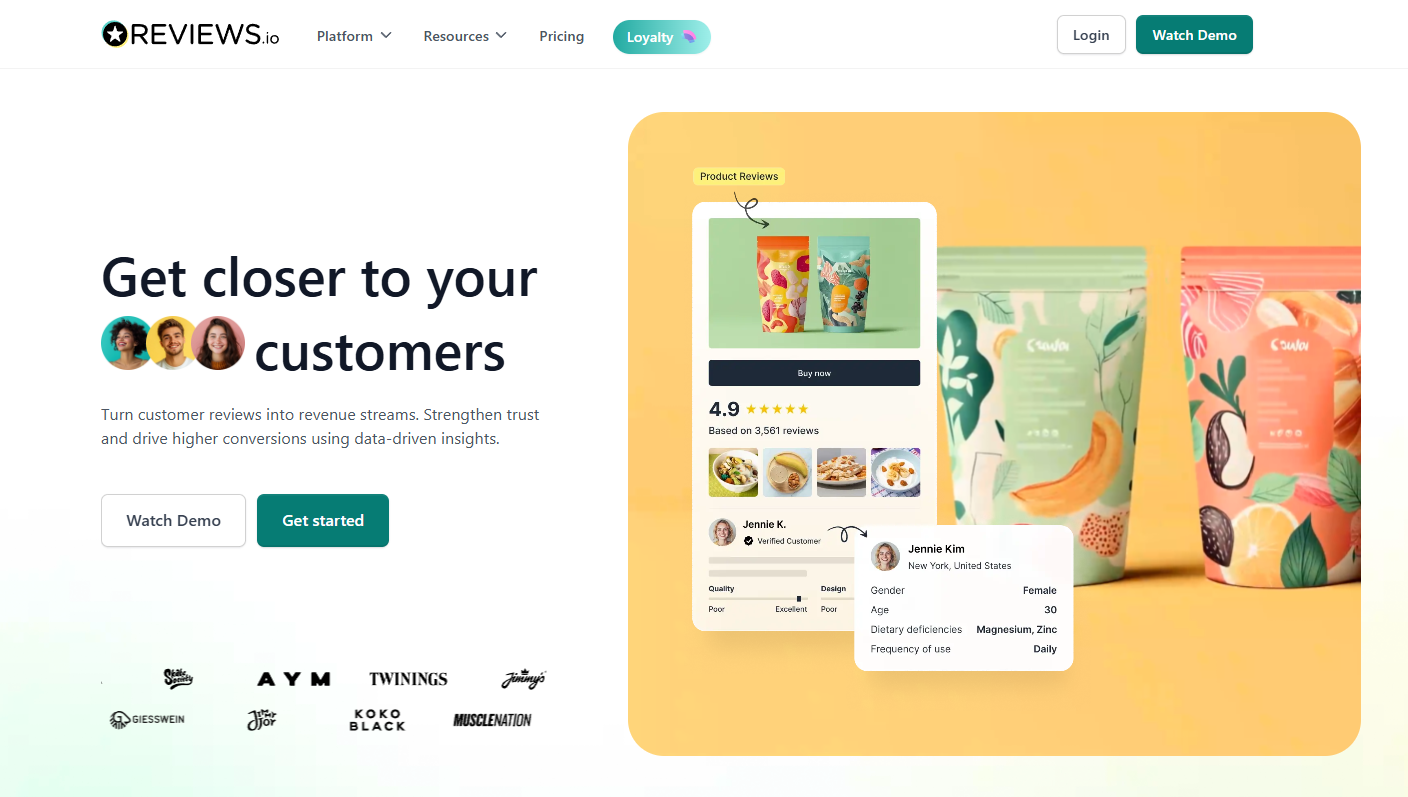
Reviews.io is a really clean and user-friendly platform that focuses solely on authentic, verified reviews and is notable for its Google Seller Rating integration.
It excels at collecting ‘Company Reviews’ in addition to product reviews, which makes it a great choice if you’re a service-based e-commerce brand that wants to show off your overall business reputation online.
Best for: Brands that prioritize Google visibility and verified review credibility.
Pricing: Starts around $29/month with 300 monthly review invites.
What to look for in a review platform
Before committing to a platform, evaluate these criteria:
Collection channels: Does it support email, SMS, and WhatsApp, or only email?
Form customization: Can you ask custom questions and collect photos/videos?
Display options: Can you control widget placement, design, and layout?
AI features: Does it offer moderation, smart topics, or review insights?
Platform integrations: Does it connect natively with Shopify, WooCommerce, or your CMS?
Review export policy: Can you take your reviews with you if you switch? (Some platforms lock your data.)
Automated Incentives: Does it automatically offer incentives like discount codes or loyalty points upon review verification?
SEO Syndication: Does it push your star ratings directly to Google Shopping and Search results?
Pricing transparency: Are key features gated behind expensive tiers?
How to write product reviews that help customers (For brands doing editorial reviews)
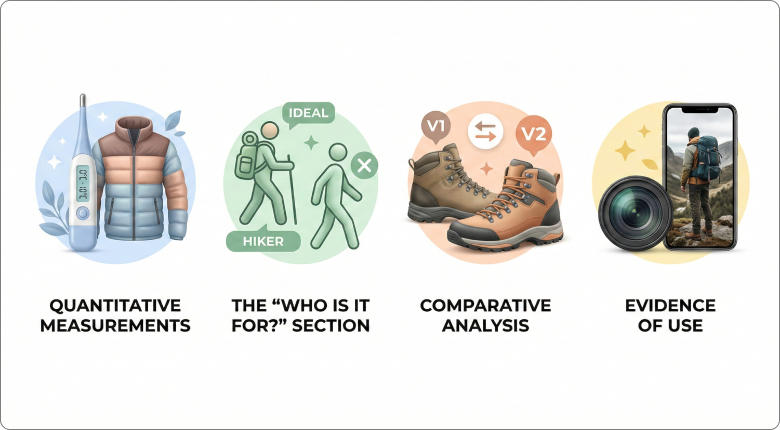
Some brands publish their own editorial reviews or buying guides to help customers compare products within their catalog. Done right, this content drives organic traffic and increases time on site.
- Quantitative Measurements: Don’t just say a jacket is “warm”; provide the specific temperature range in which it was tested.
- The “Who is it for?” Section: Clearly state who should not buy the product (e.g., “Great for hikers, too heavy for casual walkers”).
- Comparative Analysis: Compare the item to the previous version or its top competitor to provide contextual value.
- Evidence of Use: Include original photography of the product in a real-world environment, not just stock images.
Brands writing editorial reviews should also use review schema markup so Google can display star ratings in search results, a significant driver of CTR.
Key takeaways
Reviews are a measurable revenue lever, not a nice-to-have. Here’s what to take away from this guide:
- Collect reviews proactively: Automated post-purchase requests via email, SMS, or WhatsApp are the best way to boost your review volume.
- Put photo reviews first: Photo reviews tend to convert better than text-only reviews in just about every single product category.
- Display reviews where decisions happen: Product pages, checkboxes, and landing pages, not just a testimonials section.
- Respond to every customer feedback, especially the bad ones. It’s basically the most visible moment of customer service you’ve got.
- Use AI to scale. AI moderation, smart topics, and review insights save time and give you insights you’d normally miss.
- Choose a platform that fits your stage. WiserReview is the best fit for most growing ecommerce brands. Yotpo fits brands that need a full marketing stack. Reviews.io fits brands prioritizing Google Seller Ratings.
Your goal shouldn’t be just to rack up a bunch of 5-star ratings; it’s to build a library of social proof that answers every single question your potential customers might have before they even have to ask.
All your reviews in one place
Collect reviews, manage every response, and display them where they matter most.
Start Free →Frequently asked questions
Even 5 reviews can significantly increase the likelihood of purchase. Aim for 10–20 reviews per product for steady conversion impact.
Yes. A mix of ratings (around 4.0–4.5 stars) builds trust, and thoughtful responses to negative reviews improve credibility.
Send requests 1–3 days after delivery, or up to 7 days for products that require a usage period. One reminder after 4–5 days works best.
Yes, if the incentive is for honest feedback and not tied to positive ratings, follow the FTC and platform guidelines.
WiserReview is a strong option for small stores, covering collection, display, AI moderation, and insights, with a free plan available.

Krunal