3 min
3 min 
Google review velocity refers to the rate at which new reviews are posted for your business.
Many owners believe that getting a rush of reviews in a short time will boost rankings. That is not true. Google’s system checks for steady, natural growth.
A sudden jump in reviews can signal fake activity and lead to filters, hidden reviews, or even penalties.
What actually helps is a constant flow of genuine reviews over weeks and months. Ten reviews spread across a month look better than ten reviews in one day.
This pattern shows Google that real customers are sharing feedback, which builds trust.
In this blog, we explain how review velocity works, why too many fast reviews can backfire, and what pace businesses should follow to stay safe and improve local ranking.
Let’s get started!
What is Google review velocity?
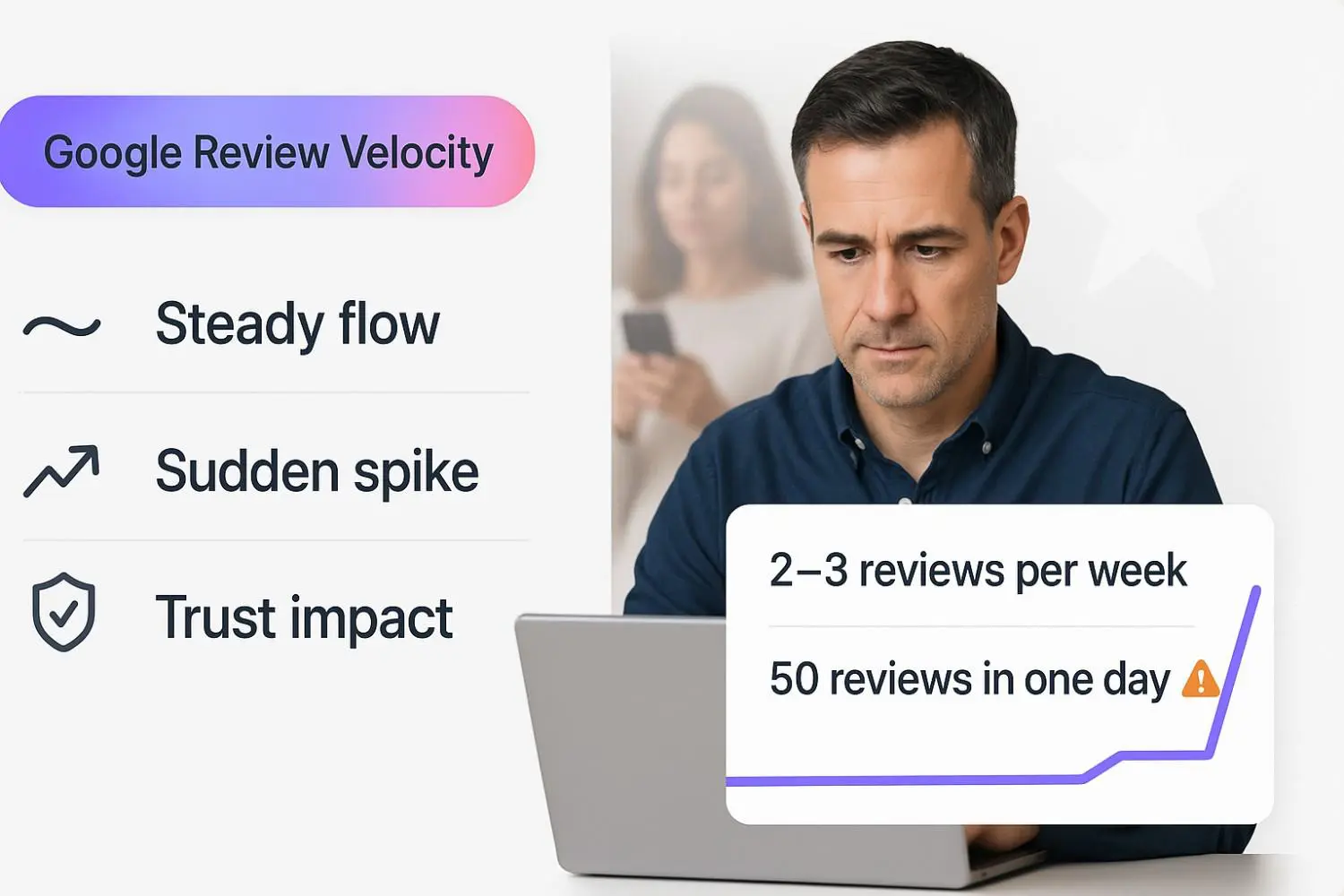
Google review velocity is the pace at which new reviews arrive on your Google Business Profile.
It shows how often customers leave feedback and how that pattern changes over time.
For example, if your business gets 2–3 reviews per week, that’s a steady velocity.
If you suddenly receive 50 reviews in one day after weeks of silence, that’s a spike. Google can detect both steady flow and sudden jumps.
A sudden jump can look suspicious. Google may flag or filter reviews that look unnatural.
82% of consumers say they have read a fake review in the past year.
This tells us consumers are alert and skeptical. Fake or manipulated reviews hurt trust.
In short, review velocity is not just about how many reviews you get; it’s about how and when you get them.


Get more Google reviews faster
Collect, manage, and display reviews to grow trust and sales.
Does review velocity directly impact rankings?
Google does not boost rankings just because a business gets reviews quickly.
The system considers a combination of signals, including total reviews, average rating, and the natural progression of reviews over time.
Review velocity matters only when it looks unnatural. A sudden spike can trigger filters, while steady growth shows trust.
Key points to know:
- Google does not reward fast review spikes.
- Consistent growth signals real customer activity.
- Sudden jumps can cause reviews to be flagged or hidden.
- 73% of consumers lose trust in businesses that show suspicious review spikes.
The safest path is slow, steady, and genuine growth. A few reviews every week do more for ranking and trust.
What Google actually looks for in reviews
Google doesn’t reward a business just because it gets reviews fast. What really matters are four simple things:
1. Quantity
The total number of reviews matters because it shows how many people have interacted with your business.
A profile with 200 reviews looks stronger than one with 20, but only if those reviews were built over time. Steady growth is key.
For example, adding five reviews each month is safer than getting 50 reviews overnight. Google can detect unnatural spikes and may filter them out.
2. Quality
Not all reviews are equal. A short “Great service” helps, but a detailed review that explains what the customer bought, how they were treated, and why they recommend you has far more weight.
Google’s algorithm can recognize when a review gives useful details versus when it looks vague or copied. The more specific the review, the more it helps your profile stand out.
3. Recency
Fresh reviews are more powerful than old ones. A review written three years ago does not carry as much weight as one from last week.
Google uses recency as a sign that your business is active and still trusted.
69% of consumers say reviews must be written within the last three months to influence their decision.
This means businesses must focus on collecting reviews regularly, not just once.
4. Diversity
Google also pays attention to variety. A natural review profile has a mix of star ratings, review lengths, and different types of customers.
Reviews with photos, reviews from mobile users, and reviews across different times of day or week all look more credible.
If all reviews come from the same type of account or in the same format, it can raise red flags.
Why fast reviews can backfire
Here are the reasons fast reviews can backfire:
Spam detection & suspicious patterns
Google’s system flags profiles that suddenly gain reviews far outside normal patterns.
For example, a business with no reviews that suddenly gets 40 in one day looks suspicious.
These reviews may be filtered or hidden, and the profile could lose trust signals.
Poor quality reviews
Fast campaigns often lead to short, vague reviews like “Great!” or “Nice service.” Google prefers detailed feedback that shows real experience.
Thin reviews don’t help ranking and can reduce the overall value of your profile.
User perception
Customers notice review patterns too. If someone sees dozens of reviews all posted within a short period, it feels fake.
This can reduce trust and make the business look unreliable.
The right way to build review momentum

Here are a few ways to build review momentum.
Encourage a consistent flow
The safest way to grow reviews is gradually. Instead of pushing for a big batch all at once, ask customers for feedback often.
A few new reviews each week look natural to Google and build steady trust over time.
- Ask for a review after each visit or purchase.
- Don’t chase large spikes in reviews.
- Keep a slow, steady pace.
- Show Google regular customer activity.
Focus on authenticity
Real reviews always carry more weight than fake or copied ones. Customers can tell when feedback is genuine, and so can Google.
Honest experiences, even if they are not perfect, build stronger trust than forced or made-up reviews.
- Keep reviews genuine and personal.
- Don’t use paid or fake reviews.
- Encourage customers to share real details.
- Value honest feedback, even if it’s mixed.
Leverage recency
Fresh reviews have more impact than old ones. People want to see recent experiences before they decide to trust a business.
A profile filled with current feedback looks active and reliable, while one with only old reviews can raise doubt.
- Ask for reviews soon after a visit or purchase.
- Keep a steady flow of new reviews each month.
- Show customers that your business is active today.
- Replace outdated feedback with recent experiences.
Diversify review sources
Don’t rely on just one way to collect reviews. Customers respond in different ways, so providing them with more than one option makes it easier for them to share their feedback.
Spreading requests across channels also helps reviews look more natural to Google.
- Send review requests by email and SMS.
- Add QR codes to your store or office.
- Share direct review links on receipts or thank-you pages.
- Use different touchpoints so more customers respond.
Use WiserReview – Best Google review software

Managing review momentum is easier with the right tool.
WiserReview helps businesses collect steady and genuine reviews by automating requests and spreading them across different channels.
This keeps your Google profile active, prevents sudden spikes, and makes sure customers see fresh feedback.
- Automates review requests through email, SMS, and QR codes
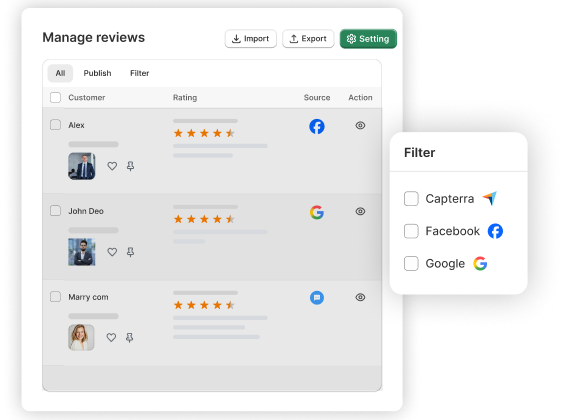
- Filter, organize, and respond to reviews in one place so you can handle both positive and negative feedback quickly.
- Spaces out requests to keep reviews steady and natural
- Sends reminders so customers don’t forget to leave feedback
- Tracks new reviews across Google and other platforms
- Displays reviews on your website to build trust with visitors

All your Google reviews in one place
Collect Google reviews, manage every response, and display them where they matter most.
Start Free →Conclusion
Google review velocity is about steady growth, not quick spikes.
Sudden jumps can hurt trust, while a constant flow of genuine and recent reviews improves ranking and customer confidence.
A slow, steady pace shows both Google and customers that your business is reliable.
Over time, this consistent approach brings stronger visibility and more loyal customers.
Frequently asked questions
No. Google does not reward sudden spikes in reviews. It values steady and natural growth over time.
There’s no fixed number. Small businesses may aim for 5–10 reviews a month, while larger ones may need more. What matters is a consistent pace.
Yes. A sudden surge can look suspicious and may cause reviews to be filtered or hidden.
Fresh reviews show that your business is active and trusted today. Customers are more likely to believe recent feedback than old reviews.
Ask for reviews regularly, focus on genuine feedback, and use different channels like email, SMS, or QR codes to collect them naturally.

Krunal