4 min
4 min 
Every single day, millions of potential customers read online reviews before buying something.
89% of consumers are more likely to choose a business that responds to all reviews, both positive and negative.
Many businesses struggle because reviews are spread across multiple sites like Google, Facebook, and Yelp.
Managing them all can be overwhelming, making it hard to maintain a good online reputation. A review aggregator can help businesses manage their online reviews effectively.
In this blog, we’ll explore what review aggregator tools are, how they work, compare the best options, and share how businesses (whether a local coffee shop or a multi-chain) can use them.
Quick answer
Below is a quick comparison table of some of the best review aggregator tools. It highlights what each tool is best for, key features, and highlights so you can easily find the right fit for your business.
| Review Aggregator | Key Features | Pricing |
|---|---|---|
| Google Reviews | Aggregator integrated with Google Search and Maps, free to use | Completely free |
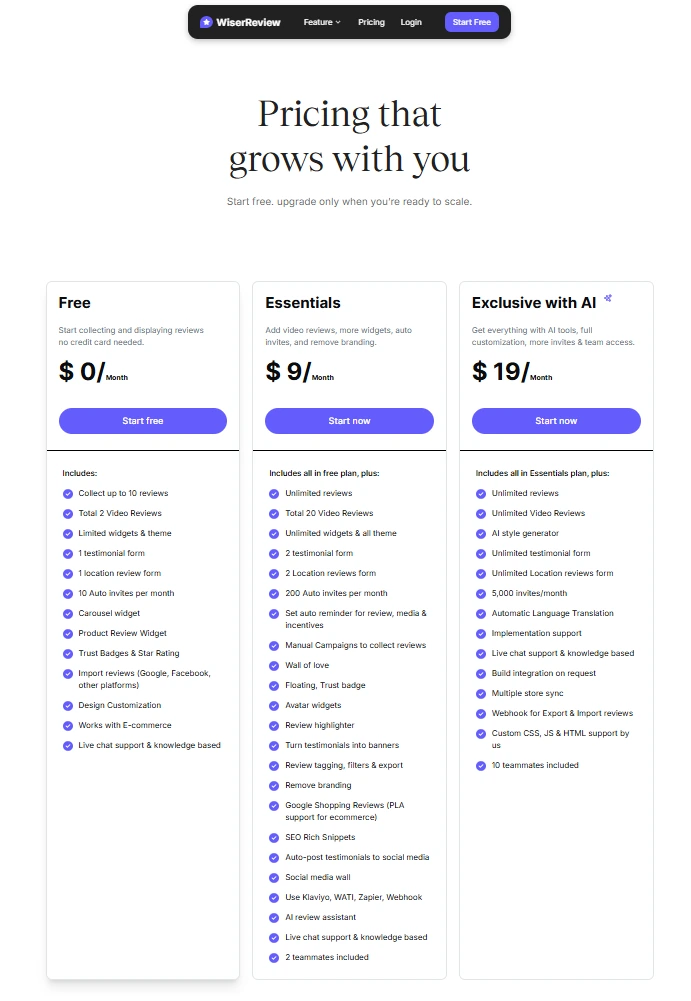
| WiserReview | Centralized review management, automated review requests, and a review widget for websites | Offers a free version |
| Reviews from Yelp | Detailed customer feedback with paid features, like enhanced profiles, is available | Offers a free version |
| Trustpilot | Requires user verification to write feedback, promoting transparent feedback | Starts from $299/month |
| G2 Reviews | Online review site with user reviews and a comparison tool | Completely free |
What are review aggregators, and how do they work
A review aggregator collects customer reviews, star ratings, and user-generated content from many different sites and platforms and puts them together in one place.
For example, you have a local cafe. One person leaves a review on Google, another posts on Facebook, another on Yelp. A review aggregator pulls all those together so you see them in a single dashboard.
How they work (step-by-step)
- They connect with multiple review websites (Google Reviews, Yelp, TripAdvisor, etc.) or use APIs.
- They fetch the reviews and ratings (maybe star ratings, written feedback) from those sites.
- They store and display them in one tool with sorting, filtering, and maybe sentiment analysis (seeing if a review is positive or negative) for easier reading.
- They also allow businesses to respond to reviews, see what new customers like/don’t like, and use that for customer engagement improvements and reputation management.
Why businesses use them
- They give a comprehensive view: instead of logging into many platforms, you use one to see all the reviews.
- They help monitor customer sentiment (what customers feel) and help you act on it.
- They build proof and credibility: when potential customers see many positive reviews, they trust the business more.
- They improve online reputation, which helps with Google search results and local search visibility.
5 best review aggregator tools
Let’s explore 5 of the most popular review platforms that can help your business understand customers better, improve customer satisfaction, and grow with confidence.
1. WiserReview
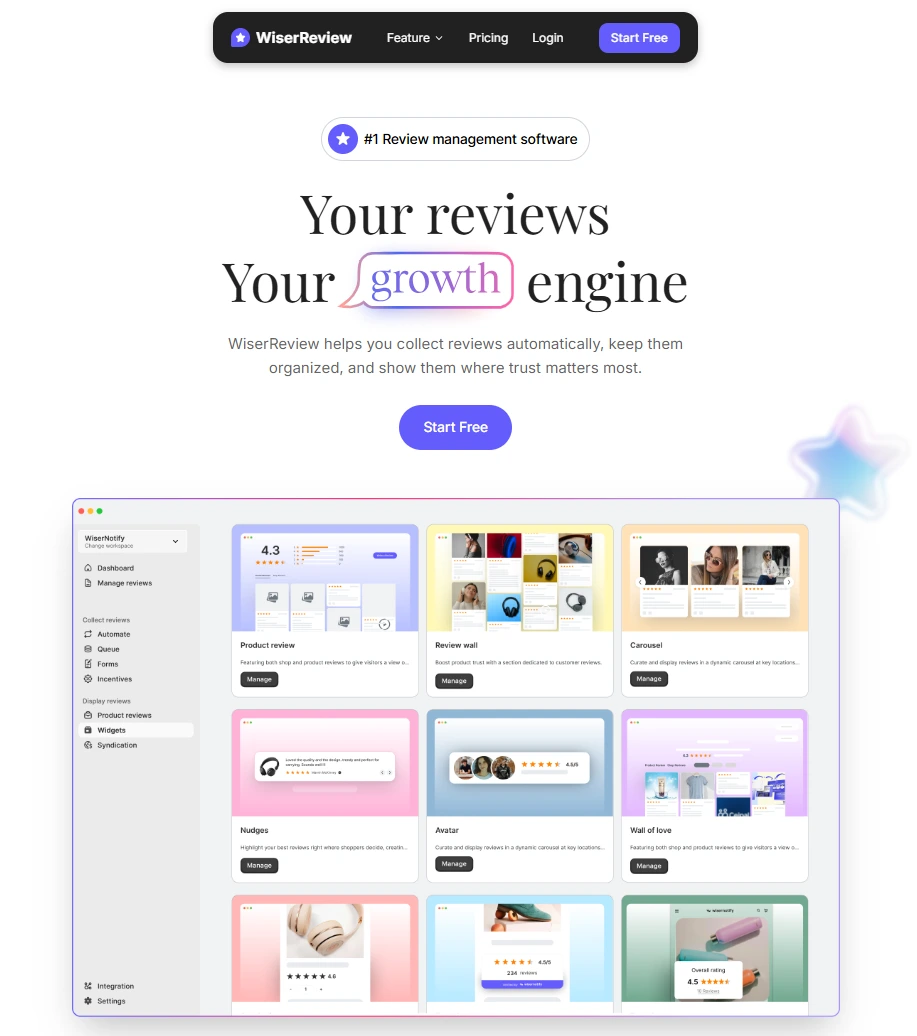
WiserReview is a review management platform designed to help e-commerce and other businesses collect reviews, manage, and display customer feedback easily. It offers a system that simplifies the process of handling reviews.
The platform is ideal for online stores and small teams looking to build trust without needing coding skills. It works well with popular platforms, like Shopify, WooCommerce, and WordPress.
Collection, Management, and Display from Different Sources
1. Review Collection
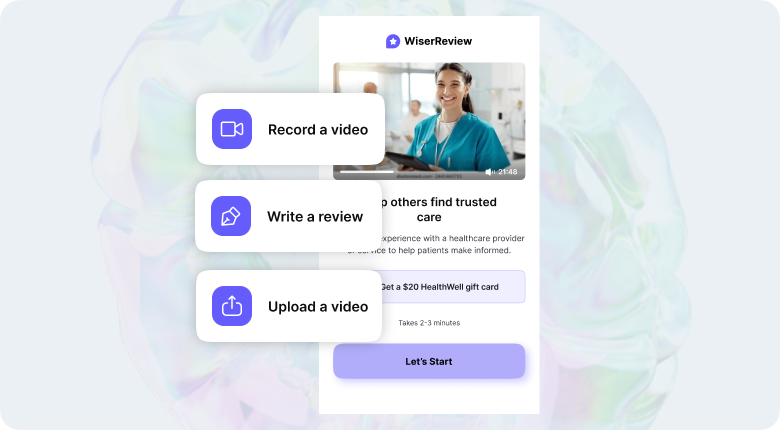
WiserReview automates the review collection process by sending requests after a purchase or delivery, ensuring customers respond while the experience is still fresh.
- It offers flexible ways to ask for reviews, including email, SMS, WhatsApp review requests, or shareable links.
- The platform supports collecting not just text and star ratings, but also highly effective visual user-generated content like photo and video reviews, even on its free plan.
2. Review Management
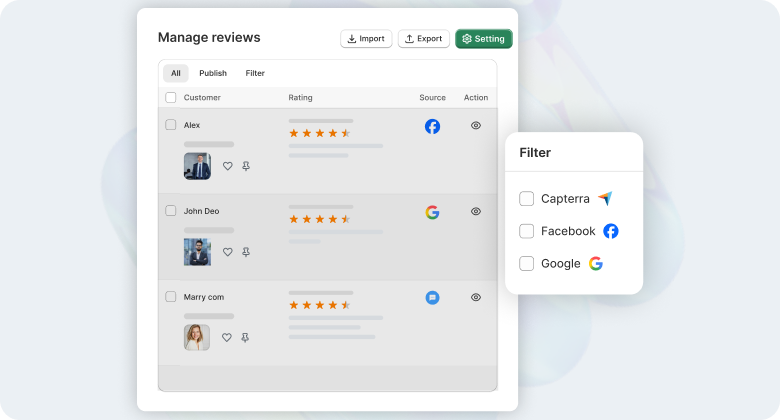
All collected customer reviews, including those imported from Google and other sources, are brought into one central dashboard. You control what gets published, as WiserReview includes smart moderation controls to filter out spam or off-brand comments before they are published.
- You can approve reviews before they go live and use the Tag List Module to label reviews by categories like “pricing,” “support,” or “quality,” which helps you analyze feedback faster and get valuable customer insights.
- The platform also features AI to help automate the moderation and sharing of reviews.
3. Review Display

WiserReview is known for its wide variety of customizable and SEO-friendly review widget options. Every widget includes schema markup, which helps your star ratings appear directly in Google search results (rich snippets), increasing your visibility and clicks.
Display options are fully flexible to match your brand and include:
- Carousels, Auto Sliders, and Wall of Love to display real, scrolling reviews on your home and landing pages.
- Product Review Sections that show product-specific stars and reviews right on the product page.
- Floating Badges and Popups that add subtle online credibility across your site.
- It also lets you easily turn a single review into a shareable banner or snippet for social media.
Best For: Small to mid-sized businesses, online stores, and local service providers who need an easy-to-use tool that supports photo/video reviews and provides SEO features at an affordable price.

All your reviews in one place
Collect reviews, manage every response, and display them where they matter most.
Start Free →2. Birdeye
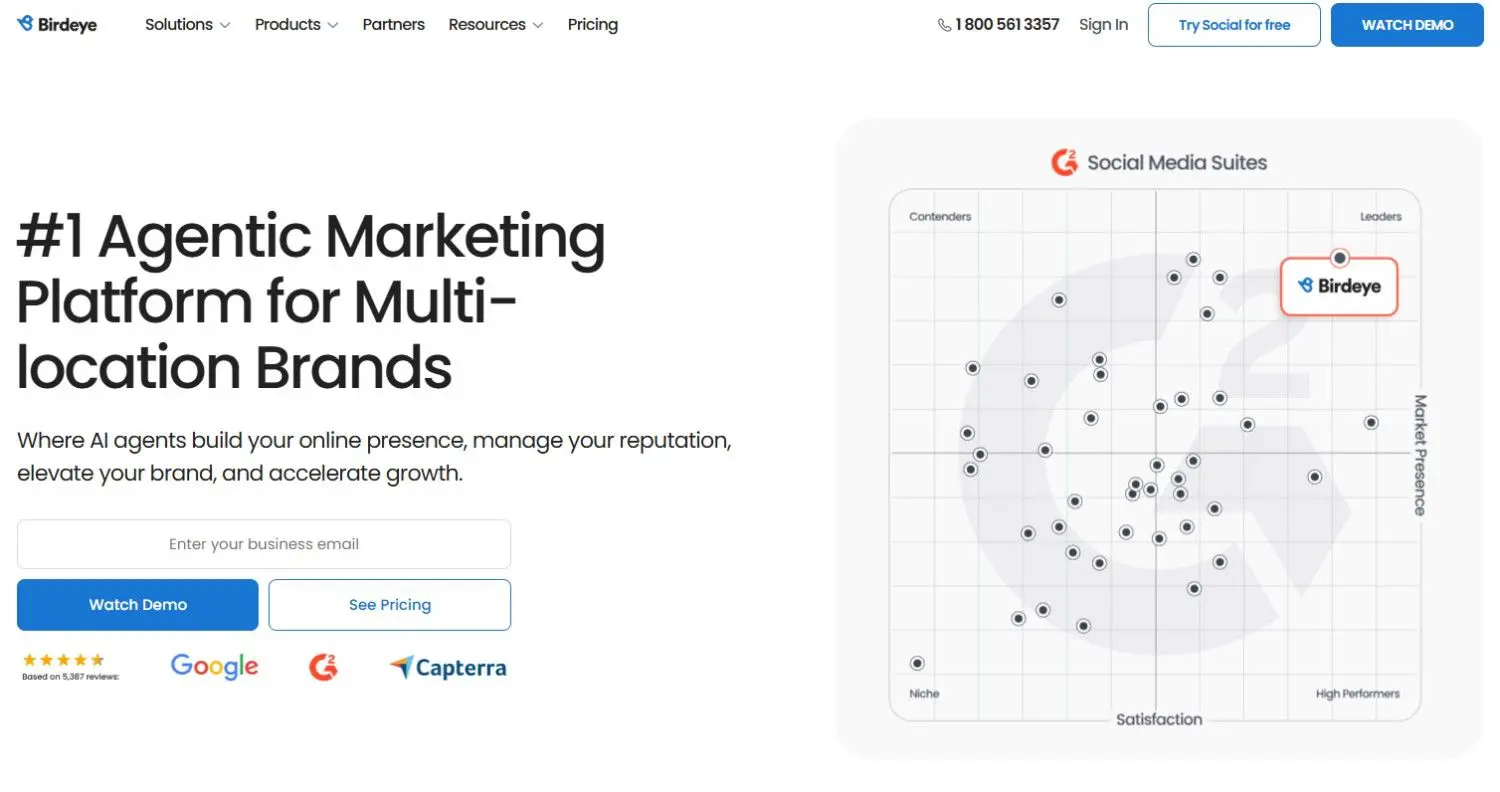
Birdeye is an all-in-one reputation management platform that is excellent for businesses that have multiple locations or complex needs. Birdeye helps you gather reviews from many various platforms like Google, Yelp, and Facebook, into one easy-to-use central dashboard.
This tool is a powerhouse for reputation management because it uses advanced features like sentiment analysis to tell you exactly how customers feel about different aspects of your service, making it ideal for multi-location chains.
Best For: Medium to large businesses, particularly those with multiple locations or active customer feedback programs.
Also check: The #1 Birdeye Alternative | Save 90% on Pricing
3. Podium
Podium is a platform that specializes in converting leads and simplifying the collection process using text messaging. It’s great for local businesses and service providers that interact with customers face-to-face and want quick feedback.
Rather than waiting for an email, Podium allows you to send a quick text after a customer leaves, making it easy for them to leave positive reviews on sites like Google.
Best For: Service businesses (e.g., auto, home services) where customer contact and messaging play big roles.
4. Yotpo
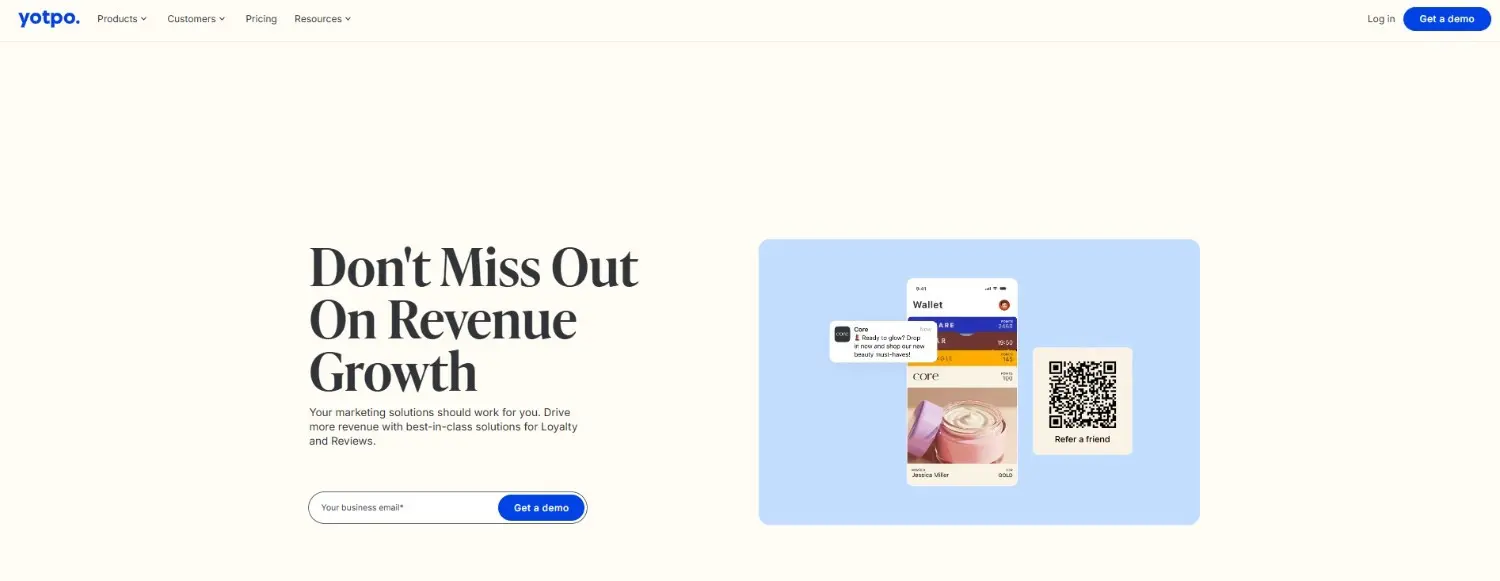
Yotpo is an e-commerce marketing platform that turns user-generated content, like reviews, photos, and Q&A, into a strong marketing tool. Its main strength lies in its integration with major platforms like Shopify and BigCommerce.
Yotpo uses AI to time automated review requests for the best response rate. For online brands, Yotpo is helpful because it converts simple reviews into features that boost product sales, acting as strong social proof.
Best For: E-commerce brands that sell their own products online and want to leverage collection, display, and conversion.

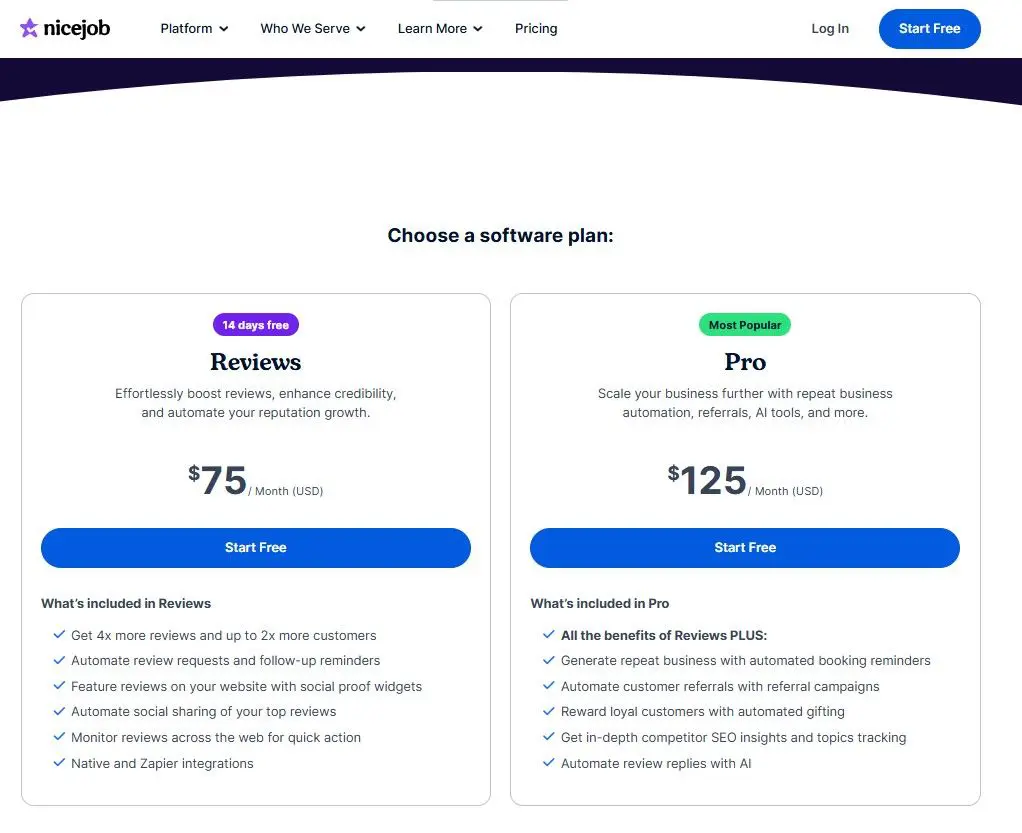
5. Nicejob

NiceJob is a platform that helps service businesses get more reviews and turn them into sales and referrals. Its main feature, called the “smart funnel,” makes it easy for satisfied customers to share their positive experiences online.
NiceJob sends automated email and SMS requests for reviews, gathers high ratings, and shares the best stories on social media to build trust.
Best For: Local service providers (home services, professionals) who want to rank in local search and gather positive online reviews consistently.
How to choose the right aggregator (for your purpose)
Choosing the review aggregation tools isn’t just about picking the “best one,” it’s about picking the right one for your business type, budget, and goals.
Here’s how to decide:
Step-by-Step Guide
1. Define your goals: Do you want to collect more customer feedback? Display positive reviews? Manage reviews across different platforms?
2. Know your business size & model:
- Local single-location business – Simpler tool, fewer features needed.
- Multi-location chain – you’ll need multi-site support and deeper analytics.
- E-commerce brand – product-review features, rich snippets, and UGC matter more.
3. Check Key Features
- Reviews from various platforms (Online reviews, Facebook, other sites) = “aggregate reviews.”
- Review display widgets.
- Automated review requests.
- Analysis or insights into customer feedback.
- Response and management of negative feedback.
4. Budget vs trade-offs: More advanced tools cost more. If you only need display and basic collection, you may not need full enterprise features.
5. Ease of use & integration: Integration with your website, tools use already use (CRM, email), and the user interface matter.
6. Future growth: If you plan to scale, choose a tool that can grow (multi-location, more platforms) rather than just the minimal option now.
Comparison Hook (for clarity)
- If you’re a local business that just wants to gather reviews and show them on your site, NiceJob is better.
- If you’re a multi-location brand with many customer touchpoints, Birdeye offers more depth in review management and analytics.
- If you’re an online merchant selling products nationally/globally, WiserReview is better for product review, syndication, and conversion.
- If you deal with lots of customer service interactions and need messaging plus review generation, Podium is better.
5 Smart ways to get the most out of review aggregator sites
Once you pick a tool, you’ll want to use it well so you can actually benefit from the aggregate reviews and customer feedback.
Here are five actionable ways to use review aggregators and reviews generally so you can gain more customers, more trust, and better insights.
1. Filter & segment reviews intelligently
Don’t just collect reviews: segment them by source, date, location, star ratings, and theme (e.g., more recent vs service). It provides more valuable insights than just seeing a big number.
For example, easily compare customer sentiment across locations to identify underperforming branches.
2. Compare across aggregators/sources
If you only monitor one platform, you miss feedback from other sites. Aggregation gives you a comprehensive view: reviews from various review platforms are shown together.
Also, use the comparison hook: One tool may be stronger for Google reviews, another better for product reviews. Use them based on your needs.
3. Watch volume & recency, not just average scores
A 4.8 average rating is good, but if you don’t have fresh reviews in six months, it can make it seem old to potential customers.
So: Monitor how many new reviews you’re getting, how recent they are, and keep a steady stream of positive online reviews.
Customers read online reviews and often check “recent activity”.
4. Read beyond the stars – Dive into the content
Star ratings give a quick view, but the text of reviews (what customers actually said) provides valuable insights on product quality, customer preferences, and pain points.
Use the aggregate tool to collect reviews, look for trends (“delivery took long”, “helpful staff”, “poor packing”), and act on them.
Also helps you respond better and manage negative feedback.
5. Use reviews strategically (Businesses/Brands)
- Local Businesses/ Local pro: Use reviews in local search results, add widgets on your site that show “recent 5-star reviews“, and use reviews in social proof on local directories.
- Multi-location business: Use reviews to compare branch performance, spot strong vs weak locations, and standardize best practices.
- E-commerce brand: Use product reviews + visual UGC to boost online shopping conversion, show star ratings in search engines, and syndicate reviews to the marketplace.
- Corporate brand/ reputation team: Use aggregate customer feedback and sentiment analysis across platforms to inform product development, customer service strategy, and improve customer satisfaction.
Wrap up
Review aggregation helps businesses gather reviews, manage their online reputation, and turn customer feedback into valuable insights.
Tools like WiserReview, Podium, and Yotpo offer options for different types of businesses.
To get better results, choose the right tools needed for your business size and goals. Use it to collect customer reviews from various review platforms, track how many recent reviews you have, analyze the text, and display authentic customer feedback.
All your reviews in one place
Collect reviews, manage every response, and display them where they matter most.
Start Free →Frequently asked questions
These platforms gather customer reviews from different platforms and show them all together. It helps businesses and consumers to get a holistic view.
No review aggregation tools are compatible with all websites, but most tools are compatible with popular platforms like WordPress, Shopify, and more.
To aggregate reviews, use tools that collect feedback from sites like Google, Facebook, and Yelp. These tools show all reviews in one place, helping businesses manage and respond more quickly.
Yes, some review tools have free plans with basic features. For example, WiserReview offers a free plan and also has paid plans with more customization options and integration for businesses seeking extra functionality.

Krunal