4 min
4 min 
Email marketing still works for eCommerce brands. It brings shoppers back, helps recover lost carts, and drives repeat sales without high ad costs.
While ads keep getting more expensive, email stays stable. Brands use it to reach customers directly and turn interest into orders.
This article shares 33 clear eCommerce email marketing statistics for 2026. Each stat shows how email performs and where brands should focus to get better results.
Top highlight
- Email returns $36–$42 for every $1 spent
- Automated emails convert 10× higher than bulk emails
- Welcome emails reach 50–60% open rates
- Abandoned cart emails convert 3–4% of recipients
- eCommerce open rates average 18–22%
- The average eCommerce click rate is 2.5–3%
- Email conversion rate averages 2.8% for B2C
- Automated flows generate 37% of email revenue
- Mobile devices drive 55–60% of email opens
- Segmented emails increase clicks by up to 28%
Overall Email Marketing landscape for eCommerce
Email marketing remains a core channel for eCommerce brands. It helps reach customers directly, drive repeat visits, and generate steady revenue at low cost.
Unlike ads or social platforms, email gives brands full control over delivery and audience access.
Usage & Reach
Email reaches customers more consistently than any other marketing channel.
Most shoppers check their email daily, making it a dependable way to stay visible and drive engagement.
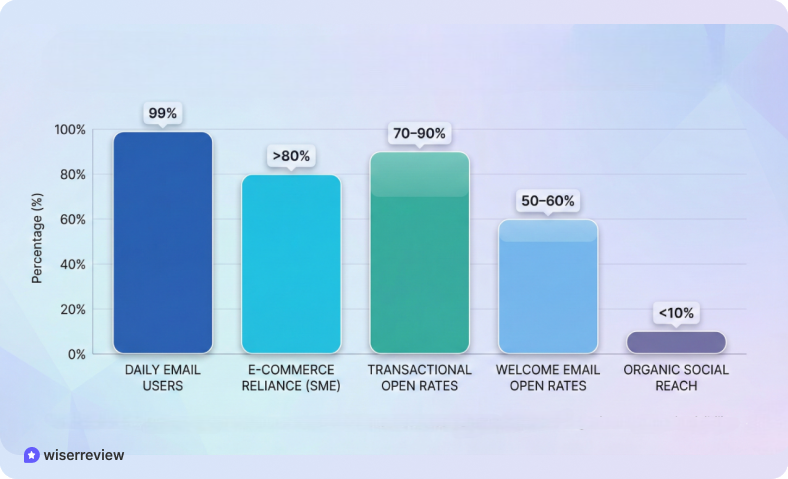
1. Nearly 100% of online shoppers check their email every day
Email remains the most reliable channel to reach buyers consistently.
2. Over 80% of small and mid-size eCommerce brands rely on email
Email supports both sales growth and customer retention.
3. Email reaches more customers than any single social platform about 99% of users check email daily, while organic social reach often falls below 10%
4. Transactional emails see 70–90% open rates
Order confirmations and shipping updates get immediate attention.
5. Welcome emails average 50–60% open rates
New subscribers engage the most right after signup.
ROI and revenue impact
Email delivers strong returns because it targets existing customers and warm leads.
Costs stay low while conversion rates remain high, especially with automation.
6. Email generates $36–$42 for every $1 spent
Email delivers the highest return among marketing channels.
7. Top eCommerce brands earn up to $68 per $1 spent
Automation and targeting improve revenue efficiency.
8. Email traffic converts better than paid ads — email converts at around 2.8–3%, while paid ads typically convert at 1–2% for eCommerce.
Email visitors already trust the brand and show stronger intent.
9. Automated emails convert 10× higher than bulk campaigns
Well-timed messages outperform one-size-fits-all sends.
10. Automated flows generate 37% of total email revenue
Fewer emails can drive more sales when automation is used well.
Industry-specific benchmarks (eCommerce)
Benchmarks help eCommerce brands understand what normal performance looks like.
Retail inboxes are crowded, so average rates differ from those in other industries.
| Industry | Avg Open Rate | Avg Click Rate (CTR) | Avg Conversion Rate | Key Insight |
|---|---|---|---|---|
| eCommerce / Retail | 18–22% | 2.5–3% | 2–3% | High volume, strong buying intent, heavy inbox competition |
| SaaS / Technology | 20–24% | 3–4% | 2–2.5% | Product updates and feature emails drive steady clicks |
| Media & Publishing | 22–26% | 4–5% | 1–2% | Content-driven emails earn high clicks, lower purchases |
| Financial Services | 21–25% | 4–4.5% | 3–4% | Trust-based emails perform well with strong intent |
| B2B Services | 19–23% | 2–3% | 2–3% | Longer buying cycles lower click volume |
| Travel & Hospitality | 17–21% | 2–3% | 2–3% | Seasonal demand affects engagement |
| Non-Profit / Government | 30–40% | 3–5% | N/A | High trust and relevance boost open rates |
11. eCommerce has lower open rates than most industries
Retail emails face heavy competition in inboxes.
12. A 3% CTR is considered strong for retail emails
Most brands remain close to the 2–3% range.
13. Email conversion averages 2.8% for B2C brands
Email traffic converts better than general site traffic.
Key performance metrics & Benchmarks
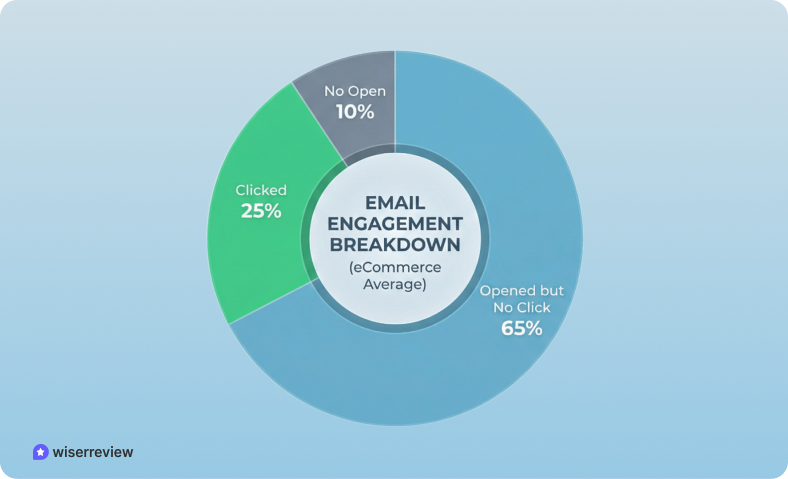
Key performance metrics show how well eCommerce emails attract attention, drive clicks, and generate sales.
These benchmarks help brands compare results, spot gaps, and focus on what improves revenue. As privacy rules change, clicks and conversions now matter more than opens.
Open rates & Click-through rates
Open and click rates measure early engagement. Open rates show inbox visibility, while clicks show real interest and action.
14. Retail emails average 18–22% open rates
Retail inboxes are crowded, which keeps open rates lower than other industries.
15. CTR above 3% signals strong engagement
Most eCommerce brands stay near 2–3%, so crossing 3% shows strong relevance.
16. Welcome emails earn 3–4× higher CTR than promotions
New subscribers are more likely to click during the first interaction. Clicks matter more than opens due to privacy changes.
Conversion rates & Revenue per email
Conversion and revenue metrics show the real business value of email. These numbers connect engagement directly to purchases.
17. Email converts 1 in every 35–40 recipients
Email traffic converts better than most digital channels.
18. Transactional emails convert 22× better with upsells
Order and shipping emails get high attention, making upsells effective.
19. Cart emails generate $3.65 per recipient
Even a single cart reminder can recover meaningful revenue.
List growth, segmentation, & Engagement
List growth works best when paired with segmentation and cleanup. Targeted lists protect deliverability and improve results.
20. Segmented emails increase opens by 14%
Relevant messages are more likely to be opened.
21. Segmented campaigns boost revenue by up to 760%
Targeting and behavior-based sends outperform bulk emails.
22. Clean lists improve inbox placement more than list size
Removing inactive contacts protects sender trust.
Personalization, segmentation, & Behavioral targeting
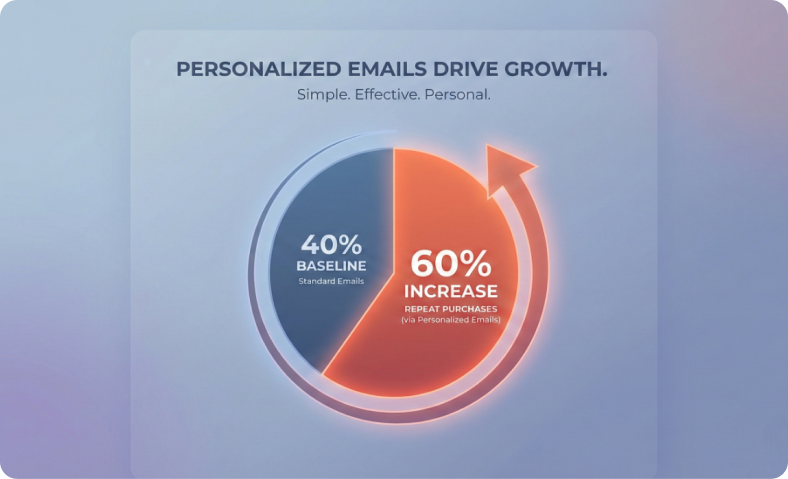
Personalization and behavioral targeting help eCommerce brands send fewer emails with better results.
Instead of broad messages, brands use customer actions and preferences to deliver relevant content that drives repeat sales.
Personalized content impact
Personalized content helps customers feel understood. Messages based on past behavior and preferences drive repeat purchases and higher spending.
23. Personalized emails raise repeat purchases by 60%
Relevant product and content suggestions encourage customers to return.
24. Repeat buyers spend 31% more than first-time buyers
Loyal customers place higher-value orders over time.
Behavioral segmentation (Browse, purchase, cart)
Behavior-based emails react to what shoppers do on the site. These messages reach customers at the right moment with clear intent.
25. Cart emails convert about 50% of clickers
Shoppers who return from cart emails are very likely to buy.
26. Browse abandonment emails earn 2× higher CTR
Reminding shoppers about viewed products increases clicks.
Zero-party & First-party data in eCommerce email
Having owned customer data helps brands send safer and more relevant emails. It also protects inbox placement as privacy rules tighten.
27. First-party data improves inbox trust and delivery
Consent-based data reduces spam filtering and bounces.
Preference centers reduce spam complaints by allowing users to control the frequency and content.
Localization & Globalization
Localized emails feel more relevant to global shoppers. Language, timing, and regional context improve engagement.
28. Localized emails improve engagement by up to 20%
Customers respond better to familiar language and local timing.
Language and send-time alignment increase relevance and clicks.
Automation & Lifecycle email flows
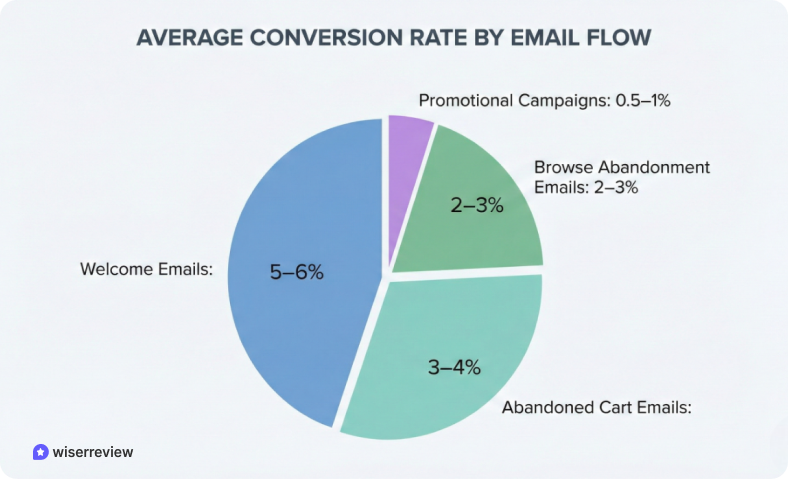
Automation helps eCommerce brands send the right email at the right time without manual work.
Lifecycle emails respond to customer actions and support sales from the first visit to repeat purchase.
Welcome emails
Welcome emails set the tone for new subscribers. They introduce the brand, explain value, and encourage the first purchase.
29. Welcome emails are the highest converting email type
They drive first purchases faster than any other email.
Abandoned cart & Browse abandonment
Abandonment emails target shoppers who showed interest but did not complete a purchase. These emails recover revenue that would otherwise be lost.
30. Cart emails convert 3–4% of recipients
Multiple reminders help recover more abandoned sales.
Post-Purchase / Retention Flows
Post-purchase emails keep customers engaged after checkout. These emails support repeat buying and long-term value.
31. Retaining customers costs 5× less than acquisition
Email supports reviews, reorders, and loyalty programs.
Multi-channel & Cross-channel automation
Email works best when combined with other channels. SMS and push help with urgency, while email handles details and closes sales.
Email supports SMS and push notifications, but email drives most sales.
Mobile, deliverability & Technical considerations
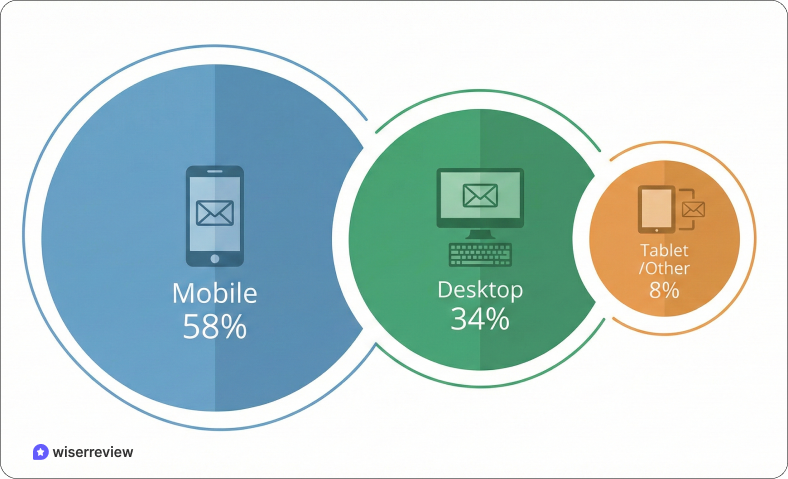
Technical setup plays a big role in email performance.
Mobile usage, inbox placement, email design, and trust signals all affect whether emails get opened, clicked, or ignored. Strong fundamentals protect revenue and engagement.
Mobile email statistics
Most shoppers read emails on their phones. Emails that do not load or read well on mobile lose clicks and sales.
32. Mobile devices account for 55–60% of email opens
Most eCommerce emails are first opened on smartphones.
Short subject lines, clear buttons, and fast-loading designs perform better on mobile screens.
Deliverability & Authentication
Deliverability decides whether emails land in the inbox or spam. Proper setup protects sender’s reputation and revenue.
33. Proper authentication improves inbox placement
SPF, DKIM, and DMARC help mailbox providers trust emails.
Poor authentication reduces visibility even if the content is strong.
Email design & Interactive elements
Email design affects how users read and act. Simple layouts work better than heavy visuals or clutter.
Clear CTAs, readable text, and clean spacing improve clicks. Interactive elements should stay light to avoid loading issues.
Privacy, Data compliance & Consumer trust
Trust affects engagement and deliverability. Clear consent and transparent data use protect long-term email performance.
Permission-based emails reduce complaints and unsubscribes.
Respecting user choices builds loyalty and inbox trust.

All your reviews in one place
Collect reviews, manage every response, and display them where they matter most.
Start Free →Trends & Forecasts for eCommerce Email Marketing
Email marketing keeps changing as technology, privacy rules, and customer behavior shift. Brands now focus on smarter targeting, fewer emails, and better timing instead of volume.
This section explains where eCommerce email marketing is heading and what matters next.
AI, machine learning & Predictive email
AI helps brands send emails at the right time with the right content. It reduces guesswork and improves results without extra effort.
AI supports subject line testing, send-time optimization, and product recommendations. Predictive models help identify customers who are likely to buy again or drop off.
Email + Multi-channel integration
Email works best as part of a larger system. Brands combine email with SMS, push, and on-site messaging to guide customers across the journey.
Email handles detailed content and follow-ups. SMS and push add urgency. Together, they improve conversion without overwhelming users.
Growth of email marketing revenue & Budget
Email budgets remain steady because returns stay high. Brands continue to invest in email tools, automation, and data rather than increasing ad spend.
Most growth comes from better targeting and lifecycle flows, not sending more emails.
Emerging behavior & Consumer expectations
Shoppers expect relevant emails and fewer interruptions. They want clear value, helpful timing, and easy control over preferences.
Customers respond better to emails that align with their actions and interests rather than generic promotions.
What eCommerce brands should focus on
Brands that win with email focus on quality, not volume. Strong basics matter more than new features.
Key focus areas include:
- Automation and lifecycle flows
- Clean lists and first-party data
- Personalization based on behavior
- Mobile-friendly design
- Clear consent and trust
Conclusion
Email marketing remains a strong channel for eCommerce in 2026. It brings repeat buyers, recovers lost carts, and drives steady revenue at low cost.
The data shows that automation, segmentation, and clean customer data lead to better results. Fewer emails with better timing perform better than bulk sending.
Brands that focus on trust, mobile-friendly design, and behavior-based flows will continue to see consistent growth from email.
Also see:
Frequently asked questions
Yes. Email continues to deliver high ROI, strong conversion rates, and repeat purchases, even as ad costs rise.
Click-through rate and conversion rate matter more than open rate, especially after recent email privacy changes.
There is no fixed number. Brands see better results by sending fewer emails that are relevant and timed based on user behavior.
Yes. Automated emails like welcome and cart recovery flows convert much higher than one-time promotional emails.
Focus on automation, clean lists, mobile-friendly design, explicit consent, and behavior-based targeting.

Krunal