4 min
4 min 
Online shoppers expect stores to feel relevant. They want products, offers, and messages that match their needs. Generic shopping no longer works.
Personalization now affects trust, conversions, and repeat sales. Brands that fail to personalize lose customers fast.
This blog shares eCommerce personalization statistics. Each stat explains how personalization impacts shopping behavior and business growth.
Top highlight
- 76% of customers expect personalized shopping experiences.
- 71% feel frustrated when personalization is missing.
- Personalization increases revenue by 10–15%.
- 80% prefer buying from brands that personalize.
- 65% remain loyal to brands that offer good personalization.
- Over 50% of purchases are influenced by recommendations.
- Personalized emails deliver 6× higher transactions.
- AI personalization boosts conversions by up to 30%.
- 60% of shoppers become repeat buyers after personalization.
- Only 48% of shoppers feel personalization is done well.
Shopping experience & Expectations
Personalization shapes the first impression of an online store. Shoppers quickly decide if a store feels relevant or generic, which affects trust and buying intent.
Customers expect brands to understand their needs. When this does not happen, the experience feels disconnected and frustrating.
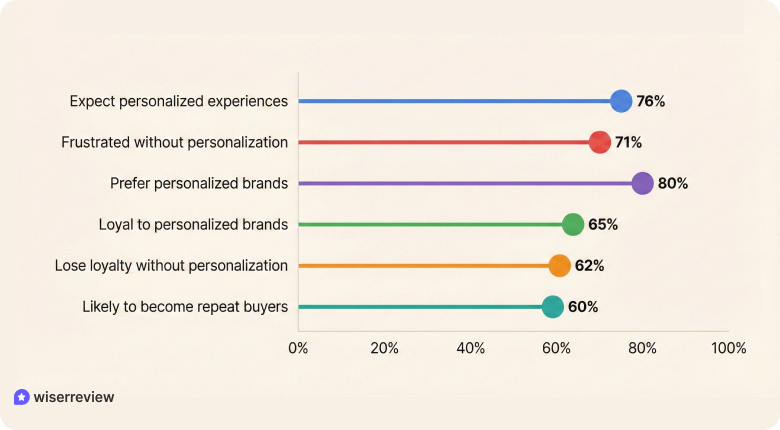
1. 76% of consumers expect personalized shopping experiences.
Most shoppers now assume stores will adapt content, products, and offers to them. When this expectation is not met, the experience feels outdated.
2. 71% of shoppers feel frustrated when personalization is missing.
Showing the same products and messages to every visitor makes customers feel ignored. This frustration often leads to quick exits.
3. 80% of consumers prefer buying from brands that personalize.
Shoppers trust brands more when content feels relevant.
Personalization reduces hesitation and helps customers decide faster.
4. 65% of customers stay loyal to brands that personalize well.
Good personalization builds familiarity.
Customers return because the store feels easier to use and more helpful each time.
5. 62% of consumers lose loyalty when experiences are not personalized.
Poor or missing personalization damages long-term relationships. Customers may switch even if prices are lower.
6. 60% of shoppers expect to become repeat buyers after personalization.
When customers feel understood, they are more likely to come back. Personalization directly supports repeat purchases.
On-site & Product recommendations
On-site personalization helps shoppers decide faster. Relevant product suggestions reduce search time and increase purchases.
Product recommendations guide customers based on their behavior and intent, improving conversions and order value.
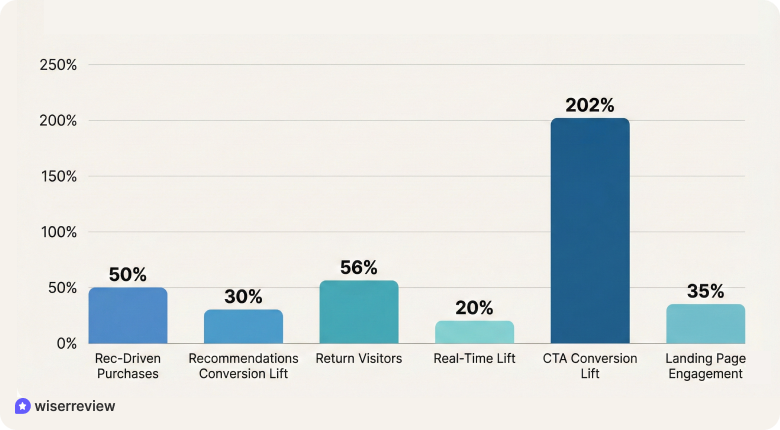
7. Product recommendations influence over 50% of online purchases.
More than half of online purchases are affected by recommended products.
Customers often rely on recommendations rather than browsing categories manually.
8. Personalized recommendations increase conversion rates by up to 30%.
When product suggestions match shopper intent, customers are more likely to add items to their cart and complete checkout.
9. 56% of shoppers return to sites with personalized recommendations.
Good recommendations create familiarity. Customers return because the store is easier to shop from each time.
10. Real-time personalization converts 20% better than batch updates.
Real-time recommendations respond to current behavior. They work better than static or delayed suggestions.
11. Personalized calls-to-action improve conversions by 202%.
CTAs that reflect user behavior perform far better than generic buttons.
Clear relevance drives clicks.
12. Personalized landing pages increase engagement by 35%.
Landing pages that adapt to traffic source or user intent keep shoppers engaged longer and reduce bounce rates.
Email, marketing, & Automation personalization
Email and automation remain some of the most effective personalization channels in eCommerce.
Generic email campaigns no longer perform well.
Customers ignore mass emails that do not match their interests, timing, or shopping history. Behavior-based automation creates relevance.
13. Personalized emails generate 6× higher transaction rates.
Emails that reflect customer behavior and preferences drive more purchases. Relevance makes customers more likely to act.
14. Segmented emails increase open rates by 65%.
Sending emails based on segments such as location, purchase history, or interests improves visibility and reduces email fatigue.
15. Personalized subject lines increase click rates by 14%.
Subject lines that reference user intent or past activity encourage more clicks without changing the message itself.
16. Behavior-based automation generates 320% more revenue.
Triggered emails, such as cart recovery or product follow-up,s perform far better than scheduled bulk campaigns.
17. Personalized offers deliver 3× higher ROI than mass promotions.
Targeted discounts and offers reach the right shoppers, which reduces wasted marketing spend.
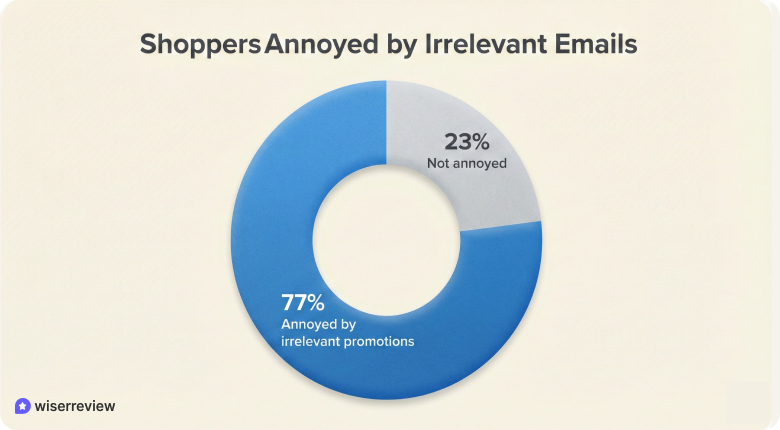
18. 77% of shoppers feel annoyed by irrelevant promotions.
Poor targeting damages trust and can push customers away from future emails.

All your reviews in one place
Collect reviews, manage every response, and display them where they matter most.
Start Free →Data, AI, technology & Scalability
Technology now sits at the center of personalization. Manual rules are no longer enough when stores handle thousands of users, products, and interactions every day.
AI and data help brands personalize faster, more accurately, and at scale.
Instead of guessing what customers want, systems learn from behavior and adjust automatically.
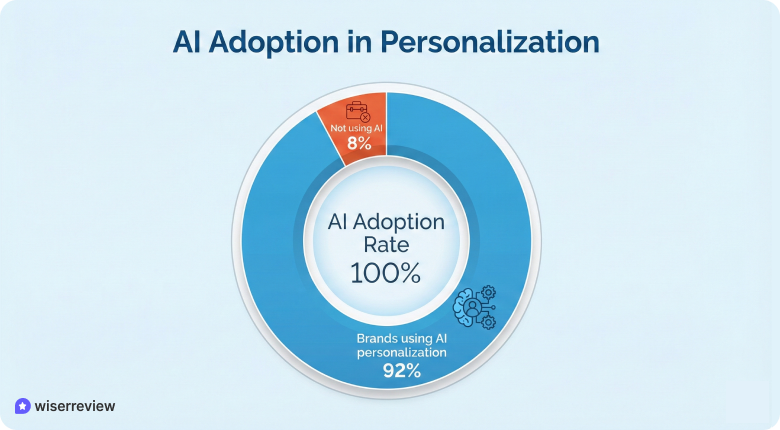
19. 92% of brands use AI-driven personalization.
Most eCommerce brands rely on AI to manage personalization across products, content, and messaging. AI allows personalization without manual effort.
20. AI-based personalization improves conversions by 20–30%.
AI reacts to real customer behavior. It adjusts recommendations, offers, and content based on user intent to improve accuracy.
30. Personalization drives a 10–15% increase in revenue.
Relevant experiences help customers decide faster. This leads to higher conversion rates and larger order values.
31. Top-performing brands generate 40% more revenue from personalization
High-growth brands invest more in data, testing, and automation. They treat personalization as a core system, not an add-on.
32. 78% of brands rely on first-party data for personalization.
Privacy rules limit third-party tracking. Brands now use browsing behavior, purchase history, and on-site actions that they collect themselves.
33. 73% of leaders say AI will reshape personalization strategies.
AI adoption will continue to grow as brands seek greater speed, scalability, and accuracy.
How to use these statistics for your eCommerce strategy
Statistics matter only when they lead to action. Personalization drives revenue and loyalty when applied in the right areas.
Use these insights to focus on what affects buying decisions, fix gaps, and scale what works.
Audit current Personalization maturity
Before improving personalization, brands need to understand their current position.
Most stores believe they personalize well, but customers often disagree. An honest audit helps identify gaps between intent and execution.
26. Only 48% of consumers feel personalization is done well.
This gap shows that many brands overestimate their personalization quality. Reviewing real customer experiences is critical.
Key areas to audit:
- Product pages and recommendations.
- Email relevance and timing.
- Repeat customer recognition.
- Consistency across devices.
Fixing basics often delivers the fastest results.
Quick wins to consider
Not all personalization requires complex tools. Small changes can improve results quickly.
Focus on relevance and behavior rather than volume.
25. 56% of shoppers are more likely to return after personalized experiences.
Simple personalization increases repeat visits and customer familiarity.
Quick wins include:
- Recently viewed products.
- Related and complementary items.
- Behavior-based email triggers.
- Location-based content.
These changes require minimal setup yet deliver a clear impact.
Longer-term strategy
Sustainable personalization needs planning and investment. Long-term success comes from building systems that adapt as traffic and data grow.
Brands that commit early gain a competitive advantage.
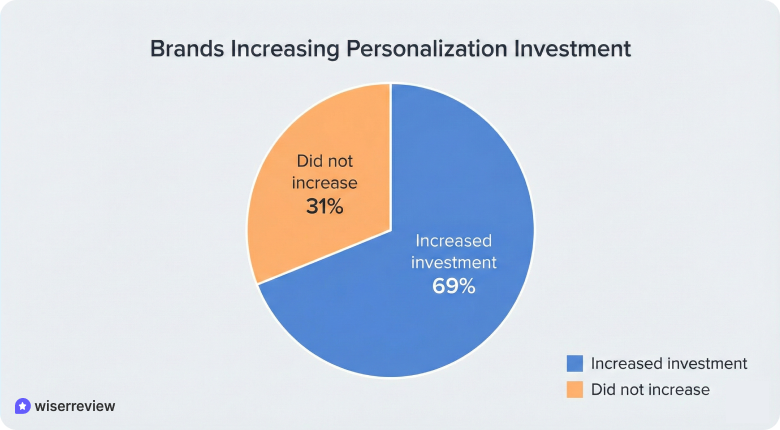
28. 69% of businesses increased personalization investment despite economic pressure.
This shows personalization remains a priority even during slowdowns.
29. Marketing teams now allocate about 40% of budgets to personalization.
Personalization has shifted from an experiment to a core strategy.
Long-term focus areas:
- Centralized customer data.
- AI-driven personalization logic.
- Cross-channel consistency.
- Continuous testing and optimization.
Pitfalls to avoid
Poor personalization creates more harm than no personalization.
Many brands fail due to the overuse of data or disconnected systems.
30. Only 35% of companies have achieved true omnichannel personalization.
Most brands struggle to connect experiences across email, site, and ads.
Common mistakes:
- Over-personalizing sensitive data.
- Using outdated or inaccurate data.
- Showing irrelevant recommendations.
- Ignoring privacy and consent.
Avoiding these issues protects trust and performance.
All your reviews in one place
Collect reviews, manage every response, and display them where they matter most.
Start Free →Conclusion
Personalization now defines how customers shop online. Shoppers expect brands to understand their needs and show relevant content at every step.
The data proves personalization increases conversions, loyalty, and revenue. Brands that delay improvements fall behind, even if their pricing is competitive.
Start with simple personalization, fix gaps, and scale using data and AI.
The brands that focus on relevance and trust build stronger customer relationships and long-term growth.
Also see:
Frequently asked questions
eCommerce personalization is the practice of showing shoppers relevant products, offers, and content based on their behavior, preferences, or past purchases.
Personalization helps increase conversions, build trust, and improve repeat sales as shoppers expect relevant experiences instead of generic stores.
Personalization reduces friction by showing products and messages that match shopper intent, which helps customers decide and buy faster.
Product recommendations, behavior-based emails, personalized offers, and real-time on-site content are some of the most effective methods.
AI is not required, but it helps scale personalization by analyzing customer behavior and adjusting experiences automatically as traffic grows.

Krunal