4 min
4 min 
Most customers check reviews before they choose a business. If your review and messaging tool is slow, confusing, or limited, you miss chances to get reviews and lose leads.
DemandHub helps send review requests and manage messages, but it can feel heavy for small teams. Pricing is not very clear, and some features are better suited for large groups than for single locations.
This guide walks you through 10 DemandHub alternatives that are easier to get started with, transparent on pricing, and strong in review collection and messaging. You can compare them and pick the one that fits your budget and setup.
Let’s get started!
1. WiserReview
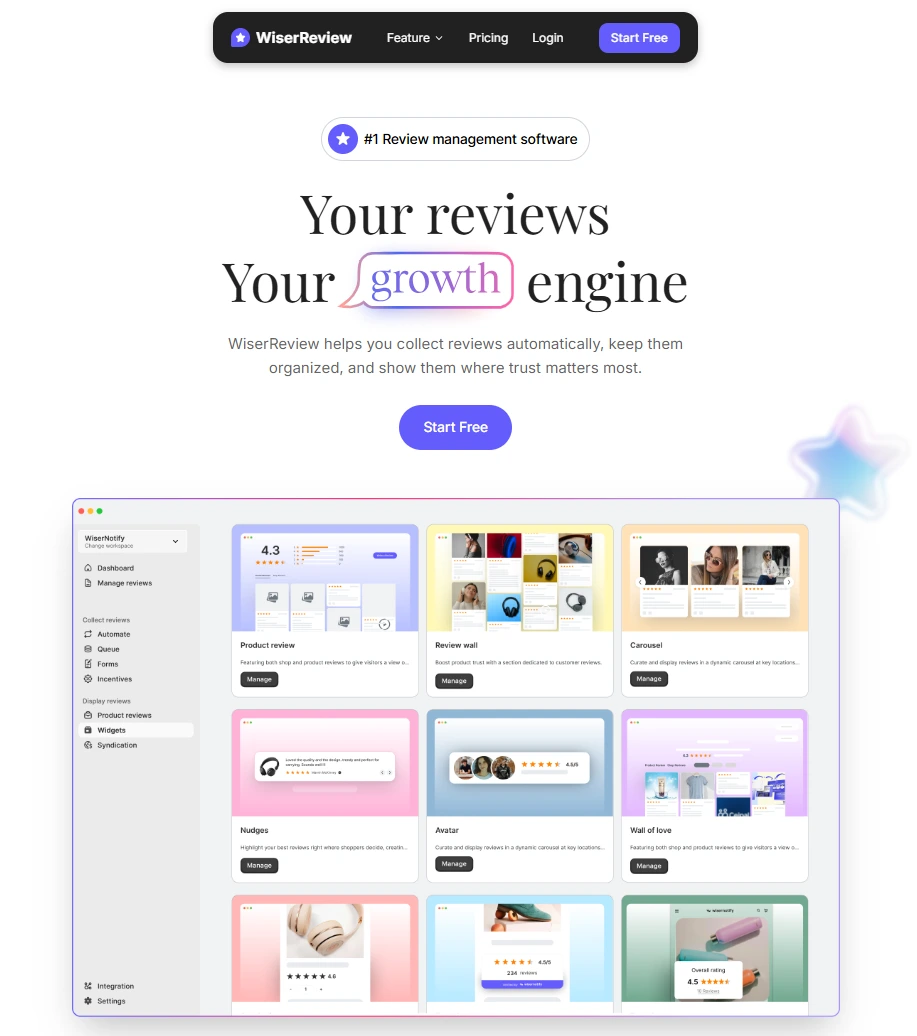
WiserReview is a simple tool that helps you collect, manage, and show customer reviews in one place.
It works well for online stores, service businesses, and local businesses that want steady review growth without a complex setup.
You can collect reviews through forms, emails, and automation, and then display them on your website with clean and modern widgets.
Key Features
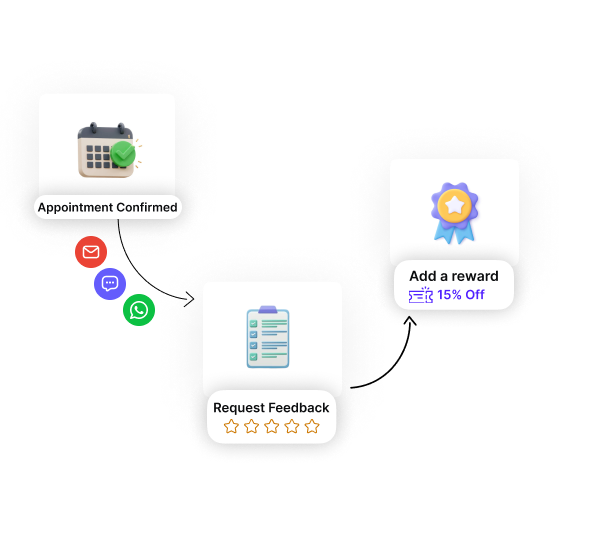
Automated review request emails
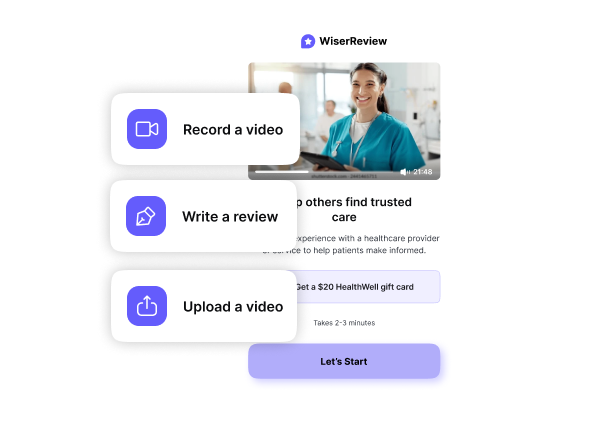
Collect text, photo, and video reviews
Smart filters to block spam or unwanted content
Widgets like carousels, review walls, pop-ups, and trust badges
Works with WooCommerce, Zapier, and many other tools
Clean dashboard with review analytics
SEO-friendly review snippets for better search visibility
Why Prefer WiserReview
- Easy setup that takes only a few minutes
- Simple pricing that fits small and growing teams
- More flexible display options than most tools in this category
- Strong automation to help you get more reviews with less effort
- Clean design that fits well with any website style
- Gives you complete control over review moderation and what appears on your site

Affordable alternative to DemandHub
WiserReview helps you collect, manage, and display reviews without high costs.
2. Podium
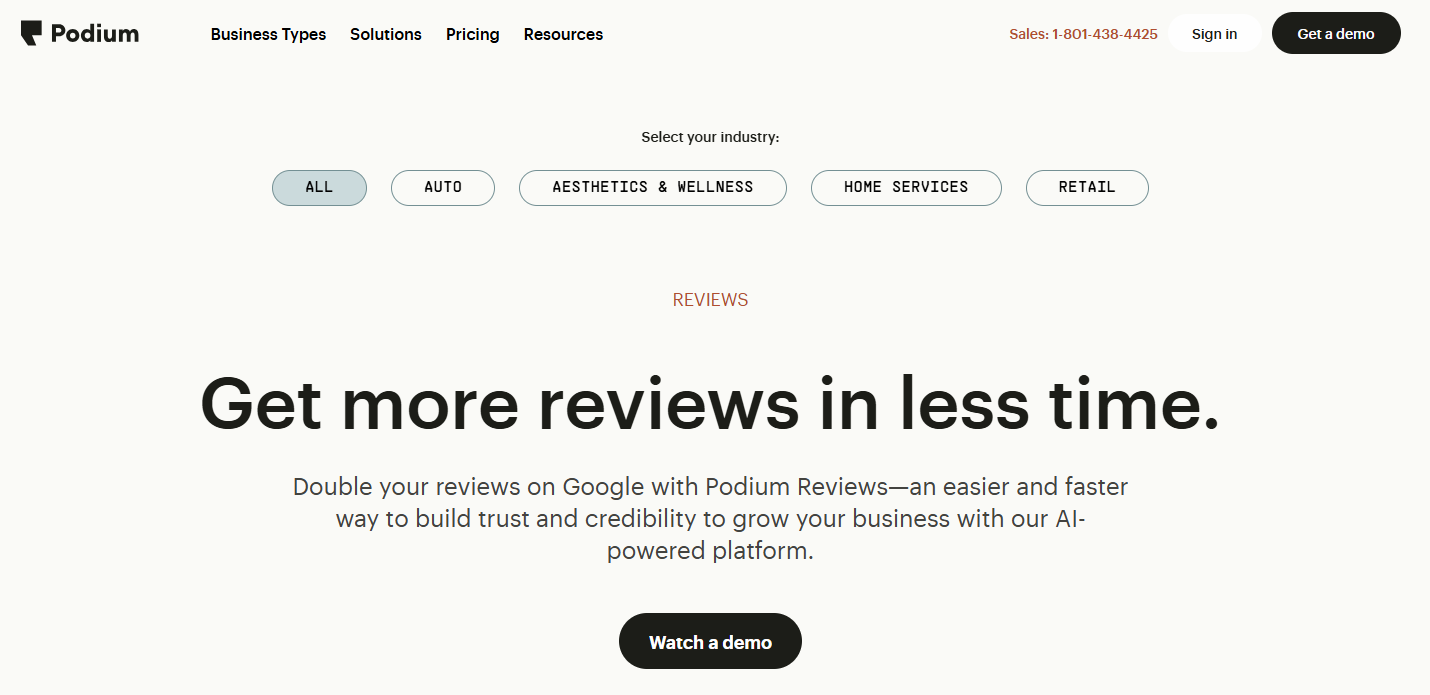
Podium is designed for businesses that want to consolidate reviews, texting, and messaging in one centralized hub.
It helps you send review requests via SMS, manage customer chats, and gather feedback quickly after every interaction.
Podium also lets you track responses, store messages, and engage with customers from a unified dashboard. It works well for service-based businesses, multi-location companies, and local stores seeking to enhance their responsiveness.
Main Features
- SMS-based review request automation
- Unified inbox for chats, texts, and reviews
- Review monitoring & response tools
- Team messaging and workflow assignments
- Contact & lead capture via text
- Analytics on review volume, response time, and sentiment
 Pros
Pros - ◆ Easy to engage customers via text right away
- ◆ Brings messaging and reviews into one interface
- ◆ Strong support for local and service-based businesses
- ◆ Good tracking of review activity and responsiveness
- ◆ Helps convert chat/leads into reviews and customers
 Cons
Cons - ◆ Higher cost for smaller single-location businesses
- ◆ Some review platforms (e.g., Yelp) may not integrate fully
- ◆ Extra fees for additional phone numbers and texts
- ◆ Setup can be heavier when you have many locations
- ◆ Some advanced features are only available on the top plans
Pricing: Podium offers multiple paid plans with custom pricing tailored to business size and specific needs.
Rating: 4.8/5
3. Birdeye
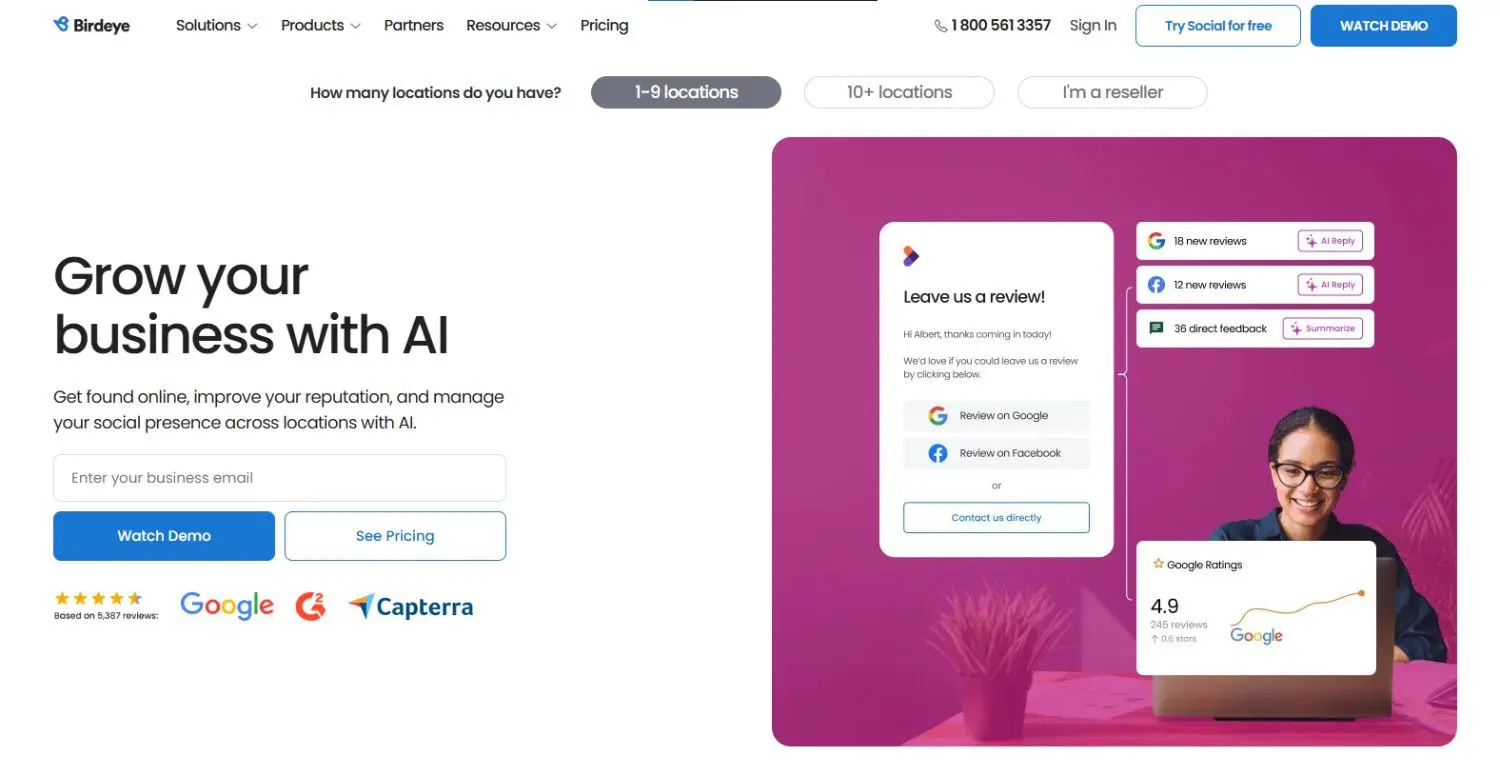
Birdeye markets itself as a complete reputation and customer-experience platform.
It’s used by thousands of businesses and aims to help you manage reviews, messaging, listings, and experience all in one place.
It utilizes AI to monitor feedback across channels, send review requests, enhance local search rankings, and facilitate customer engagement at scale. This makes it suitable for multi-location brands or fast-growing businesses.
Main Features
- Review generation via email/SMS/links
- AI-powered review monitoring and sentiment analysis
- Business listing management for local search
- Unified messaging and chat across channels
- Analytics dashboards for reputational insights
- Automated workflows for review responses
Pros - ◆ Very strong reputation-management and AI insight tools
- ◆ Scales well for many locations or larger teams
- ◆ Combines reviews, listings, and messaging fewer tools needed
- ◆ Trusted by prominent brands and recognized in its category
- ◆ Good reporting of customer feedback trends
Cons - ◆ The price is high for smaller single-location businesses
- ◆ Complexity may be more than needed for simple setups
- ◆ Custom pricing means less transparency for smaller users
- ◆ Might require training for the team to use advanced features
- ◆ Some users report slower onboarding when many integrations
Pricing: Its pricing starts from $299/month
Rating: 4.7/5
4. Weave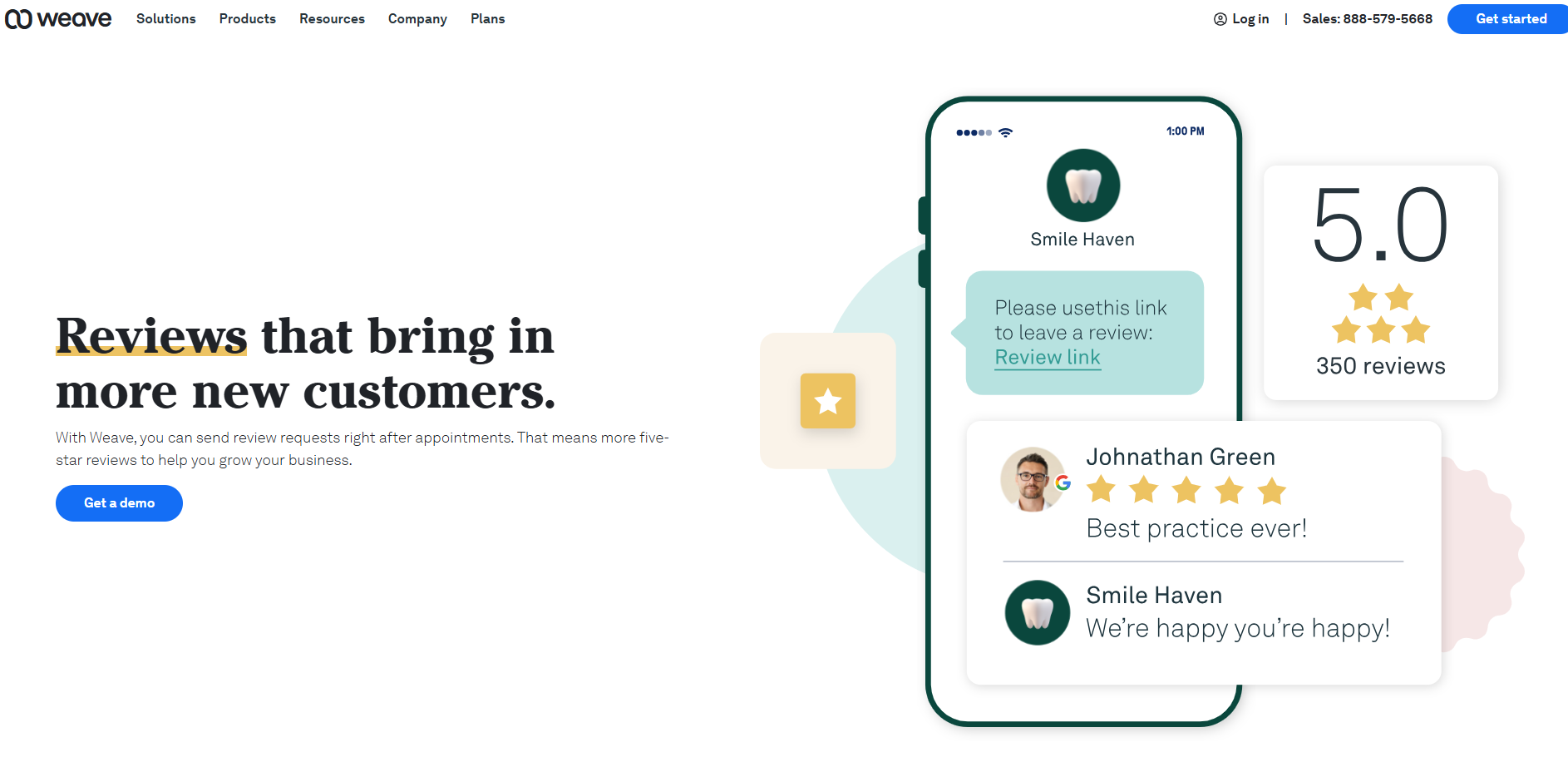
Weave focuses on businesses that communicate frequently with clients, such as clinics, service shops, and local offices.
It offers review features alongside complete communication tools (texts, calls, scheduling).
It’s useful if you want reviews but also want to improve your messaging and customer touchpoints in one system.
Main Features
- Texting and calling platform plus review requests
- Automated review prompts after customer interactions
- Unified communication dashboard (calls + texts + messages)
- Customer reminders and scheduling are built in
- Integration with business software for service operations
- Tracking of review performance and response rates
Pros - ◆ Good fit when messaging and customer contact are heavy parts of your workflow
- ◆ Combine review-growth + customer communication under one roof
- ◆ Strong in service-industry contexts (clinics, local shops)
- ◆ Straightforward interface that spans both communication and reputation
- ◆ Helps reduce the use of separate tools for SMS + reviews
Cons - ◆ The starting price is relatively high (may be more than review-only tools)
- ◆ Some review-specific features might be less advanced than pure review platforms
- ◆ Setup might require aligning your communication workflow
- ◆ Focused on service industries less fit for pure e-commerce or niche types
- ◆ Expansion or additional users may increase the cost significantly
Pricing: From $249/month
Rating: 4.6/5

Affordable alternative to DemandHub
WiserReview helps you collect, manage, and display reviews without high costs.
Start Free →5. Text Request
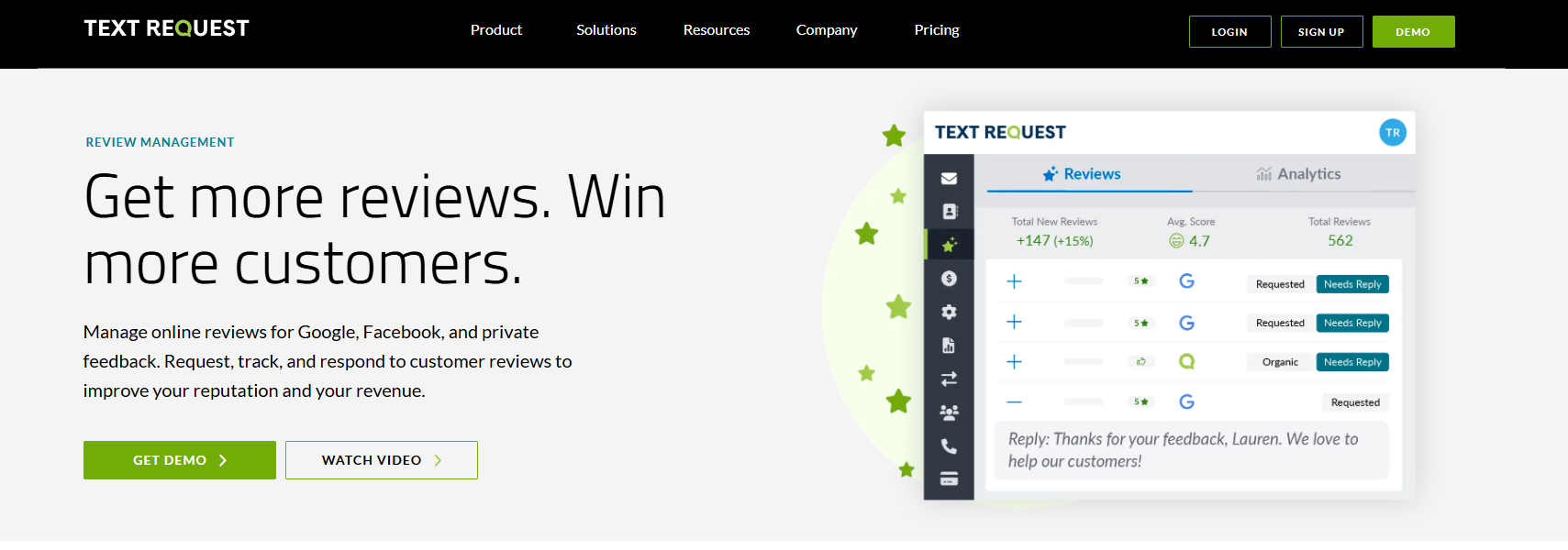
Text Request is a simpler tool that focuses on SMS communications, utilizing texting to drive review requests and gather feedback.
If most of your customer interactions happen via text or you already use SMS heavily, this platform provides a lean way to send review links, reminders, and follow-ups.
It’s less full-service than some reputation management suites, but it effectively supports review growth through texting.
Main Features
- SMS messaging and auto review-invitation links via text
- Two-way texting with customers (SMS + MMS)
- Review monitoring for Google/Facebook from texts
- Analytics on message clicks, review conversions, and sentiment
- Integration with CRMs and business tools
- Volume-based pricing for messages
Pros - ◆ Lower cost entry point compared to large reputation systems
- ◆ Excellent if texting is already a big channel for you
- ◆ Easy to launch and start sending review requests via SMS
- ◆ Flexible message volume plans
- ◆ Clear messaging and review tracking in one tool
Cons - ◆ Not as many full review-management features (widgets, listings, etc)
- ◆ Without integrations, it may require manual steps
- ◆ Best for businesses with an SMS-friendly customer base
- ◆ Less suited if you need full multi-channel review & reputation management
- ◆ Some message volume plans may get pricey with scaling
Pricing: Starts at around $59/month.
Rating: 4.6/5
6. Reputation
Reputation is a large-scale platform designed to monitor, measure, and improve how customers perceive your business.
It pulls in feedback from many channels (reviews, surveys, social posts), gives you insights via AI, and helps you act on issues.
If you’re managing multiple locations, various feedback sources, or want in-depth insight into customer sentiment, this platform is suited for you.
Main Features
- Multi-channel feedback collection (reviews, surveys, social)
- Central dashboard for brand reputation and sentiment
- Automated review request workflows
- Analytics and insights (trends, competitor comparison)
- Review monitoring and response tracking
- Integration with CRM and business systems
Pros - ◆ Very comprehensive for businesses that need big-picture reputation control
- ◆ Strong analytics and insight capabilities
- ◆ Scales across many locations and channels
- ◆ Combines survey & review feedback in one view
- ◆ Suitable for identifying operational issues via customer feedback
Cons - ◆ Pricing not publicly clear – usually custom and higher cost
- ◆ More features than many small businesses need
- ◆ May require a dedicated team or more setup for full value
- ◆ Some users find the interface complex when they only need to review growth
- ◆ Focusing on the enterprise may mean less focus on simpler SMB workflows
Pricing: Custom pricing
Rating: 4.3/5
7. NiceJob

NiceJob is a reputation software tool built for small to medium service businesses (plumbers, auto, contractors).
It emphasizes gathering reviews automatically, showing them on your website, sharing them on social media, and building trust.
If you want something review-first with minimal fuss, NiceJob is a strong choice.
Main Features
- Automated review request workflows after jobs
- Website widgets to display reviews and trust badges
- Social sharing of reviews to Facebook/Instagram
- Review monitoring across the web
- Integration with business tools and Zapier
Pros - ◆ Very easy to use for small teams and service businesses
- ◆ Focused on review generation rather than complete communication suites
- ◆ Affordable for service-type businesses
- ◆ Good trust-building display options (widgets, badges)
- ◆ Works in the background without heavy manual work
Cons - ◆ Less suited for large multi-location or SMB setups with many users
- ◆ Customisation of display widgets may be limited
- ◆ Pricing can feel high if you start small
- ◆ Fewer messaging or CRM features compared to full platforms
- ◆ Could require add-on tools for listings or advanced analytics
Pricing: Starts at $75/month
Rating: 4.8/5
8. Trustpilot

Trustpilot is a significant public review platform that helps you collect customer reviews, embed them on your site, show trust badges, and improve your search credibility.
Because it’s well recognized by consumers, having strong Trustpilot reviews can boost your brand image.
It works well if you want a global reach and consumer-facing review presence.
Main Features
- Invite customers to leave reviews on the Trustpilot page
- Review display widgets and trust badges for websites
- Analytics on review volume, ratings, and customer segments
- Integration with Google Seller Ratings, search ads
- Community & public-review visibility to boost trust
Pros - ◆ Powerful consumer recognition and impact on buying decisions
- ◆ Suitable for businesses focused on external reviews and public perception
- ◆ Free tier available to start collecting reviews
- ◆ Widgets and badges help build trust quickly
- ◆ Works globally and across many industries
Cons - ◆ Free tier is basic; useful features often require a paid plan
- ◆ Pricing can escalate for large invitation volumes or advanced analytics
- ◆ Historically some concerns about fake reviews or manipulation in the review ecosystem
- ◆ May not integrate deep into your internal messaging or CRM workflows
- ◆ Focus is more on consumer-side review presence than on internal workflow automation.
Pricing: Free plan available, paid starts at $225/month
Rating: 4.5/5
9. ReviewTrackers
ReviewTrackers focuses on monitoring and managing what people say about your business online.
It gathers reviews from many platforms, gives you alerts, lets you respond, and provides analytics for your feedback.
If you want to stay on top of reviews across channels and respond quickly, ReviewTrackers presents a solid tool.
Main Features
- Multi-platform review collection and monitoring
- Alerts for new reviews and sentiment changes
- Dashboard for tracking review trends and performance
- Response management tools for review replies
- Analytics comparing review performance by location/channel
Pros - ◆ Strong monitoring across platforms is helpful if you have locations in many places.
- ◆ Lower cost entry point compared to full-service reputation platforms
- ◆ Suitable for tracking review volume, response times, and trends
- ◆ Simple to set up and operate for review tracking
- ◆ Helps identify areas needing attention via feedback
Cons - ◆ Fewer features around review generation and display compared to complete suites
- ◆ Less emphasis on messaging or customer-contact workflows
- ◆ If you need automation of review invites, you might need add-on tools
- ◆ The interface may feel basic if you expect advanced workflow features
- ◆ Some features may require higher tiers or add-ons
Pricing: Starts at $119/month
Rating: 4.4/5
10. BrightLocal
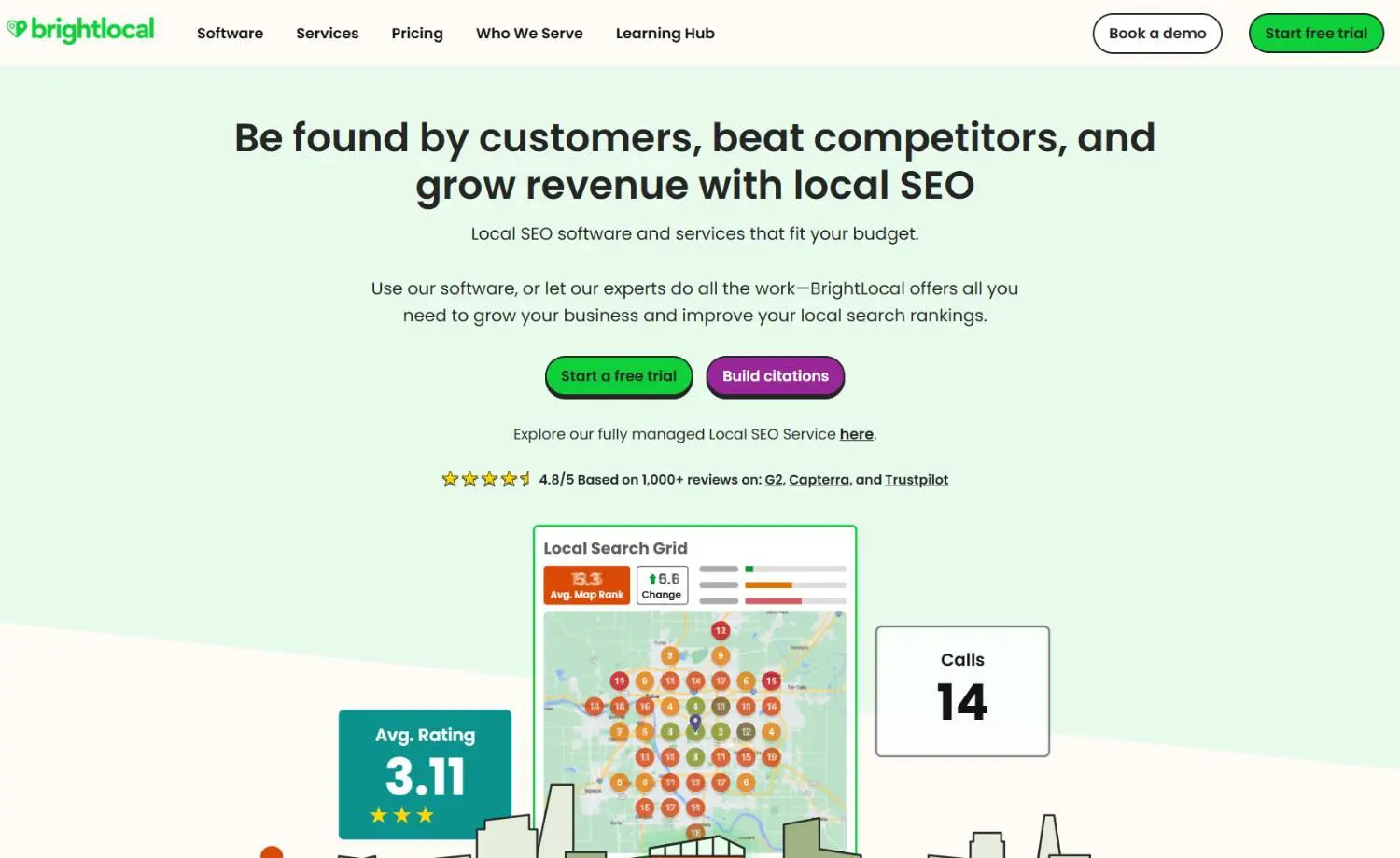
BrightLocal helps local businesses improve their local search visibility and review presence.
While it covers review monitoring and generation, its strong suit is local SEO tracking your business listings, local search rankings, and review growth in tandem.
It fits businesses focused on local markets and wanting reviews plus better local search positioning.
Main Features
- Review generation tools for local listings
- Monitoring of local search listings and business citations
- Analytics on local search performance and review trends
- Widgets for review display on the website
- Multi-location tools for tracking by region
Pros - ◆ Good value for local businesses focused on SEO and reviews together
- ◆ Helps with both reviews and search visibility from one tool
- ◆ Flexible plans that scale across locations
- ◆ Review display and listing tools are ready-made for local businesses
- ◆ Precise tracking of local performance tied to reviews
Cons - ◆ Review invitation features may be less advanced than dedicated review tools
- ◆ Some features require SEO knowledge to use fully
- ◆ Messaging or unified inbox features are minimal compared to full suites
- ◆ Not as many enterprise-scale features for large chains
- ◆ Might need add-ons for more advanced review automation
Pricing: Starts at $39/month
Rating: 4.6/5
How to choose the right DemandHub alternative
Choosing the right tool depends on how your business collects reviews, handles customer messages, and interacts with customers daily.
A good alternative should make your workflow easier, not heavier. Here are the key things to check before you decide:
➔ Ease of setup
Choose a tool that you can install and start using within minutes.
This avoids lengthy onboarding and keeps your team moving.
➔ Review request options
Make sure it supports email, SMS, links, QR codes, and automatic triggers.
More ways to request reviews means more reviews collected.
➔ Messaging and inbox features
If your business frequently receives customer questions, choose a tool with a clean inbox, quick replies, and multi-channel messaging capabilities.
➔ Support for your industry
Different industries need different options.
Verify if the tool is suitable for clinics, service businesses, e-commerce stores, or multi-location setups.
➔ Review display widgets
Look for carousels, grids, badges, and review walls.
These help you show reviews in a clear and trust-building way on your site.
➔ Moderation and control
Ensure you can filter spam, block specific words, edit details, and control what goes live on your website.
➔ Pricing clarity
Select a tool with straightforward pricing that suits your team’s size.
Avoid platforms that require calls for basic plans.
➔ Integrations
Verify that it integrates smoothly with your CRM, website platform, booking system, or store checkout.
All your reviews in one place
Collect reviews, manage every response, and display them where they matter most.
Start Free →Conclusion
Choosing the right DemandHub alternative comes down to what your business needs daily.
You want a tool that helps you collect more reviews, manage messages without stress, and keep everything simple for your team.
Each option on this list offers something different: some focus on texting, some on deep analytics, and others on fast review growth.
Take a moment to compare features, pricing, and ease of use for each tool. Select the one that best fits your workflow, industry, and budget.
The right platform will help you consistently receive steady reviews, build trust, and provide your customers with a better overall experience.
Frequently asked questions
A good alternative should help you collect reviews easily, manage messages in one place, and offer clear pricing. It should fit your business size and workflow without adding extra steps.
Yes. Most review apps let you import your existing reviews or connect your platforms so nothing is lost when you switch.
Tools with simple setup and open pricing, like WiserReview, NiceJob, or Text Request, work well for small teams because they don’t feel heavy.
Platforms like Birdeye, Podium, and Reputation offer stronger features for large teams, more locations, and deeper reporting.
Yes. Many tools support Google reviews, structured data, and review widgets that help your business show up better in local search results.

Krunal