3 min
3 min 
Big Cartel and Shopify are common choices for small businesses that want to sell online.
Both platforms help you set up an online store. They solve different problems. Big Cartel works best for artists, creators, and small sellers who want a simple store with low costs. Shopify suits growing businesses that need more features, apps, and control.
This guide compares Big Cartel and Shopify side by side. It explains pros, cons, pricing, and use cases. The goal is simple: help small and mid-sized businesses choose the right platform based on how they sell today and how they plan to grow.
Quick comparison: Bigcartel vs Shopify
| Features | Big Cartel | Shopify |
|---|---|---|
| Pricing | Free plan plus low-cost plans ($0–$30/month) | Plans start ₹1,994/month to ₹1,75,000/month |
| Product limits | Free: 5 products; Paid: up to ~500 products | Unlimited products on all plans |
| Transaction fees | No platform fees; payment processor fees only | No fees with Shopify Payments; extra if using external gateways |
| Ease of setup | Very simple, minimal steps | Simple, but more setup options |
| Design & themes | Few themes, limited control | Many themes, deep customization |
| App ecosystem | Very limited integrations | Large app marketplace with thousands of options |
| Advanced sales tools | Basic selling only | Abandoned cart, discounts, and multichannel selling |
| Inventory & reporting | Basic tracking only | Bulk import/export, deep analytics |
| Shipping tools | Basic shipping options | Real-time rates, label printing, and advanced shipping |
| Customer support | Email only during limited hours | 24/7 support options |
| Best for | Small catalogs, solo sellers, creatives | Growing stores, wide products, scaling businesses |
What is Bigcartel?
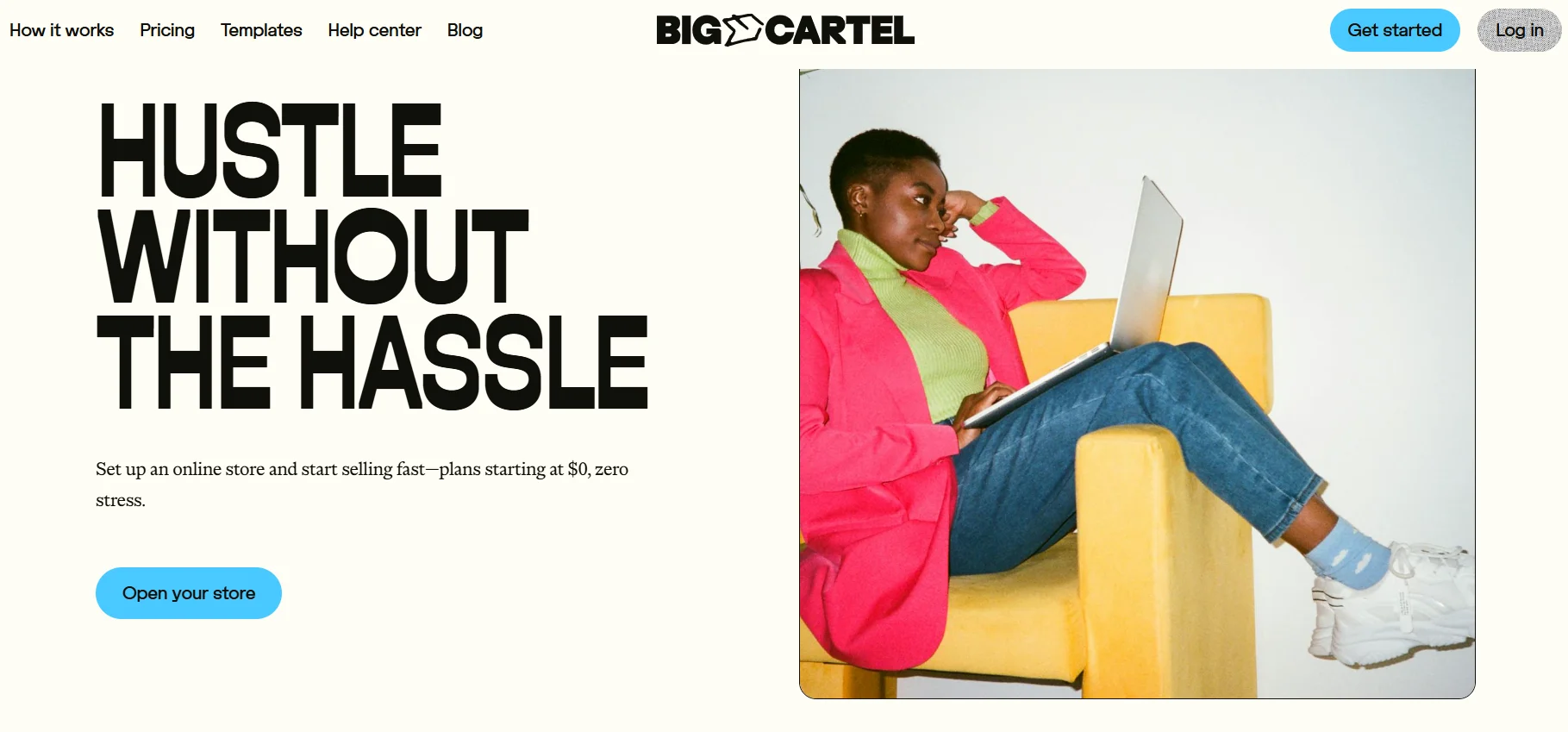
Big Cartel is an ecommerce platform built for artists, makers, and small sellers. It lets sellers list products, accept payments, and manage orders without complex settings.
Big Cartel keeps features limited on purpose. It does not push apps, add-ons, or advanced tools. This makes the platform easy to run but restrictive as sales grow.
The platform fits sellers who want a basic storefront and sell a few items each month. It is not built for large catalogs, heavy traffic, or long-term scaling.
What is Shopify?
Shopify is a full ecommerce platform for all-sized businesses. It helps you build, run, and grow an online store from one dashboard.
Shopify supports unlimited products, multiple sales channels, and many payment options. You can sell through a website, social media, marketplaces, and in person. The platform offers themes, apps, and tools to customize how your store works.
Shopify fits businesses that plan to grow. It handles larger catalogs, higher traffic, and complex operations. It costs more than basic platforms, but it gives more control and room to scale.
WiserReview is the best review management software. It helps you easily collect, manage, and display real customer reviews on your site in minutes. You control how reviews look and where they appear, without high costs or locked plans.
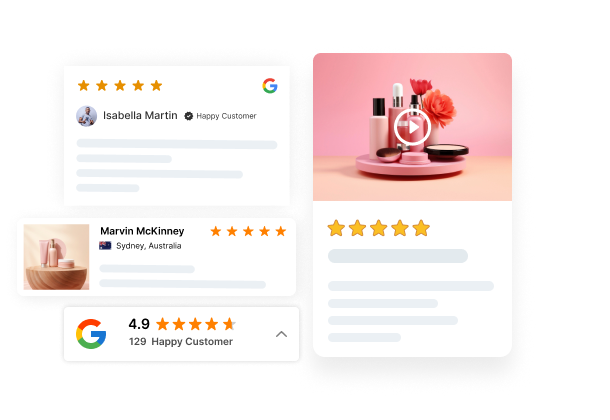
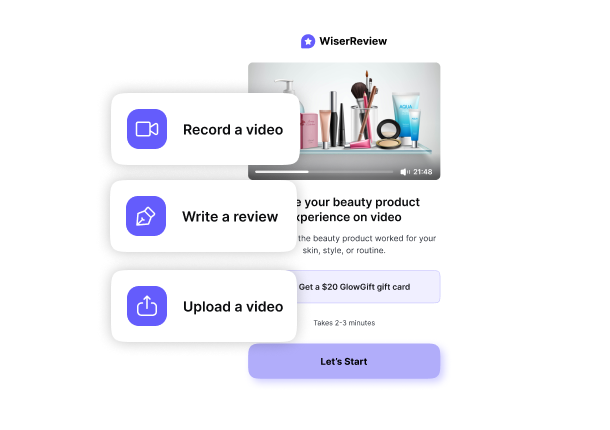
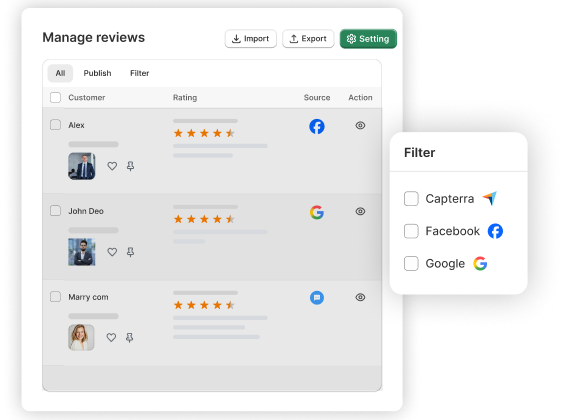
All your reviews in one place
Collect reviews, manage every response, and display them where they matter most.
Bigcartel vs Shopify: Feature-by-feature comparison
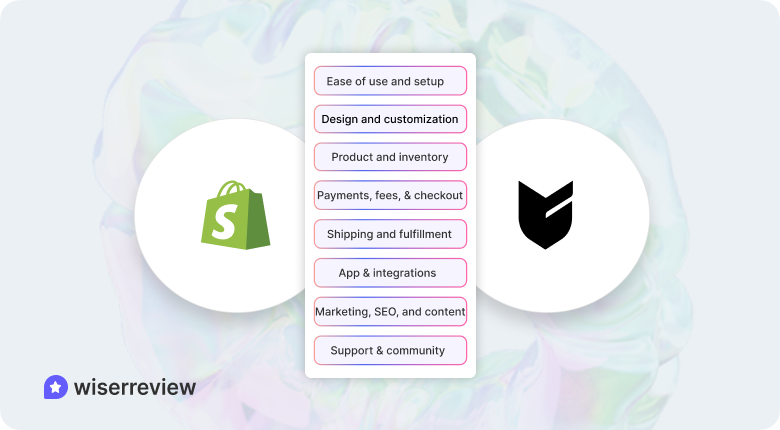
This section compares Big Cartel and Shopify on key features that matter to online businesses. It shows real differences in tools, limits, and control.
Ease of use and setup
Big Cartel focuses on fast onboarding. You sign up, choose a theme, add products, and publish your store. The dashboard stays clean and avoids advanced settings. This helps sellers who want to start quickly without learning ecommerce terms.
Shopify uses a guided setup process. It asks about your business type, products, shipping, taxes, and sales channels. This takes more time but prevents setup issues later. The dashboard includes many tools, which can feel heavy at first but help manage growth.
Summary:
Big Cartel reduces setup friction. Shopify adds structure for long-term use.
Design and customization
Big Cartel offers a small set of themes. Customization stays limited to layout options, colors, and fonts. You can edit theme code, but most sellers rely on basic changes. This keeps design simple but restricts brand control.
Shopify provides many free and paid themes. You can customize product pages, collections, navigation, and checkout layout. Apps and code access allow bigger changes. This supports branded storefronts and conversion-focused design.
Summary:
Big Cartel keeps design simple. Shopify supports full brand control.
Product and inventory management
Big Cartel limits the number of products based on the plan. Inventory tracking remains basic. You can manage stock, but bulk edits and advanced rules are not available. This works for small catalogs with stable inventory.
Shopify allows unlimited products and variants. It supports bulk updates, inventory sync, and multi-location tracking. You can manage stock across online, social, and in-person sales. This reduces manual work as product count grows.
Summary:
Big Cartel fits small catalogs. Shopify handles large and changing inventories.
Payments, fees, and checkout
Big Cartel supports basic payment providers. It does not add platform transaction fees. Checkout stays simple but offers fewer optimization options.
Shopify supports its own payment system and many third-party gateways. The checkout includes fraud protection, multiple currencies, and faster payment options. Extra fees apply when using external gateways.
Summary:
Big Cartel keeps costs simple. Shopify offers a stronger checkout experience.
Shipping and fulfillment
Big Cartel supports flat rates and simple shipping rules. Sellers often handle fulfillment manually. This works for low-order volumes.
Shopify includes shipping profiles, real-time carrier rates, label printing, and fulfillment integrations. You can automate shipping rules and manage multiple fulfillment partners.
Summary:
Big Cartel suits basic shipping needs. Shopify supports shipping at scale.
App ecosystem and integrations
Big Cartel limits third-party integrations. The platform avoids complexity but restricts feature expansion. Sellers must work within built-in tools.
Shopify offers a large app marketplace. You can add reviews, subscriptions, marketing tools, analytics, accounting, and automation. Apps let stores grow without rebuilding systems.
Summary:
Big Cartel stays minimal. Shopify grows with apps.
Marketing, SEO, and content tools
Big Cartel provides basic SEO settings and simple product pages. Marketing relies on manual promotion and external tools.
Shopify includes SEO controls, blogging, discount tools, email marketing, and social selling. You can manage campaigns and track performance from one dashboard.
Summary:
Big Cartel supports basic visibility. Shopify supports active marketing.
Customer support and community
Big Cartel offers email support and help articles. The community is small, with limited guides and tutorials.
Shopify provides 24/7 support via chat, email, and phone. It also has a large user community, documentation, and certified experts.
Summary:
Big Cartel offers limited help. Shopify provides ongoing support.
Pros and cons of Bigcartel and Shopify
This section lists the main strengths and weaknesses of Big Cartel and Shopify for online businesses.
Big Cartel
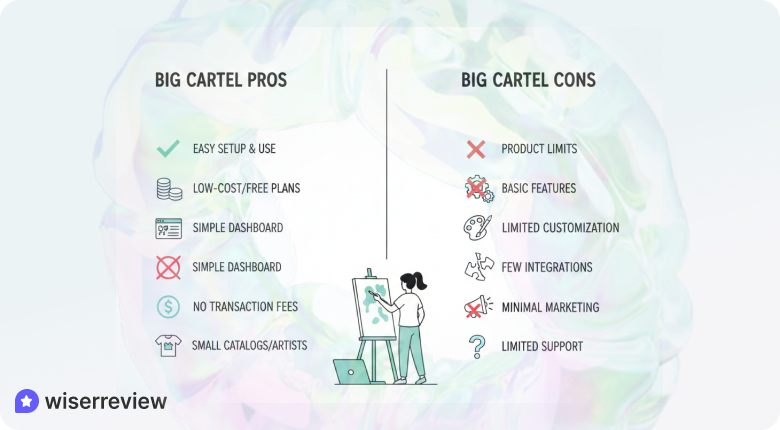
Pros
- Very easy to set up and use.
- Low-cost plans and a free option.
- Clean and simple dashboard.
- No platform transaction fees.
- Good for small catalogs and solo sellers.
Cons
- Product limits on all plans.
- Very basic features.
- Limited design and customization.
- Few integrations and add-ons.
- Minimal marketing and sales tools.
- Support options are limited.
Best fit: Creatives, artists, and small sellers who want a basic online presence without complex tools.
Shopify
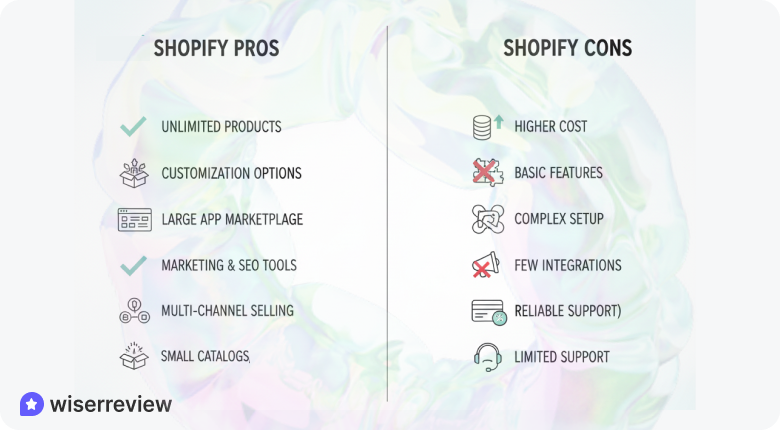
Pros
- Unlimited products and catalog size.
- Strong design and customization options.
- Large app marketplace for added functionality.
- Built-in marketing, SEO, and sales tools.
- Multi-channel selling (web, social, marketplaces).
- Reliable support and community resources.
Cons
- Higher cost, especially with apps and add-ons.
- More setup steps than basic platforms.
- Extra fees if using external payment gateways.
- It can be complex for first-time sellers.
Best fit: SMBs with growth goals, larger product catalogs, and a need for robust tools.
Best choice by business type
Different businesses need different tools. This section maps common SMB types to the platform that fits their daily work, budget, and growth plans.
Creators, artists, and makers
Best choice: Big Cartel
Artists and creators usually sell a small number of items. They want a store that works without setup friction. Big Cartel fits this need. It keeps tools minimal and costs low. You can focus on creating instead of managing software.
Why it works
- Small product catalogs
- Simple order flow
- Low monthly cost
Side projects and early-stage businesses
Best choice: Big Cartel
If you are testing a product or running a side business, Big Cartel helps you start fast. You avoid long setup time and high monthly fees. This makes it easier to validate demand before investing more.
Why it works
- Fast launch
- Low risk
- No complex tools to manage
Small ecommerce stores planning to grow
Best choice: Shopify
If growth is part of your plan, Shopify fits better. It supports more products, more traffic, and more sales channels. You can start small and expand without switching platforms.
Why it works
- Unlimited products
- Scales with traffic
- Strong store control
Product-heavy stores
Best choice: Shopify
Stores with many SKUs need strong inventory tools. Shopify handles large catalogs, variants, and bulk updates. Big Cartel becomes restrictive as product count grows.
Why it works
- No product limits
- Bulk inventory management
- Better stock tracking
Marketing-driven businesses
Best choice: Shopify
If your sales depend on SEO, content, discounts, and campaigns, Shopify gives built-in tools. Big Cartel requires external work for most marketing tasks.
Why it works
- Built-in SEO controls
- Discount and campaign tools
- Multi-channel selling
Online + in-person sellers
Best choice: Shopify
Businesses that sell online and offline need one system. Shopify syncs inventory and orders across channels. Big Cartel does not support this workflow well.
Why it works
- POS support
- Unified inventory
- Central order management
Budget-first businesses with simple needs
Best choice: Big Cartel
If budget matters more than features, Big Cartel stays practical. It handles basic selling without pushing upgrades or add-ons.
Why it works
- Lower ongoing cost
- Simple operations
- No feature overload

All your reviews in one place
Collect reviews, manage every response, and display them where they matter most.Wrap up
The choice between Big Cartel and Shopify depends on store size, budget, and growth plans.
Big Cartel works best when the goal is simplicity. It fits artists, creators, and small sellers with a limited catalog. It keeps costs low and setup easy, but it adds limits on products, features, and growth.
Shopify works best when the goal is scale. It supports unlimited products, strong inventory tools, marketing features, and multiple sales channels. It costs more, but it gives control and room to grow without switching platforms.
Final decision guide:
- Choose Big Cartel if you sell a few products, want low cost, and need a simple store.
- Choose Shopify if you plan to grow, add products, run marketing, or sell across channels.
Also read:
BigCommerce vs Shopify: Features, pricing & pros compared
How to import Amazon reviews to Shopify in 2 minutes
Frequently asked questions
Yes. Big Cartel offers a free plan, but it limits how many products you can sell. Paid plans remove some limits, but product caps still apply.
Shopify costs more, but it includes advanced tools, unlimited products, and growth support. For businesses planning to scale, the higher cost often pays off.
Yes. Many sellers start on Big Cartel and move to Shopify when their catalog or sales grow. Shopify supports product imports and store migration tools.
Big Cartel is easier for beginners who want a simple store with few settings. Shopify has a learning curve but provides guides and support to help new users.
Shopify is better for long-term growth. It handles more products, more traffic, marketing tools, and multiple sales channels without hitting limits.
Yes. WiserReview works well with Shopify and can also be used on Big Cartel through embed code. It lets you collect, manage, and display customer reviews without high costs or complex setup.

Krunal